
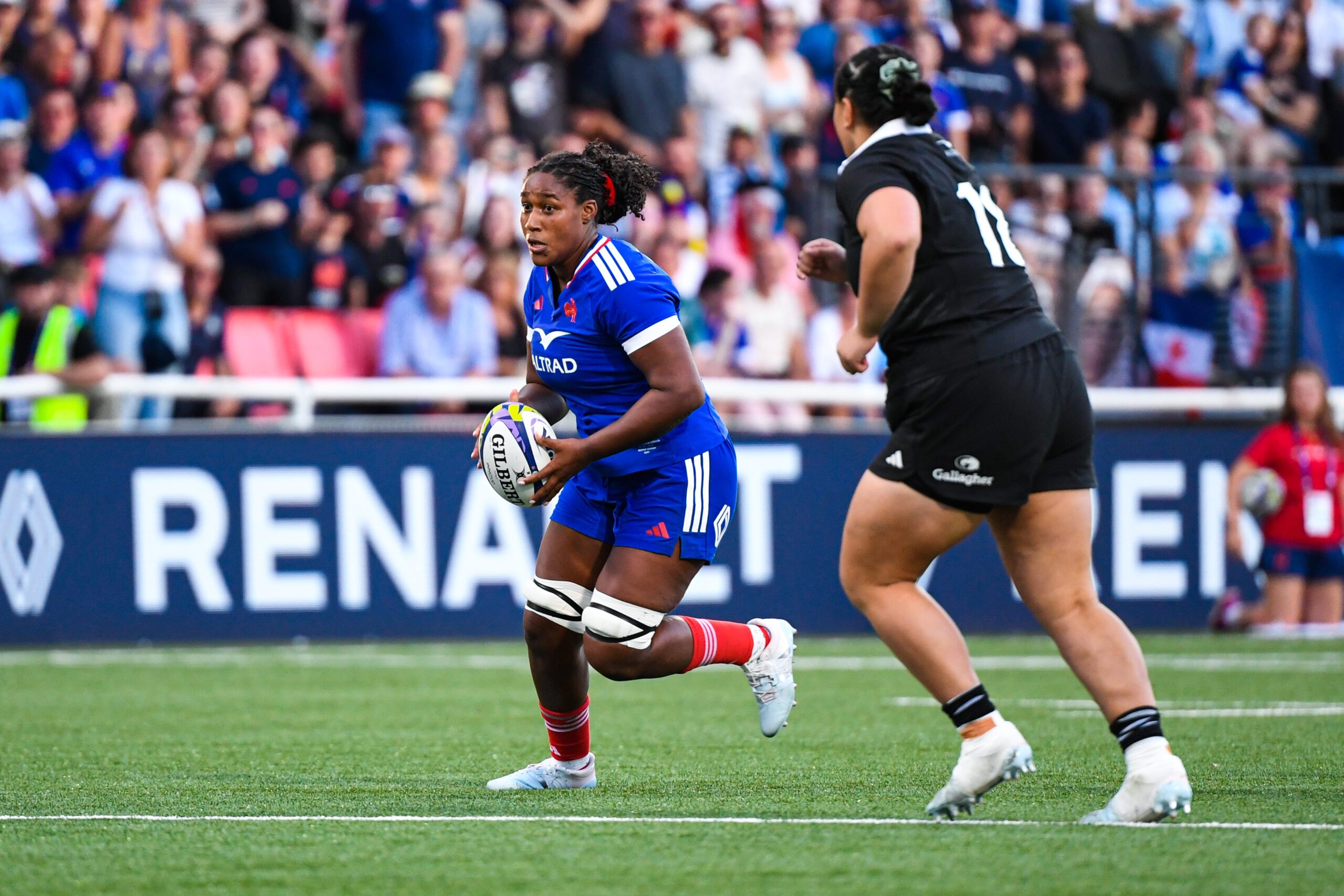
Outspoken, determined, clear-eyed… Who is Cloé Correa, the rough diamond of the France women’s team? Her red card against Australia could have cost her dearly. In September, during the WXV Global Series, Cloé Correa saw her international progress briefly halted by a sending-off that earned her a two-match ban, after initially fearing a much heavier sanction. It was a frustrating episode, one she insists she did not cause intentionally, but she wanted to learn from it.
Kept in the French squad for the tour of New Zealand despite missing the first match, the Stade Toulousain player also saw this period as a stage in her development. Behind the blue jersey, the international looks back on the incident, her doubts, the support of those close to her, notably her father Yogane, and her ambition to establish herself for good with France.
“I didn’t want to play rugby at all”
You grew up in a family where rugby played a big part, your father being a former professional (USA Limoges, Montauban, Albi…). Did you always know you would make it your career?
Not at all! Originally I absolutely did not want to play rugby. I did loads of sports, but I avoided that one because I found it too violent. I would watch my father (Yogane, Ed.) play and take hits, and it didn’t make me want to. In the end, one of my best friends convinced me to come and try. And from the very first training session I knew, deep down, that I would do this until I no longer could.
You were already a child of rugby, around players, coaches and changing rooms, at your father’s side. What did that environment give you?
I really grew up in that world. I was with my father all the time, I’ve always been very attached to him. Sporting Club Albigeois was my second family. All the players played a bit of a part in my upbringing, I think. I was there at training, at video sessions, in the changing rooms. I also knew people who mattered in shaping me, like Éric Béchu, who was a bit like a great-uncle to me. Looking back, I tell myself rugby was maybe in me from the start, even if I didn’t want to play. I grew up in that atmosphere, around people who passed on their passion to me.
Is being the daughter of a former player an advantage or extra pressure?
A bit of both. When you carry a well-known name in rugby, there are bound to be expectations. You can wonder whether you’ll manage to be as well known as your father, whether you’ll stand out. Whether you’ll make a name for yourself with your first name. I also think my name helped me get into certain set-ups. When I arrived at the regional academy and started joining the selections, notably in the Tarn and in Midi-Pyrénées, I wasn’t necessarily good enough. I had the build, but I was missing a lot of things. I was given my chance and I think my name may have opened certain doors. But after that, you have to work to stay. You can’t settle for that.
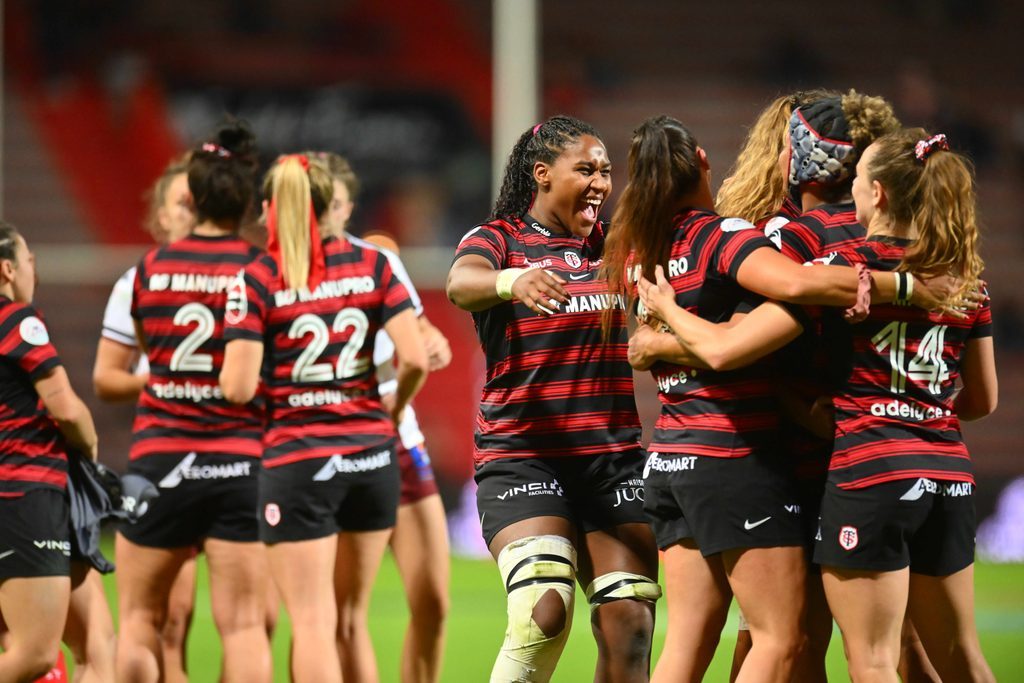
Your father is very involved in your career. How does he separate his role as a father from that of a former player?
Sometimes he lets me fall flat on my face, then he helps me get back up. He sees that I’m starting to head in the wrong direction, he warns me once, but he also lets me learn from my own experiences. He won’t necessarily stop me from falling. But when it happens, he’s there to help me understand what went on and set off in the right direction again. It’s not always the gentlest method, but he’s always behind me. With him, there are often two phone calls. The first is from the player. He’s very frank, he tells me what I need to hear, even if it hurts. I’ve ended up in tears because I struggled to accept certain truths. Then, a few hours later, there’s the second call. That’s my dad. He takes more time to support me and help me think things through. The two roles complement each other.
And your mother, what place does she have in your journey?
My mother is my comfort. Whether I’m in the France team or not, she’s happy as long as I’m happy and I love what I do. My father is more about strong words and high standards. My mother is there to pick me up when things aren’t going well. They complement each other really well.
“I had lost all desire to play”
Today you wear the jerseys of Stade Toulousain and France. Yet your club nearly didn’t keep you. What happened?
It was two or three years ago. I was going back and forth a lot between Élite 1 and the reserves. At one point I was told they didn’t really know what they were going to do with me, that they were still hesitating about keeping me. It hit me hard. I believed in it, I told myself I would end up playing, and suddenly I no longer knew where I stood. I had lost all desire to play rugby. I didn’t even enjoy training any more. It was very hard mentally. I even think I went through a mild depression. I wasn’t well, I had lost the desire to do a lot of things. At one point I told myself I would rather leave of my own accord than wait to be told I no longer had a place. I talked about it a lot with those close to me, especially my father. He asked me if I wanted to take the easy way out. Other clubs had contacted me, and I could probably have had more game time elsewhere. But he also asked me if I didn’t want to challenge myself, to see if I could get over the obstacles rather than leave. He let me think it over and decide for myself. I told myself I might be prouder of myself if I managed to succeed despite all these difficulties. I decided to stay.
The turning point finally came from an opportunity?
Yes. Players got injured in my position and I got my chance. I often say they didn’t really have any choice but to play me! At that time I felt they didn’t trust me. But I managed to do some good things. The coaches liked them, then I was able to keep taking chances and showing what I was worth. I worked enormously hard for that. Back then I was on a work-study programme, between my studies, work and rugby. Whenever I could train, I did. I wanted it to work. That’s also what makes the good things that came next even more satisfying. When you’ve come so close to giving it all up, you see how far you’ve come differently.
“There was a lot of weakness, doubt and hesitation”
Did that period change you?
It taught me that I could go through very hard times without necessarily giving up. But I don’t want to tell it as if I had always been strong. There was a lot of weakness, doubt and hesitation. Everyone wants to take the easy way out at some point. I thought about leaving too. But something told me I would be prouder of myself if I managed to succeed where I had run into obstacles. I think that’s what allowed me to carry on.
You’re very competitive, even off the pitch?
Yes, completely! I’m a very frank person, sometimes too frank. And I always need to win. Even when I play board games, I have to be the best. I don’t know why, but I’ve always had that competitive side. In everyday life, I’m pretty close to the player you see on the pitch. Away from rugby, I mostly try to enjoy time with my friends, go home to see my parents in Albi and rest. I don’t have a huge amount of free time. I really like tennis too. I even told myself that if I hadn’t made it in rugby, I might have tried for a career in that sport.
New Zealand, a red card and taking on responsibility
You’re in the middle of a tour of New Zealand, the emblematic land of rugby. What does this experience mean to you?
It’s a trip I really wanted to make. When you grow up watching the All Blacks and the Black Ferns, you’re bound to want to discover this country and play there. It was my first big trip to New Zealand. I had already played in Cardiff with the Under-20s, but this was another dimension. Since we arrived, I’ve only had positive experiences on the human side. In sporting terms there was frustration, since I couldn’t take part in the first match because of my ban (her red card in September against Australia earned her a two-match ban, Ed.). I was really looking forward to playing. The second match was an important step for me. I saw it as my first real start on this tour, even if I had already played against Australia. I was able to take on more responsibility, try to get the team moving forward and make an impact on the game. I realised I was no longer little Cloé arriving in the squad and discovering international level. I’m starting to find my place. With some important players missing, we also had to take on more responsibility and try to lift the group.
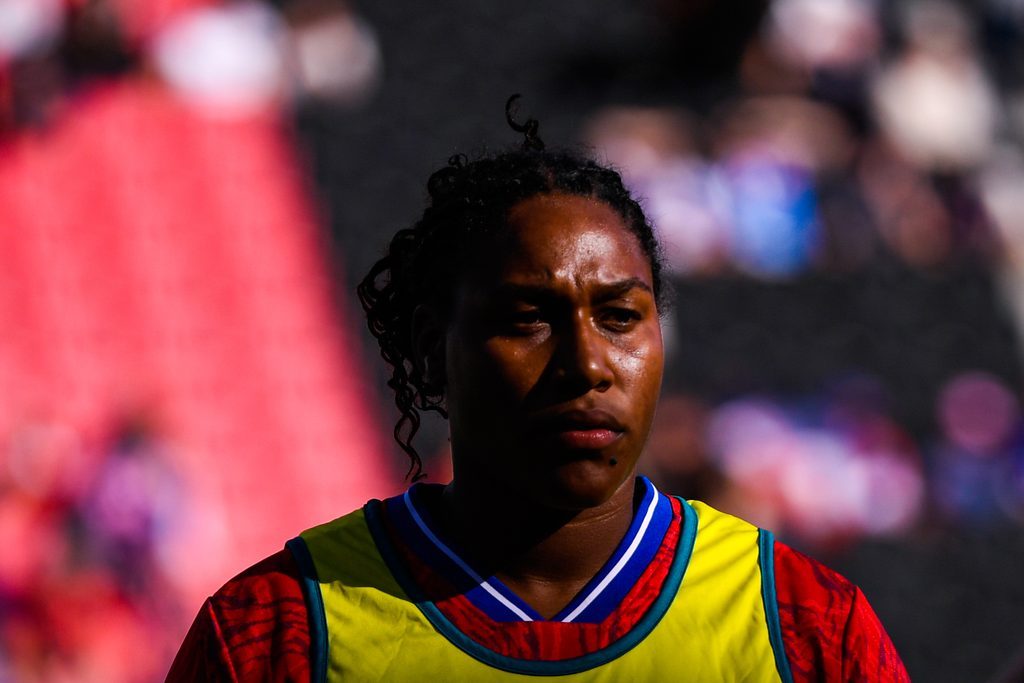
“I’m starting to find my place”
You went through a difficult time with that red card against Australia. How did you experience it?
I was very frustrated. I knew my action wasn’t deliberate, but I also knew it could have been avoided. If I had paid more attention to what I was doing, the situation could have been different. At the time I wondered why it was happening to me. But that match was unusual, several players had been sanctioned and it could have happened to someone else. When I was told I risked a ban of up to twelve matches, I realised it was serious. I was very sad. I told myself that over an action I considered avoidable, I risked losing a large part of my season and missing important international fixtures. I talked a lot with my father, him again (sic). He explained that I shouldn’t take this sanction as a personal punishment, but rather as something that happens in a game and a chance to learn. The first few days were difficult. Then the panel gave its decision and in the end I only got two matches. I felt immense relief.
Was the way others looked at you, your family, your team-mates and your coaches, hard to bear?
Honestly, I didn’t really care how others looked at me. I knew what I had done and I knew it wasn’t intentional. What mattered more to me was how the coaches saw it. But my team-mates knew I hadn’t meant to do it, and the staff knew the situation too. Above all I’m grateful to have been able to stay with the group in New Zealand, when I couldn’t play the first match. They could have decided to take someone else. The fact that they kept me in the group is a sign of trust. It made me want to give everything on the pitch even more, to show that trust was justified.
“New Zealand really left a physical mark on me”
Has this tour allowed you to measure the level you now play at?
Yes. I had already had a moment of realisation in big matches, with a lot of excitement around us. But facing New Zealand makes you aware of what the very highest level represents. For me, they’re the most physically impressive team of those I’ve faced so far. They put a lot of intensity into their game. I haven’t played all the international teams yet and I haven’t had enough game time against England to compare. But New Zealand really left a physical mark on me.
In the short term, what can we expect from the rest of this tour?
I think we can do something. The first match was a big collective mistake. We took a real beating, of course, and it hurt our pride. We wanted to hit back in the best possible way. The following week, we showed we were capable of reacting. Maybe we lacked precision, or something in the final actions. We didn’t go all the way, but we weren’t far off. This week, we’ve worked a lot on what we were missing. Personally, I believe in it. You have to believe and we can do something this weekend.
“We shouldn’t have to choose between rugby and a decent salary”
You now have a contract at Stade Toulousain, but women’s rugby is still marked by a certain precariousness. How do you live with this reality?
It affects me, of course, because I’ve lived it. Before I had my contract, I had to juggle my studies, a work-study placement and rugby. It was extremely complicated. I was wearing myself out. The problem is that a lot of players are still in that situation. Either you choose to devote yourself fully to rugby, with a salary that stays low at the end of the month, or you put rugby aside to have a job that lets you earn a proper living. We shouldn’t have to choose between those two things. Women’s rugby is growing, a lot is being done for us and I think the Federation is attentive to these issues. There’s a real will to move things forward. But I also think we could go faster. We play a top-level sport. We train every day, we have to perform, we have to recover, prepare physically and mentally. You can’t keep asking players to make that commitment while leaving them in a situation of amateurism. I’m not asking to earn 30,000 euros a month. I know that’s not realistic. But we should at least be able to make a living from our sport.
Is this difference in resources also felt when you face the best nations?
I think so, especially in terms of preparation. The New Zealanders are professional at their clubs, and so are the English. In the France team, many of us are still not professional. That means we can’t always train like them, or devote the same time to recovery and preparation. Inevitably, that can show on the pitch. You can’t ask French players to compete with the best nations in the world without looking at the conditions they work in. The talent is there, so is the desire, but resources matter.
“People sometimes tell me I look like a riot cop”
Women’s rugby also still faces clichés. Is that something you experience personally?
Yes, and still today. There are always remarks about our bodies. People sometimes tell me “I’m massive”, that I “look like a riot cop”, or that “I can’t be a woman because I’m solid”. There are also the clichés that a rugby player must be less feminine or must be a lesbian. These remarks have no basis, but we still hear them regularly, unfortunately. And then there are the comments about the level of play, as if women were less technical or less capable. It makes me angry, because we work enormously hard to improve. When I read some of the comments on social media, it breaks my heart. We give ourselves every day to get better and we end up being judged simply because we’re women.
Should some remarks be punished more severely?
Yes, I think so. I’m for freedom of expression, obviously, but some things are unacceptable. You shouldn’t be able to say anything just because you’re behind a screen. We should think about sanctions against certain comments. You can’t claim to want to develop women’s rugby and let remarks that belittle the players multiply.
Stade Toulousain, France and the dream of beating England
What are your goals for the coming years?
First I’d like to prove that I have my place at Stade Toulousain. It’s not something that’s yours for ever, and I know I can lose my place. I want to become a real pillar of my club, someone the group can count on. I’m no longer the young player who has just arrived. I think I’m starting to move into a leadership role, and I want to take on more responsibility. With France, I also want to keep my place and continue to progress. And why not, one day, become the France number 5.
You still have a plan B if your career ends sooner than expected?
Yes. I have a master’s degree in business and marketing, and I’ve always planned to start my own company. I don’t know in what sector yet, but I know I could bounce back. Obviously, I want to carry on with rugby as long as possible. But I’m aware that a sporting career can end overnight. You also have to prepare for what comes next.
“We have to keep working, understand what we’re missing and look for ways to progress”
France often seem close to the big nations, especially England, without managing to clear the final hurdle. What are they missing?
I don’t know if my analysis is totally sound, but I get the impression the other nations get together more than we do. When we talked with the Black Ferns, they explained that they were together very often. England also get together more regularly. We have our clubs, and I know we can’t be with the France team 100% of the time. But it would be good to be able to get together more, as far as possible, to work together. That might help build combinations and prepare better for the big events. There’s also the question of professionalism, I keep coming back to it. If opposing players can devote more time to their preparation, that makes a difference. We still need to progress on this point.
Is it frustrating to feel that the level is there, but that victory still escapes the French players?
Of course. When you’re close and you can’t finish the job, it’s frustrating. But we mustn’t lose confidence. We have to keep working, understand what we’re missing and look for ways to progress. We can’t just settle for saying we weren’t far off. We have to manage to turn that closeness into victory. I believe we have what it takes to do great things. We have to keep believing, collectively, and give ourselves the means to take that step.
Comments