
When he talks about her, his voice shifts a little. The tone stays gruff, direct, shaped by years of dressing rooms and muddy pitches. But behind the short sentences and the reflexes of a former player, something else appears: the immense pride of a father.
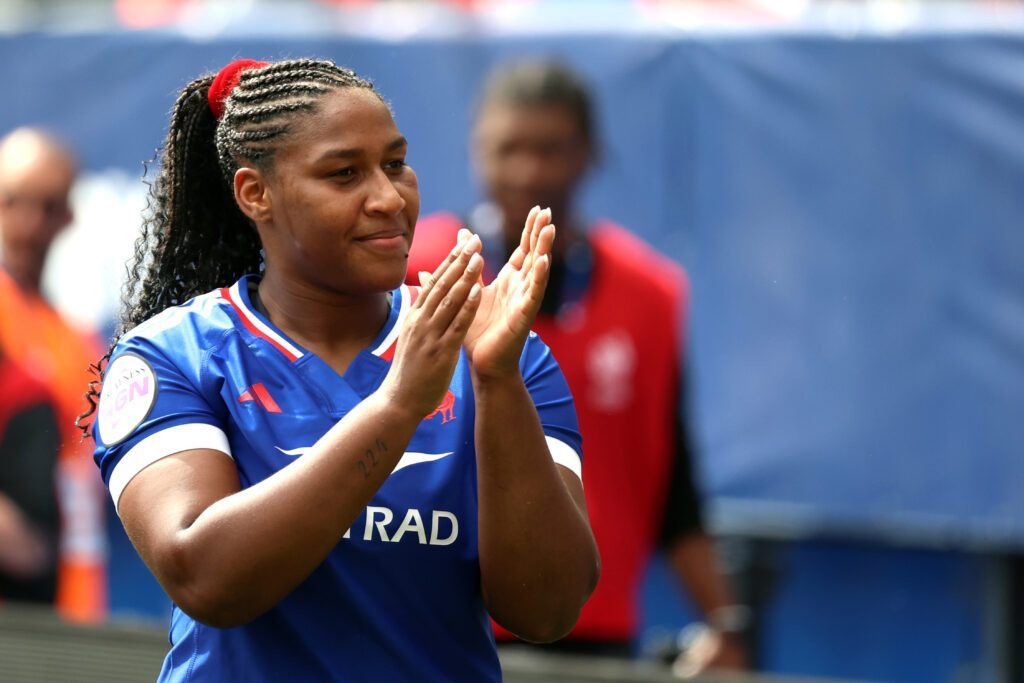
“That’s my daughter“, he says simply, almost surprised himself, when the name of his 23-year-old daughter Cloé comes up in a conversation about France women.
A few days earlier, he had been sat in front of his television watching her come on in the blue jersey against England (a 43-28 defeat). “Honestly, she made a fine return“, he adds, before diving straight back into the technical analysis of the match, like an old competitor incapable of watching rugby any other way. “The score is heavy, but in open play France match them everywhere. They are just less clinical.“
A family language
In the Correa household, rugby has never been a backdrop. It is a family language.
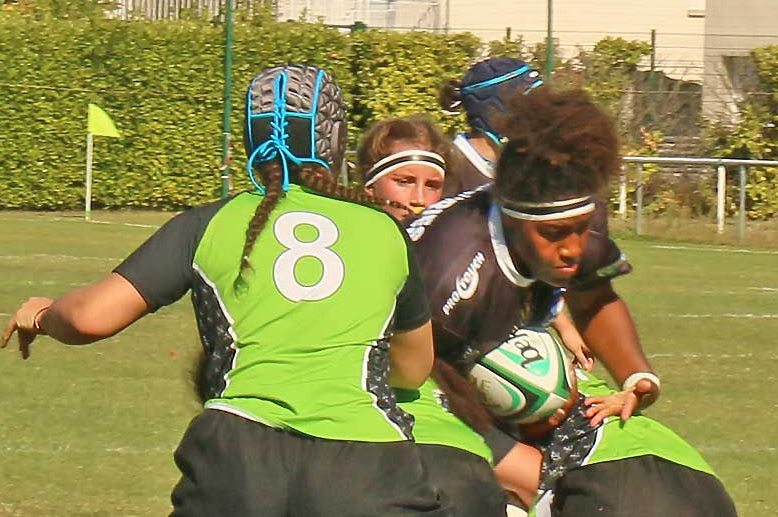
She grew up inside it, always. Literally. “She was with me the whole time in the dressing rooms from the age of three”, he says. Former team-mates still send him photos of her as a child, sitting on players’ knees, surrounded by kitbags, strapping and the smell of camphor. “She was everybody’s little mascot.“
He also speaks with a certain nostalgia about the rugby he knew, the one of long bus journeys, of sometimes run-down dressing rooms and of human adventures that went far beyond the weekend’s result.
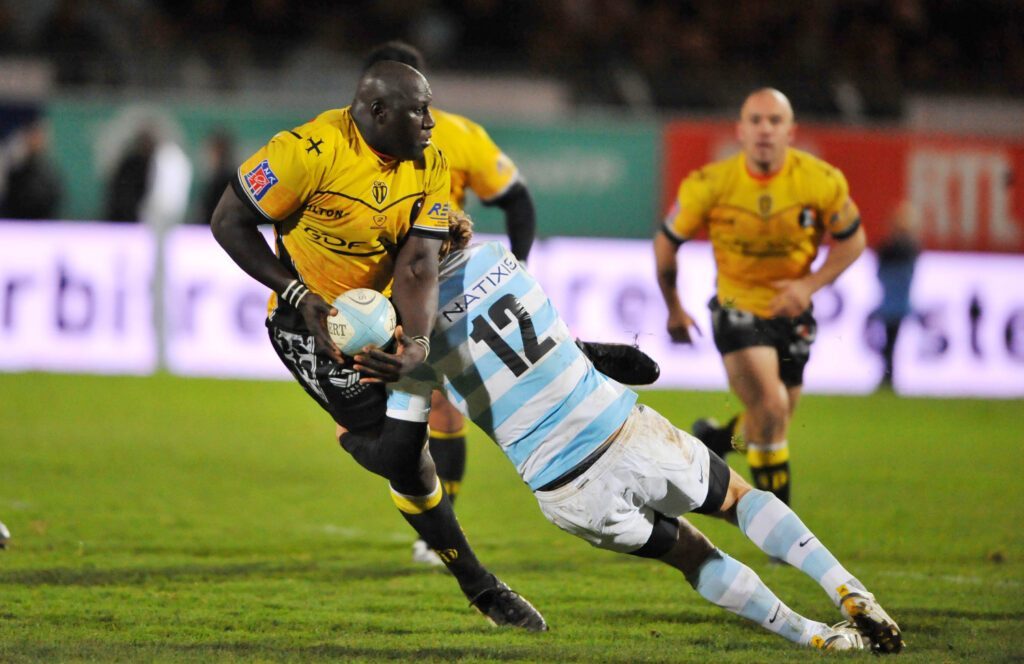
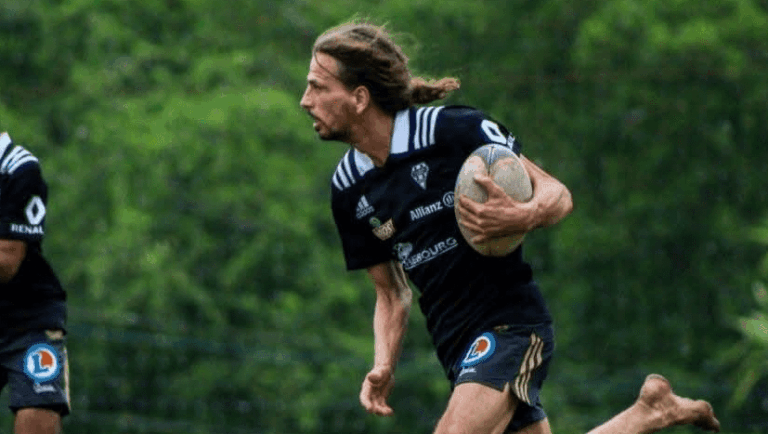
He had a long playing career taking in Mantes-la-Jolie, Limoges, Grenoble, Montauban and Albi. A Senegal international, what he remembers above all are “human adventures” and unlikely teams capable of moving mountains together.
A collective culture
“We didn’t necessarily have a great team, but collectively we became better than we were individually“, he says.
That collective culture is what he has tried to pass on to his daughter, without ever imposing his own path on her. He admits to regrets of his own, notably not daring to leave for Racing when he was younger and had the chance.
La compo du XV de France pour le Crunch dimanche !
— Gauthier Baudin (@GauthierBaudin) May 15, 2026
50e sélection en vue pour Madoussou Fall Raclot. Axelle Berthoumieu et Ambre Mwayembe reviennent dans le XV de départ. Sur le banc, Cloé Correa revient après son forfait contre l'Écosse. Charlotte Escudero couvrira la troisième… pic.twitter.com/jHpe00ep3a
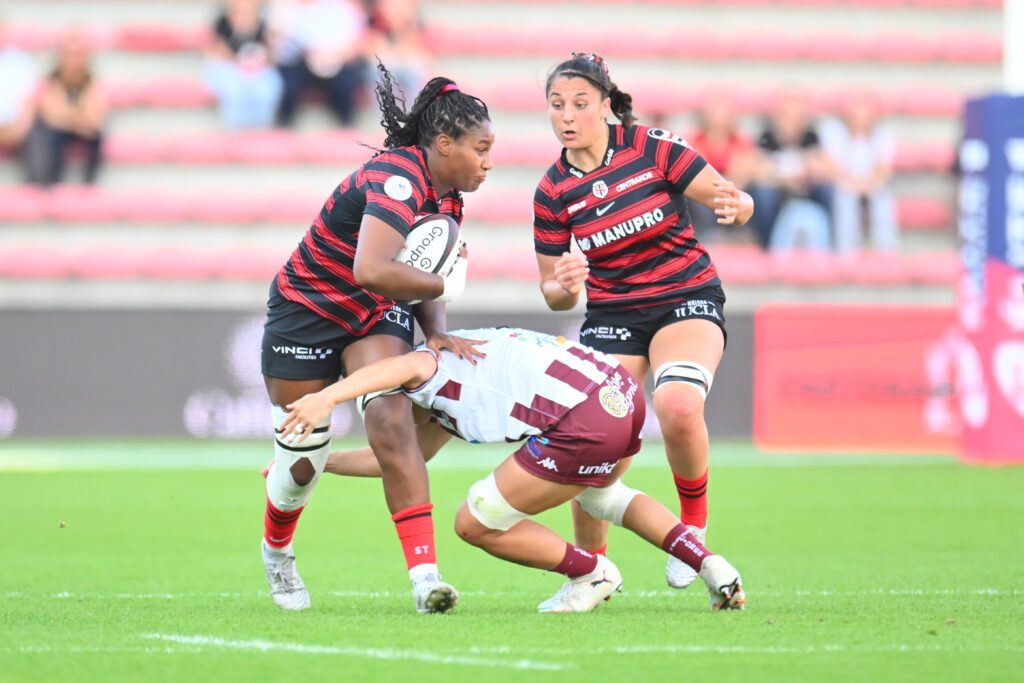
“I was in my comfort zone, with my mates, I wasn’t mature enough“, he confides. Perhaps that is also why he now pushes his daughter, an abrasive lock at Stade Toulousain, to step out of her own comfort zone, to accept the hard moments, to understand very early what elite sport really demands.
So inevitably, seeing his daughter wear the France jersey today stirs something particular. Even if he refuses to make grand statements.
“She is the one who decided one day to play. I just told her: go for it.” The rest, he insists, belongs to her.
Excessive overprotection
The big man nevertheless describes years of sometimes tense exchanges, in which he spoke to her more “like one player to another” than as a father to his daughter. “When you have played, you know the levers, you know the jargon of rugby. Sometimes the conversations are spiky.“
In their family, there is no excessive overprotection and no father screaming from the touchline. He hates that. “I have never accepted parents who live out their frustrations through their children.“
So he tries to stay in his place. Not always simple.
Because he also knows the brutality of the elite game. The injuries. The invisible sacrifices. The permanent frustration. “Rugby isn’t just playing at the weekend. You have to accept not going out, looking after your body, sleeping, working.“
“When you talk to her, it makes me want to cry.”
And then there is the mother, the indispensable balance in this very rugby family. “Thank goodness we had her, he smiles. Sometimes, when I talk rugby with her, it can be raw. Her mother often says to me: When you talk to her, it makes me want to cry.” He laughs quietly.
Because deep down, Yogane Correa knows he still works to the codes of another generation. The one of coaches who “were not there to pat you on the back“. The one where you had to take your place or disappear.
But he can also see how much the women’s game has changed.
Marginal
The 51-year-old “young old man” of a player, with his African memories and his tales of endless bus rides, now watches full stadiums for France. Massive television audiences. Young girls who can finally dream of a career. “When you see 35,000 people in Bordeaux, you tell yourself it really is moving forward.“
Correa senior nevertheless believes women’s rugby remains a long way from the recognition granted to the men. “The girls don’t really make a living from it today. They have to be given the same means.“
His view of women’s rugby also says a great deal about how the sport has evolved. He remembers a time when seeing girls play rugby remained “almost marginal” at some clubs. Today he sees full stadiums, televised coverage and young players who finally dare to dream bigger.
But he refuses easy euphoria.
That reality is one he now knows from the inside. Which makes him admire his daughter’s ability to hold that rhythm all the more. “The training, the travel, the recovery, the pressure of performing“, all of it while trying to build a life alongside.
Immense pride
A man who knew a rawer, less publicised rugby is now discovering another kind of fight: that of women who still have to prove they deserve the same recognition as men in a sport long conceived in purely male terms.
So he hopes. As a former player. As a supporter. And above all as a father.
Because in among the tactical analysis, the career memories and the blunt rugby talk, one sentence comes back almost shyly: “Honestly… yes, it is immense pride.“

Comments