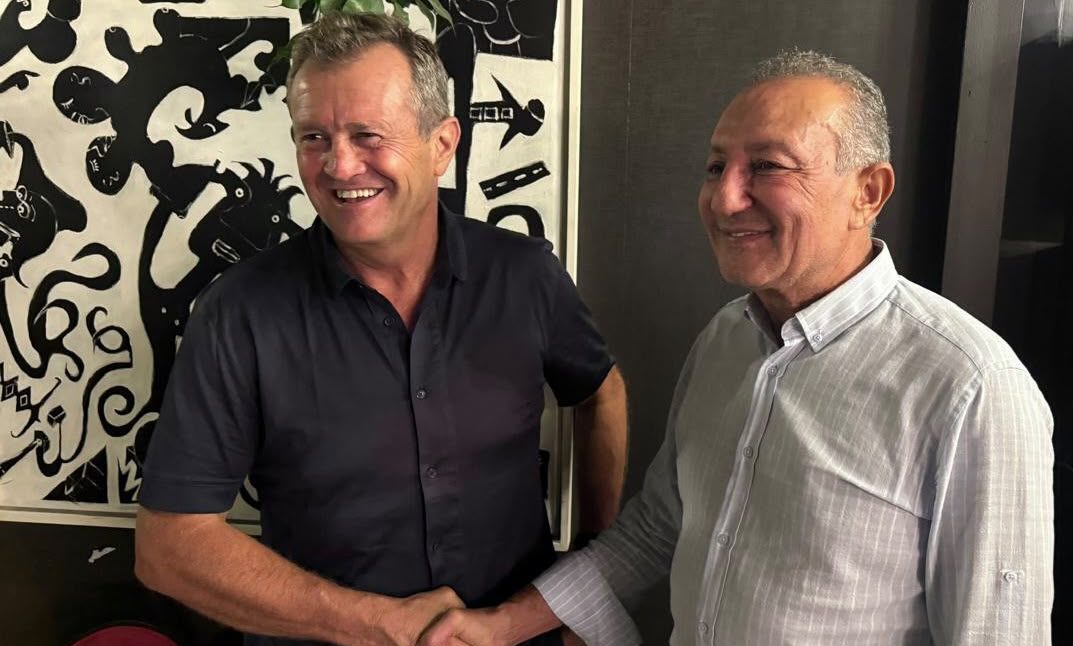
Christophe Hamacek, a son of the South-West, is about to live a brand new adventure. The experienced coach has become the new head coach of Tunisia. Having passed through many dressing rooms, from Peyrehorade to Béziers, via Tyrosse, Cognac-Saint Jean-d’Angély, Langon, Montluçon and Rouen, the coach approaches this new challenge with real excitement.
For It’s Rugby, Hamacek details his new project with a major target: qualifying the Tunisian side for the 2031 World Cup. Alongside his trusted assistant Nicolas Cabannes, the Orthez native says he’s eager to get started and tells us about local rugby, its sizeable talent pool and the career choice he has just made. A fascinating interview.
IT’S RUGBY. – It’s done, you’re the new Tunisia head coach…
Christophe Hamacek: I’m very happy. It matches what I want to do right now. It’s about building something. Many players currently play in France without having particularly come through the national team. So first I need to motivate them and organise gatherings much more often than before. I’ll be able to do that in France. We’ll also need to organise friendly matches. I’m already negotiating with the Landes committee president, Guy Villenave, to play an international match at Côte-Basque-Landes, as used to happen (today it’s called Pyrénées-Landes), in March 2027. We’ll play another match in Saint-Germain-en-Laye, in June 2027, against an Île-de-France select. The idea is to multiply the gatherings to really build a collective project and a team identity. This group has great qualities.
How did contact with the Tunisian federation come about?
I’ve coached a lot of Tunisian players. Hedi Souid, Sabri Gmir at Béziers, Mohamed Boughanmi, who was an international prop with the French team, among others. He’s a guy I spotted when he was at Bobigny. More recently, I coached Helmi Mimouna, Yahia Graa and Achref Ben Hamouda. I think all those guys appreciated my management style and they’re the ones who spoke to the Tunisian technical staff. I was invited in August to the youth selections and it happened quite naturally.
It seems you didn’t hesitate for long…
No, because what motivates me most is the 2031 World Cup. I know the players. They have great qualities of generosity and courage. They’re tough. Tunisia has a monstrous pack. They may have less skill, less technique behind it. But there’s great things to do and that long-term target has to drive us. To get there, we’ll need to finish in the top four of the 2028 Africa Cup, then in the top two of the 2029 edition. The winner qualifies directly, the runner-up plays a play-off against an Asian nation. We shouldn’t forget that a few years ago, they missed a penalty late in the match and lost by one point against Zimbabwe, who will play at next year’s World Cup.
Discipline, the first task
As for the staff, did you call on people you know?
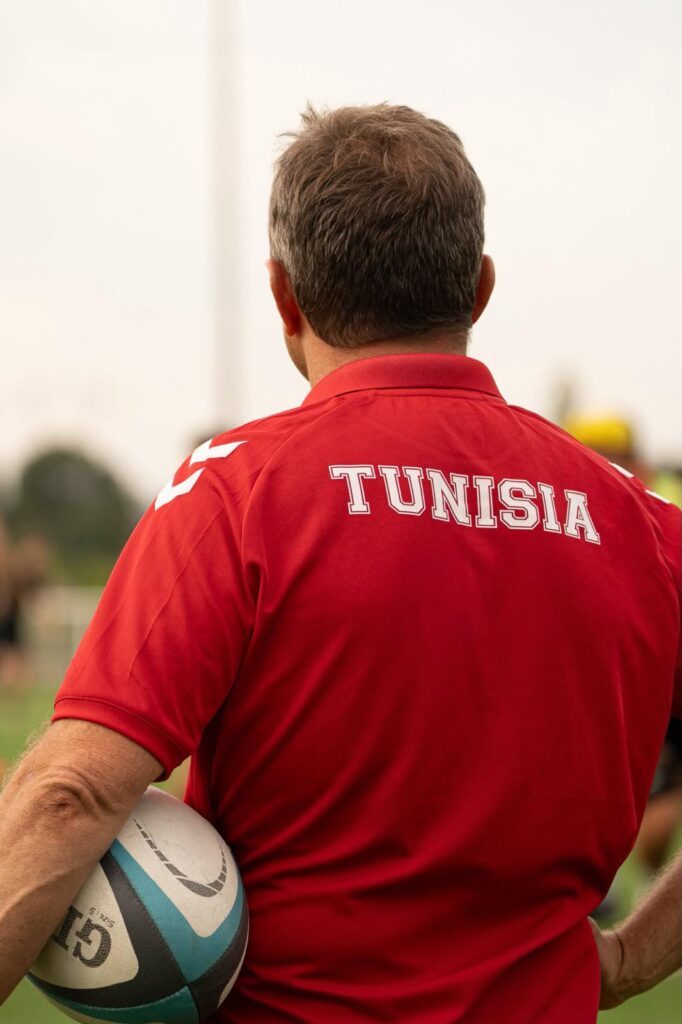
I have people I’ve already worked with, yes. Firstly Nicolas Cabannes, who for me is one of the best French technicians. He’ll take charge of the backs’ play. As a person, he’s great. Then, one of the big flaws of the Tunisian players is indiscipline. At the last Africa Cup, they lost matches because they were conceding twenty-five penalties. So I suggested this to the Tunisian technical staff, who approved it. I’ll have discipline coaches. I’m lucky to have Adrien Marbot, whom I coached at Tyrosse, who will come to the November camp. I also have Julien Castaignède, from Mimizan, who is now a TMO and who will be in charge of discipline. I want to put in place an uncompromising approach to discipline. You can’t perform at the top level if you’re as undisciplined as they currently are. That’s my first area of work.
And in terms of play?
I really want to keep their DNA, which is a confrontational game, a tough game. I tell myself that if I manage to get them to string together just one extra phase, to add a bit of continuity to their play, we can have a team that can compete with anyone at the Africa Cup.
You’re also going to take charge of the youth teams…
Yes, that’s something that motivates me enormously: defining a cross-cutting game plan and overseeing all the age groups. I’m a son of the South-West, where I often say that a skipped pass inside your own 22 isn’t a risk. That requires a huge amount of work, learning the game, reading it and gathering information. Since they’ve approved that kind of teaching, it’s something we’re going to put in place too.
To succeed, you also need financial resources. Will the federation make efforts to keep developing rugby?
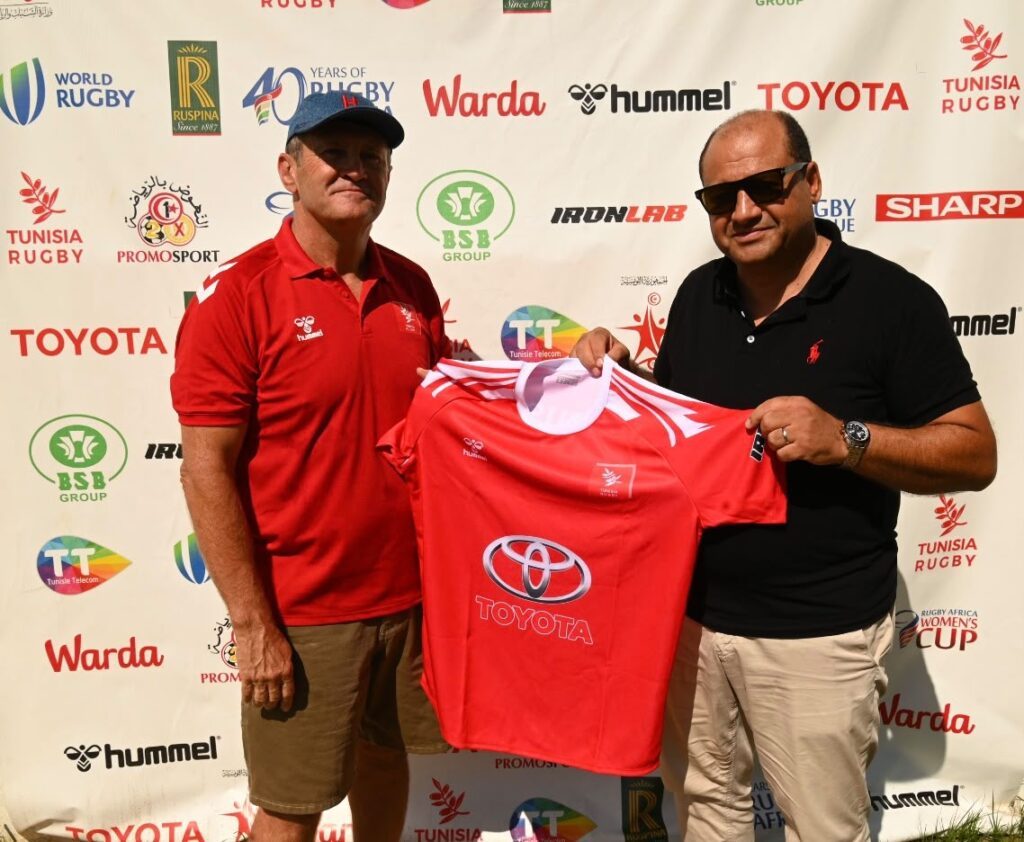
You need to know that it’s the only country in the Maghreb where a championship has existed for many years. So there are clubs and player development today. There’s also a desire to find an additional partner, and that’s a bit of the link I can provide with France. Many French companies work in Tunisia. I met the French embassy’s deputy head of mission, in Tunis. Their wish is for a French coach to succeed. Everyone wants to work in the same direction.
Christophe HamacekPlayers who play at a World Cup represent 0.030% of licensed players worldwide. So it’s worth going for it. I see it straight away, a change in behaviour: their eyes light up when you talk to them about this event.
Dual nationals: grandparents born in Tunisia
Can the eligibility rules help you find players of Tunisian descent who have played for other national teams?
If you have grandparents born in Tunisia, or Tunisian grandparents living in France, you can come. I had the surprise of finding three players who don’t have a Tunisian-sounding name at all but who can play for us. One is called Baptiste Misdrahi. He’s of Russian descent. The other day, he told me: “Christophe, my grandmother was born in Tunisia.” I replied: “You’re joking, Baptiste?” He assured me she really was born in Tunisia (smile). “Is your grandmother still alive?” Yes, she’s 85. “Go and get the birth certificate.” I also saw Mohamed Boughanmi. He’s only 34 but he has an extraordinary physique. He’ll join us in November. The other day, I went to Suresnes. They have four Tunisian players and three of them also want to come. Some play in the Top 14. There’s Ryan Chapuis, a back row at Stade Français, Adam Vargas, who plays at Castres, and Erwan Dridi, who plays at Colomiers. I tell them: “Guys, an Africa Cup is a fortnight. But at the end of the Africa Cup, there’s a World Cup.” Players who play at a World Cup represent 0.030% of licensed players worldwide. So it’s worth going for it. I see it straight away, a change in behaviour: their eyes light up when you talk to them about this event.
Morocco and Zimbabwe in particular are emerging nations. Unlike, say, Namibia, who are weaker than before…
Indeed. Zimbabwe have gone out and found a lot of South African players, just as Morocco have picked up a lot of players who played in the French championship. That’s what I’m going to focus on doing: trying to identify every player who could qualify for the national team. The paradox is that there are a lot of props and a huge number of back rows. I’ll have the luxury of choice up front! (laughs) On the other hand, behind, there are fewer profiles and fewer talented players. It’ll really be a new kind of work, both scouting and perhaps development.
Have you already started your work?
Yes, I’m working a lot on the project. I’ve already put everything online, with a Google Drive where the guys will find the attacking and defensive systems, kick-offs, lineouts and so on. I leave on 12 November to first do three days of training with the Under-20s, then coach education, particularly on how to bring players towards this game built on tactical intelligence.
Can such an experienced coach push the Tunisian championship to develop, to become more competitive?
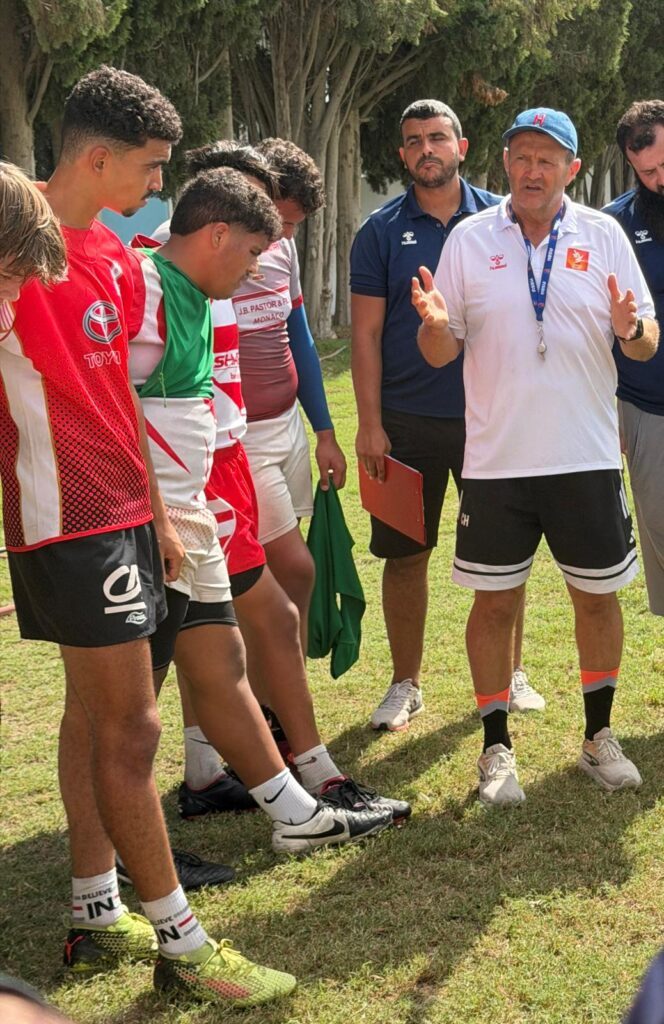
Yes, because to play rugby in Tunisia, you have to be passionate. I often say there’s sometimes more grass on my tiled living room floor than on the pitches (smile). I saw some kids this summer: it was 40 degrees, on very hard ground, and they put ferocious commitment into the rucks and the tackles. They have that generosity, which for me is essential in rugby. If we manage to get them playing a bit more, with tactical intelligence, situational intelligence, I think all the clubs will improve. That’s the idea, roughly speaking.
The dream of the 2031 World Cup
Is there a model you’d like to copy?
I have a South-West culture. I watch Dax and Tyrosse, teams that like to play. Above all, I’ve been a fan of Stade Toulousain for many years. A few days ago, I was at UBB, invited by Yannick Bru. I really enjoyed it. I saw that, even though they’re professionals, they do an enormous amount of work on reading the game and adapting.
Christophe HamacekI’m crazy enough to believe in my dreams and to coach everyone. With no false modesty, I believe I have the ability to be an inspiring coach.
Is this the greatest challenge of your career?
My dream is to go to the United States in 2031 and I’m crazy enough to believe in my dreams and to coach everyone. With no false modesty, I believe I have the ability to be an inspiring coach. My signing has already rallied a lot of players, who are excited about the idea of coming to the November test match. So yes, I believe in it. I’m going to coach them and we’ll give ourselves the means to get there.
This is also an adventure that will teach you things, isn’t it?
Yes! I always tell my players: life is a novel whose ending you always know, because the hero dies. And as for me, I want a life full of adventures. I’ve had an extraordinary career because rugby has let me discover different regions, different people, make friends, feel emotions you don’t get in real life. We’re lucky, we sportspeople, players or coaches, to live extraordinary, heightened emotions, that only sport can give you. I already know I’m going to experience things that will nourish me and matter in my life. I was raised in tolerance, curiosity, and I’ve always thought, and will think until the end of my days, that the best is yet to come.
Is there any fear, or just excitement?
No, I have no fear at all. It’s going to bring me something different. It might sound arrogant, but I have confidence in myself and in the team. The pearls are there. Now we need to work to turn them into a nice necklace.
An extraordinary pool of props
Were you surprised by the local players?
There are some impressive young props. They could easily play in Nationale 2. And I’m talking about 18 to 20 year old kids. I saw a left-hander who could play in Nationale 2 or Nationale 1, and three solid right-handers. It’s a paradox because in France, we’re badly short of good players in that position. I saw sturdy kids, 110, 120, 125 kilos, mobile and skilful with the ball in hand. As for courage, I don’t even need to say it again because it’s part of their DNA. You need to channel them more than push them.
Christophe HamacekI’d say watch out! In a few years, the pipeline could well become Tunisian rather than Georgian.
Do you have an explanation for this impressive reservoir at the prop position?
It’s odd, but there’s a club like M’saken that only produces players with huge frames. I know the Béziers prop Youssef Amrouni. He’s going to join the national team, by the way. He’s a buffalo too! I was talking with Mohamed Boughanmi. I asked him: “Momo, which prop made you suffer the most?” He told me, with no pretension at all, that he’d never suffered in the scrum. I remember this kid, who weighed 160 kilos, with monstrous upper-body and back strength. Nobody could move him. Without that recurring knee problem, he could have had a comfortable international career, in the mould of Uini Atonio. The other day, I did selections with the Under-17s, and it was the same: they had sturdy props who were very good with the ball in hand too. I’d say watch out! In a few years, the pipeline could well become Tunisian rather than Georgian.
In your view, are scouts a bit absent from Tunisia?
Possibly. I’ve also seen rugby in Kenya. There are kids with great footwork, who are quick, who have real physical gifts. And right now, they’re kids who just want to play rugby.
Are the young players well looked after?
Yes. Particularly in Béja, where the best Under-20s are based all year round. It’s really the only country in the Maghreb that does player development. And since the country is very poor, and life there is hard, their wish is to come and play rugby in France. Out of passion for rugby, because, as I keep saying, to play rugby in Tunisia, you have to be passionate.
A bit like the Fijians we know well in France…
That’s it. But they have a culture of confrontation. The other day, at the Under-18 selections, they played four times ten minutes, with sixty kids. At the end, I asked them: “Do you know how many passes you made?” They weren’t quite sure. The answer is: one. There was nothing else. A single sideways pass, not one more. On the other hand, the collisions were something else! It was very hot and I think there could have been three red cards for dangerous tackles. So, in that sense, I think we can get there: develop them, discipline them, channel their fire. It’s not complicated to do. Someone who has no courage or generosity, you can’t change that. I’m glad that’s the way it is. It’s up to us to do the work now.


Comments