
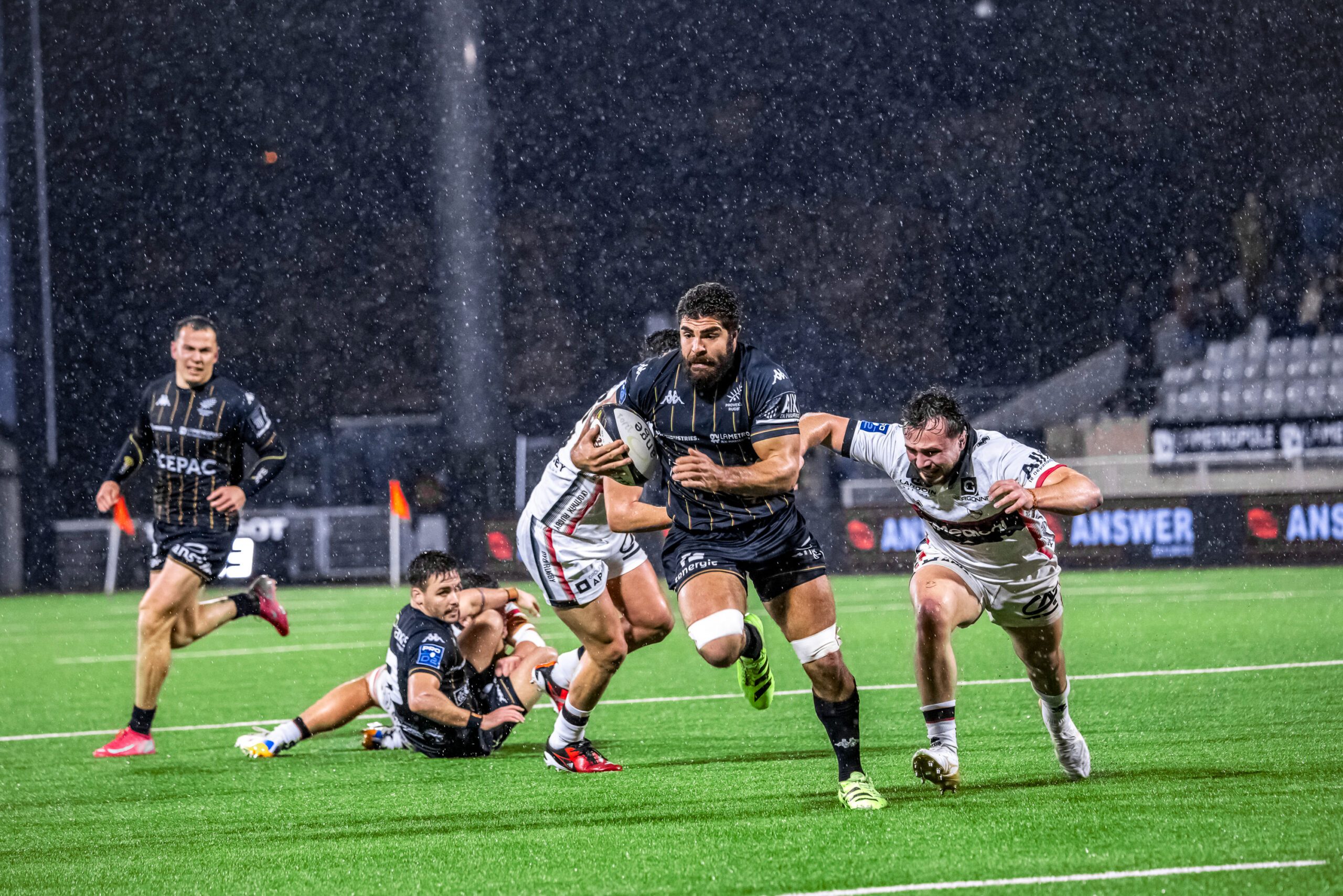
He had started the season with the ambition of establishing himself as one of Provence Rugby’s key men. But two red cards, a torn cruciate ligament and depression turned Guillaume Piazzoli’s 2025-2026 campaign upside down. Several months after this particularly difficult period, the player looks back on his recovery, the importance of psychological support and the need, in professional rugby, to learn to listen to your own fragilities too.
You had a very successful start to the season before going through a particularly difficult period. How did you experience that emotional rollercoaster?
The start of the season was huge. I was putting in big performances and I wanted to be the best player I could be. But the two red cards hit me hard mentally. You have to acknowledge your mistakes, understand what you did wrong and try to bounce back. The second red card was even harder to deal with. A week and a half later, I tore my cruciate ligament. It was an extremely difficult time for me.
How did you come to realise you were going through depression after this string of events?
I felt something was wrong, but I couldn’t put it into words. In our job, we’re constantly under pressure, wanting to give our best and show that we’re among the best. When everything stops, you can feel alone. You shut yourself off, you stay home, you don’t feel like calling anyone. Luckily, my parents were there for me throughout. I was also supported by a psychologist, because mentally, I was very weak. I went through a depression that lasted several months.
Rugby values strength and the ability to take the hits. Did you feel you had to face this ordeal alone?
After my second red card, it was very hard. For a week and a half, nobody from the staff came to talk to me. I felt very alone. And after my knee injury, I needed to step back and get away from the club for a few months. I had to find myself again, ask myself the right questions and try to get back on my feet. Luckily, I could count on my parents and on psychological support. It’s a daily effort: you have to rediscover your motivation, grow, evolve and manage to move forward.
Yet you were in the best physical shape of your career. How do you explain that gap between your physical and mental state?
Physically, I had never reached that level before. I felt fresh, I felt good. But mentally, I just wasn’t there. Looking back, I know I wasn’t emotionally ready to go back out on the pitch. I should have spoken up sooner. You can be in full physical capacity and still not be able to play mentally. You also have to learn to recognise that state.
How do you feel today?
I’m moving forward. It’s not easy to tell yourself you went through a period like that, but I’m trying to live with it. It’s become a driving force. I tell myself that if I managed to get through that state, I can also come back from my injury. Mentally, I feel like a new person. This experience made me grow and taught me to listen to myself more.
What message would you like to pass on to young players who might go through a similar period?
I sometimes played with physical niggles, especially in my shoulder, when things weren’t right. Today, I know that if I’m not ready mentally and emotionally, I don’t necessarily have to play. It’s like a physical injury, except you can’t see it and people don’t talk about it enough. You have to learn to know yourself and tell whether you’re ready to play or not. I think young professional players need to be able to rely on someone capable of supporting them mentally. You shouldn’t wait until things get really bad to ask for help.
Comments