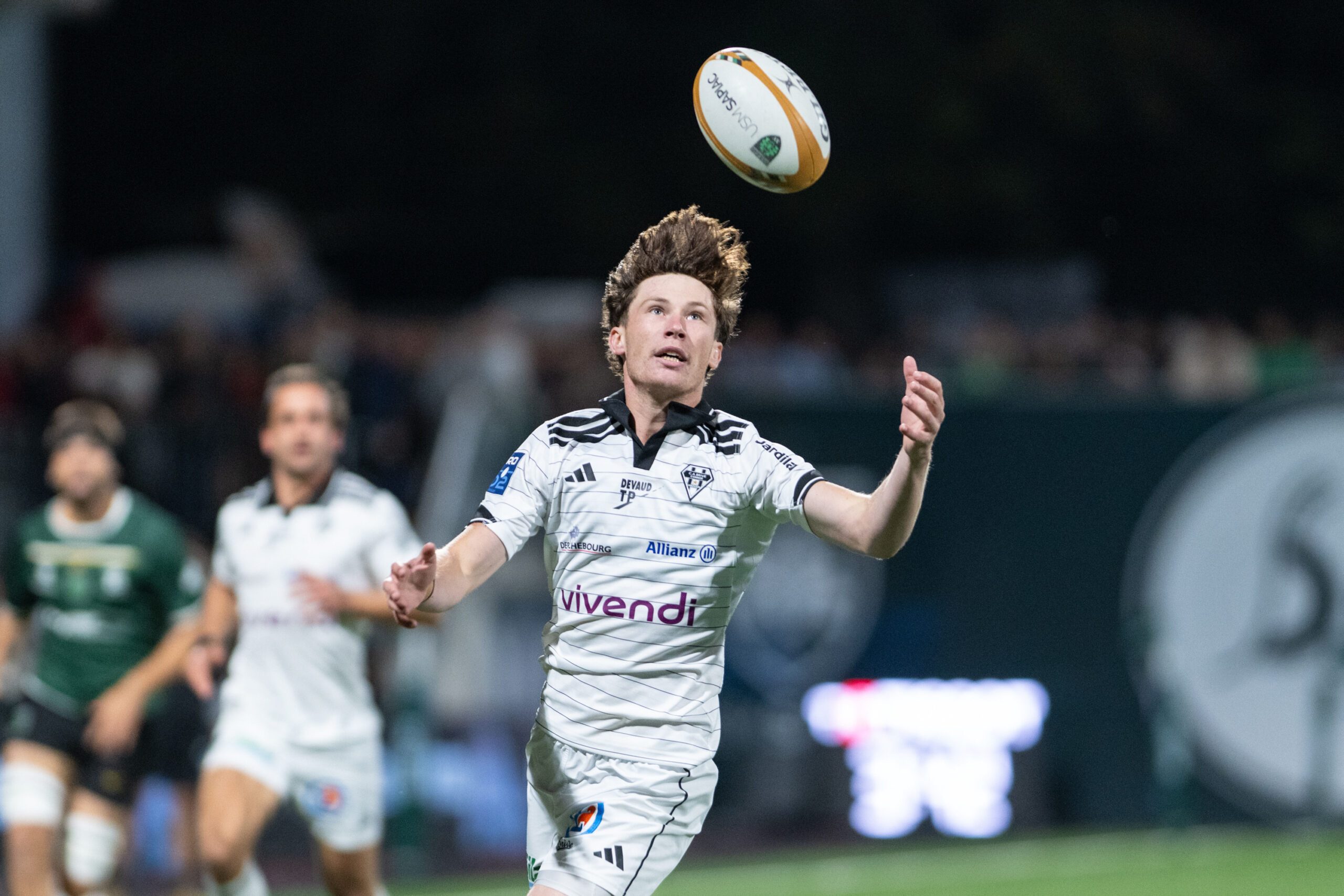
Who better than Pierre-Henry Broncan to talk about Leny? The Georgia head coach, father of Brive‘s fly-half, agreed “with pleasure” to comment on his son’s start, who, at just 20, is gradually establishing himself in Pro D2.
From abroad, the man from Gers doesn’t miss a single one of Leny’s matches, which he follows on his phone. He talks about the feedback he gives him, his natural maturity, his beneficial spell in England and his wish, one day, to coach him. An exclusive interview for It’s Rugby.
“He already knows what he did well or badly”
IT’S RUGBY. – Pierre-Henry, you must follow your son’s performances closely…
Pierre-Henry Broncan: Yes. I follow him, but from a distance, because I’ve been abroad since he started playing for the first team. I’m back in France on Sunday. I watched them on my phone.
Do you give him feedback every time?
Of course! We always talk about it. He’s a boy who is very mature when it comes to rugby. When he comes off a match, he already knows almost everything he did well or badly. We manage to talk about the match that same evening, even with a bit of a time difference. Sometimes it’s a bit late here (in Georgia, editor’s note), but at least the next day, we can talk about it calmly.
Does this maturity he shows on the pitch surprise you?
When you’re young and mature on the pitch, it’s always a bit surprising. But he’s a boy who has always been very rugby-minded and who had an enormous stroke of luck. He started at the Vic-Fezensac rugby school, with the same coach as Anthony Jelonch or Gauthier Maravat, now at Castres. His name was Jean Dupouy, someone very well-respected in Gers, who sadly passed away last year. I say stroke of luck because he was a coach who, with 7-8 year-old children, always had a ball in hand and constantly set up game situations and game-reading exercises. At the time, I was a coach at Stade Toulousain and I loved watching this coach teach rugby to these young boys on Saturday mornings at Vic-Fezensac training sessions. Leny started with very good learning, particularly everything related to reading the game. Today, that serves him well. His maturity is easier to express when you’re used to looking ahead and analysing what’s in front of you.
A Pro D2 debut at Aurillac
What did you say or think when he told you he was going to play his first professional match with Brive, at the start of the season?
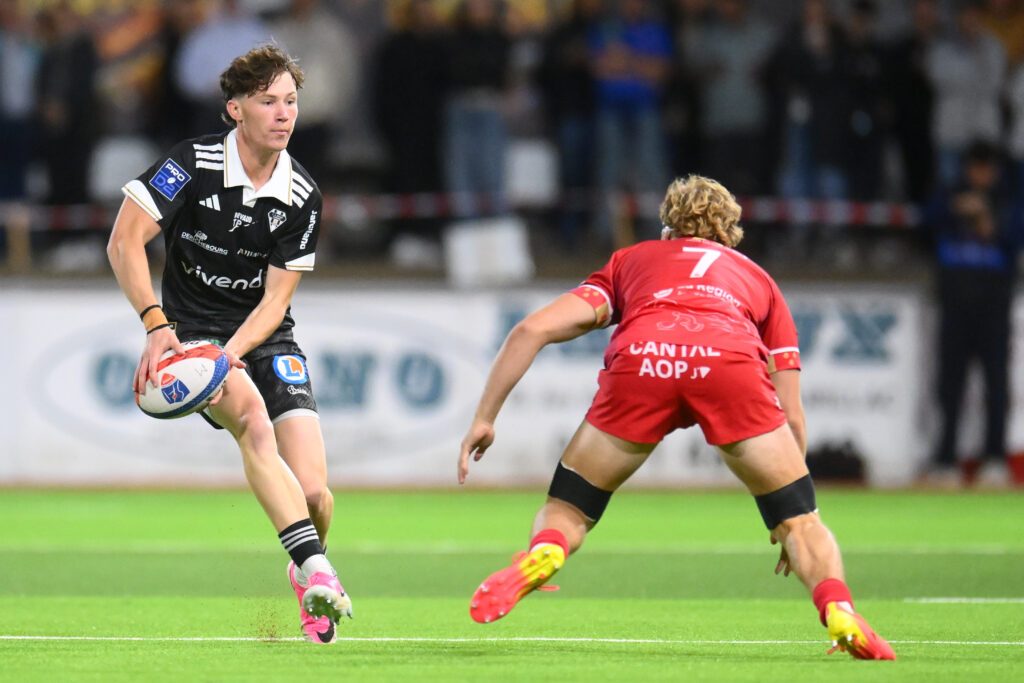
He was a bit annoyed at first (smiles). Actually, he’d been suspended at the end of last season. As far as he was concerned, he’d served his suspension matches during the off-season, since friendly matches count. There was an administrative error by the club, which, from what I understood, cost him a starting place for the home match against Nice. That was a home match with a bit less pressure than the first match he ended up playing, away at Aurillac. It was a derby, against a team that’s hard to contain, but he was calm. I’d simply told him to focus, since his chance would certainly come quickly, as Jamie Shillcock was injured, like Stuart Olding. I told him to commit physically in that first match. It’s not the under-23 level any more, it’s faster, the hits are harder. At this level, you need to commit 100% physically, otherwise it’s a tough ride for young players like him.
Pierre-Henry BroncanHe’s a boy who spends his time training.
You rightly mention that physical commitment. Don’t you sometimes feel a bit scared watching your son play at this level?
No, it’s normal, it doesn’t scare me. He’s a very physical boy, very athletic in terms of running volume, who works a lot in the gym. He’s a boy who spends his time training. I’m not too worried. But I thought Montauban, last Thursday, tried to target him early in the match. As I said, he’s a mature boy. He’s also done a lot of boxing. I think rugby doesn’t do him any more harm than getting in a ring against an opponent.
From Gers to the Bath academy
Did you also teach him technical skills?
Yes, of course (smiles). We spent eight years, with his brother, the three of us, on the pitch, back home in Gers, in Ordan-Larroque. It was a football pitch to start with. I was a local councillor in that village and we turned that pitch into a rugby pitch. We got hold of the old posts from the Moulias stadium to put them up on the football pitch. We spent a lot of time there with the neighbourhood kids, playing rugby first, then working technically on everything that could be worked on. Then, since the TV was always on and rugby was constantly playing at home, Leny has been used to watching matches from a very young age. We also spent two years in England, at Bath. There too, he was constantly on the rugby pitches, or watching Bath’s first team play. We lived at Bath’s training centre, actually. Whether it’s him or his brother, I’m not worried about their rugby culture.
Rugby is a family affair for the Broncans. Leny’s grandfather, Henry Broncan, who coached Auch from 1998 to 2007, hosted us at the Jacques-Fouroux stadium for our Parole de coach series.
In England, he watched the team, but did he also play?
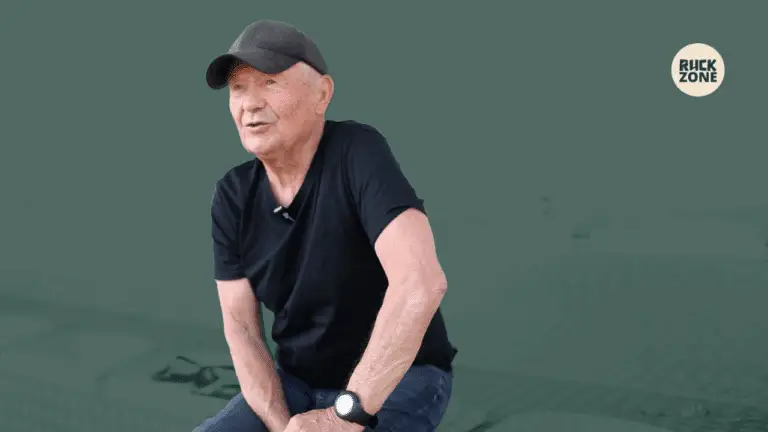
Yes, he played. He was at Beechen Cliff, Bath’s champion factory, a school where 1,500 boys play rugby, since it’s compulsory there from September to December. In our last year in England, he was already at the Bath rugby academy. This academy covers a very large region: between Bath and Southampton, for example, there’s a two-hour drive. There are three academy centres in the region, where 40 players per centre are selected during the week, and 22 to play at the weekend. Leny was part of this academy. Many England internationals have come through it. Even today, many Bath professional players come from this school. Playing rugby there was a kind of reward for him. He was a boy who was behind physically, but the English didn’t mind. They really liked Leny’s very rugby-minded side, his way of reading the game and bringing others into play around him. He was a regular starter at number 10.
Pierre-Henry BroncanHe’s a big competitor, who’s channelling that fire a bit now because he’s young and has this maturity.
A bilingual competitor
How would you describe his personality?
He’s a very bad loser, but alongside that, he can also be very composed. He’s a big competitor, who’s channelling that fire a bit now because he’s young and has this maturity. He has a cool head. He has a leadership I’d call innate. He’s not the biggest talker, but he has one advantage: he’s bilingual. In the modern world, particularly in France, he can communicate perfectly well in French as well as in English. His partnership with John Cooney, in their first games together at Brive, was made much easier by language. It’s an advantage for a number 10 to be able to communicate properly with his team-mates. He knows how to stay calm. He’s settled down, because last year, he had a season with four yellow cards and one red card at under-23 level. That’s quite a lot. He’s improved a lot on that front.
Have you already discussed the possibility of coaching him one day?
Yes, I think when I go back to France, I’m going to try and get him for myself (smiles).
Comments