
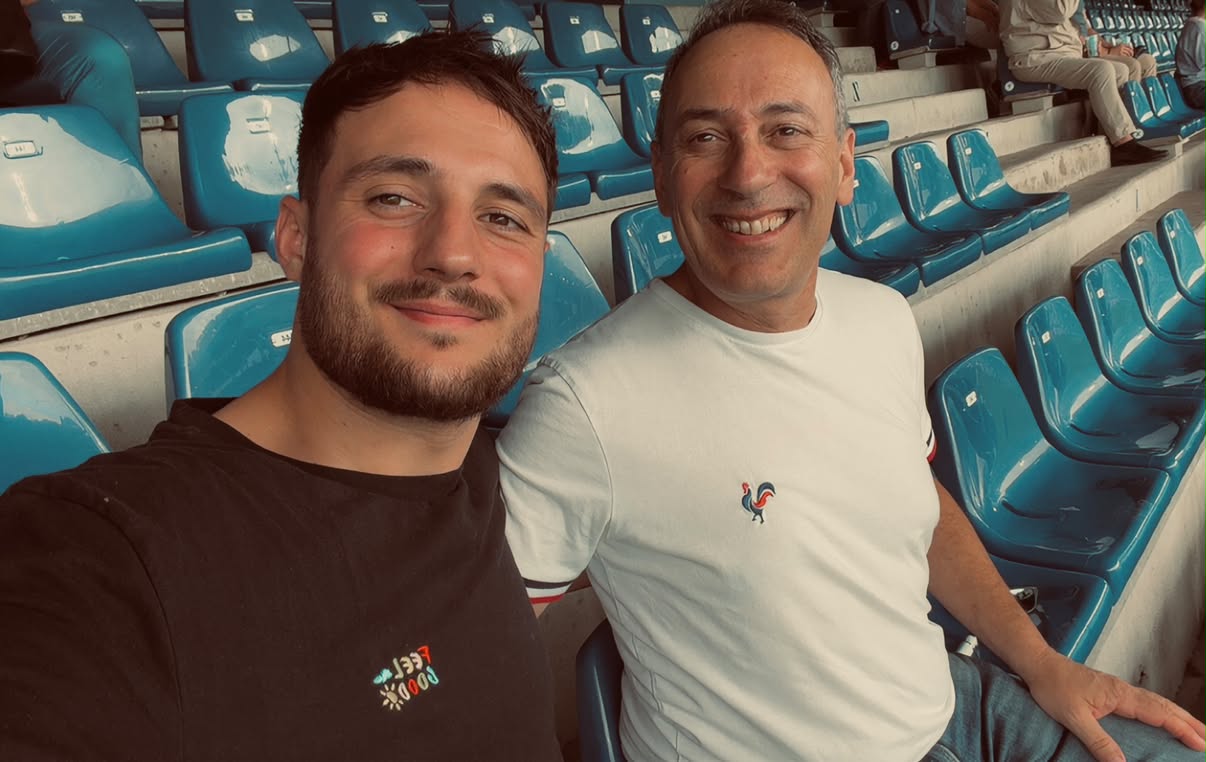
A fine project and a fine story. At 26, Raphaël Labarrière has just launched Focus Rugby, an app (available on the App Store and Google Play Store) built around a 100% AI coach, available 24/7. It follows players day to day, from physical preparation to nutrition, from sleep to mental work. Its bet? To give a real framework to those who don’t have one, especially amateurs, and to help more young players make the step up to the professional game.
Having played for Floirac and Saint-Médard-en-Jalles, in Gironde, the Dax native teamed up with his father to drive the venture. The launch was officially announced on 30 September, but the app had already been tested by Top 14 and Pro D2 players. Born out of his own struggles as a former rugby player, this pocket coach is only just getting started. He talks us through its origins and how it works, with passion and ambition. Interview.
IT’S RUGBY. – Can you introduce yourself and tell us about your career?
Raphaël Labarrière: I live in Bordeaux and I work as a sales rep for Cafés Richard. When I arrived, I signed to play rugby at Floirac. When you join a club, that’s great, but you also need to find somewhere to live and a job on the side. Thanks to the rugby network, and particularly Floirac’s manager, I managed to find something. I’d been at the club for two or three months and was looking for a sales role. I had an interview to join Cafés Merling, owned by the chairman of Stade Rochelais. I went through three tests and it all went really well. I spent two years there, it was great. Then Cafés Richard came looking for me. I’m currently there, everything’s going very well. On the side, I’ve just launched the company Focus Rugby.
Has the app officially launched?
Yes, it’s launched. The official launch took place on Wednesday 30 September, at 6pm. For two or three weeks, we ran a test phase before announcing it to the public. I gave free access to friends playing in Pro D2, Top 14, Nationale, Nationale 2 and Fédérale 1, to get feedback and spot any bugs.
A knee injury behind the project
Raphaël LabarrièreI understand that I have a physical injury, but that I’m creating a mental injury for myself.
How did the idea for Focus Rugby come about?
You have to go back to November 2022. I tore a cruciate ligament in my knee at Floirac and wasn’t kept on. I struggled to come back. For some players, everything’s fine after six months, for others it takes nine. I arrive injured at Saint-Médard-en-Jalles and I’m the number one in my position. I can feel that I’m expected to deliver. I felt pressure on my shoulders. I start a bit with the espoirs, after a year out injured, then I play for the first team. I play two or three matches. Even so, the knee isn’t right. It hurts, I’m suffering. That’s when I understand that I have a physical injury, but that I’m creating a mental injury for myself.
And professionally, is everything falling into place at the same time?
Yes. I joined Cafés Richard on 2 January 2024. I’d gone back to rugby in November, after my injury. Rugby was weighing on my mind. From January-February, I was under double pressure since I’d been recruited by a new club expecting a lot from me and a new company that’s a leader in its market. I told myself I had to be good at everything. On top of that, there’s also your relationship, the weight sessions… You’re pushing hard everywhere. I told myself I’d see the season through, but that I’d give up rugby. I wasn’t enjoying it any more. What was meant to be a passion became a burden. I was starting to go to training with a knot in my stomach. So I finished the season with the espoirs and gave up rugby.
What did you do after stopping?
Straight after, I took personal development coaching courses. I told myself that in this sport, we train the body a lot, but we never train the mind. I know that in rugby circles, it’s very much a taboo subject. We’re in the process of changing that way of thinking. Some clubs now have mental coaches. So I set myself up as a self-employed contractor. Alongside Cafés Richard, I created Focus, to work as a personal development coach for rugby players, both professional and amateur.
And then?
I wanted to launch the project. One day, a friend who works in communications filmed me with a drone. We made something decent about the project and in under 24 hours we had 15,000 views on Instagram. It exploded. I had demand coming from everywhere. Professional mates came to see me. I did a bit of coaching too. But alongside that, Cafés Richard was taking up a lot of my time. I told myself: “Raph, you’ve just joined a company with a big structure. Focus on your permanent contract. Don’t miss your chance. Be really good at that to begin with, and you’ll sort the rest out later.” So I put Focus on hold. I stopped dealing with it much and focused on my job.
Focus Rugby relaunched with his father
Richard Labarrière, père de RaphaëlI’ve got a proposal: let’s relaunch the project. We’ll think about what and how, but let’s team up and relaunch, because, honestly, it’s a crazy project, I believe in it enormously.
How did your father get involved in this project?
You should know that my father is also in sales. He sells flour and also business premises for bakers. But he’s also taken courses and done coaching for business owners. He’s been passionate about people since Covid. One day, in early 2026, in January, he asked me: “Raph, where are you at with the Focus project?” I replied: “Dad, I’ve put it on hold because my priority was Cafés Richard, but I’ve got a lot of demand.” He then said: “I’ve got a proposal: let’s relaunch the project. We’ll think about what and how, but let’s team up and relaunch, because, honestly, it’s a crazy project, I believe in it enormously, and I’m up for teaming up with you if you say yes.” I replied: “With great pleasure, Dad.” Starting a project with your father, I think that’s really lovely.
What shape did you want to give it?
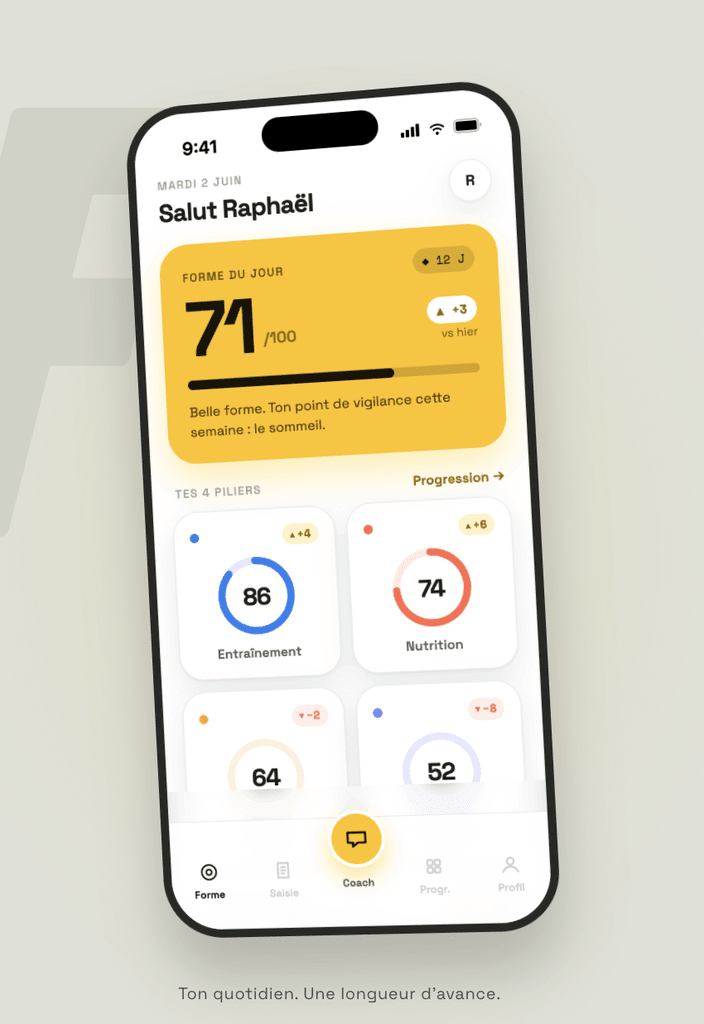
In rugby circles, you wonder what to do. We first thought about a YouTube channel. Then we thought we’d look for partners and put players and female players, pro and amateur, in touch with service providers, taking a certain commission rate. And then we thought some more, and we told ourselves: why not build an app with an AI coach built in, available 24/7, like a kind of pocket coach. Within the app, we give it every hat to wear. It’s a multi-role coach. It’s your physical and mental trainer. It’s there to watch over your nutrition. It builds you weekly plans based on your matches and training sessions. It builds you a plan based on your relationship situation, your lifestyle, your habits… The aim is to provide a genuine solution 24/7, where you can talk to it about anything, with no taboos.
A multi-role AI coach, available day and night
Was the technical side complicated to put together?
We worked on it every evening and even several times a day. We’d tell ourselves we were going to add this, then that, then we’d ask each other what we thought. We worked as a team. We first launched a prototype. We asked players and female players for feedback, with possible changes to make. Imagine you’re worried the night before your first professional match, or your first match with the first team at a club. At 2am, you can’t sleep, you get your phone out and you can talk to your coach. It has relaxation, stretching and visualisation routines for a kicker, for a hooker. There are sophrology exercises with cardiac relaxation, weight sessions with a full programme. It’s a multi-role, personal coach, just for you, that adapts to all your requests.
At the start, everything was new to us. We had to find a business lawyer, a web developer, an accountant, a community manager. Over time, we built a team. My father tells me he’d like to work with young people and diversity, because young people are in tune with the times, they want to progress and develop. It would be good for Focus Rugby, which is very young itself, to give them exposure, and at the same time, for each of them, with their own activity, to give us exposure too. Over time, we kept in touch with them, and it all went really well. We’re so well surrounded. We operate like a company, like a family.
Price, free trial and first steps in the app
How much does the app cost?
It’s a subscription at 24.99 euros a month. If you take the annual plan, you get two months free: we give away the two summer months. Instead of 299.88 euros, we take off two months and it comes to 249.90 euros. You should also know you get a seven-day trial. Why seven days? We were on holiday with my father in Marseille, for the Top 14 semi-finals. In the hotel room, my father told me: “Raph, I’ve been thinking about something.” I replied: “Oh right, what?” He said: “You know, in rugby, a try is five points, and a converted try is two more points, so seven points. What I’m suggesting is we give them a seven-day trial to convert their try.”
In practice, what happens when you open it on your phone?
When you enter the app, you press “start” and there are twelve steps to follow. You’re asked your level, your first name, your surname, your date of birth, which club you’re at, which division you play in, in what position, whether you’re more of a starter or a replacement, what your goals and your wishes are. An example: if you’re in Fédérale and you say you want to play in Top 14, the virtual coach will know you’re a very ambitious person and will do everything it can to push you to your limits every day. It also asks if you have any allergies so it can adapt your meal plan. At the start, it needs to gather as much information as possible.
Professional players among the first users
What feedback have you already had from players?
That the offer is complete. It provides a real framework, particularly for amateur or dual-activity players, those who are semi-pro or amateur and also work. Nowadays things can move very fast. A Nationale 2 player can move into the professional game. There was a time, particularly with Mourad Boudjellal at Toulon, when clubs took on a lot of foreign players. Today, I think there’s a real will to invest in youth and French talent. We need to support these players so the gap between the two worlds is as small as possible. At amateur level, there’s no framework. If nobody takes you under their wing, it’s very hard to make it.
So the early feedback is positive…
So far, we haven’t had any criticism or bad feedback. We’ve felt a lot of positivity. Yet you know the French mentality… When you start a project, a business, there’s a lot of jealousy. Here, we’ve felt a lot of enthusiasm, real support around us. People were genuinely pleased that we were launching this project. Perhaps they thought that, in the environment we live in, a solution is being created to help people feel better. Today, I’m proud to have launched this project. Especially with my father. I’m lucky to be on the same wavelength as him. We complement each other really well. On a personal level, I’d also say my weaknesses have become my strengths.
Is the app aimed at female players too?
We haven’t talked about it much but the aim is of course to promote women’s rugby, which is struggling to turn professional. You only have to look at what happened at the Nuit du rugby, when they displayed the wrong player… Our aim is to provide a framework for women too. I also got in touch with Marie Ibañez, who has just earned her first cap with the France team. We decided we’d give her access, that she’d give us feedback and talk about it to people around her.
Was choosing AI an obvious decision from the start?
We wanted it to be AI. At first, we thought we could do the coaching ourselves, take on players and female players, professional and amateur. But that takes a lot of time and you’re quickly limited. You can’t take on a hundred people and have fifteen appointments a day. Even personally, you’d wear yourself out. We’re precisely not robots.
The rugby network is helping you grow…
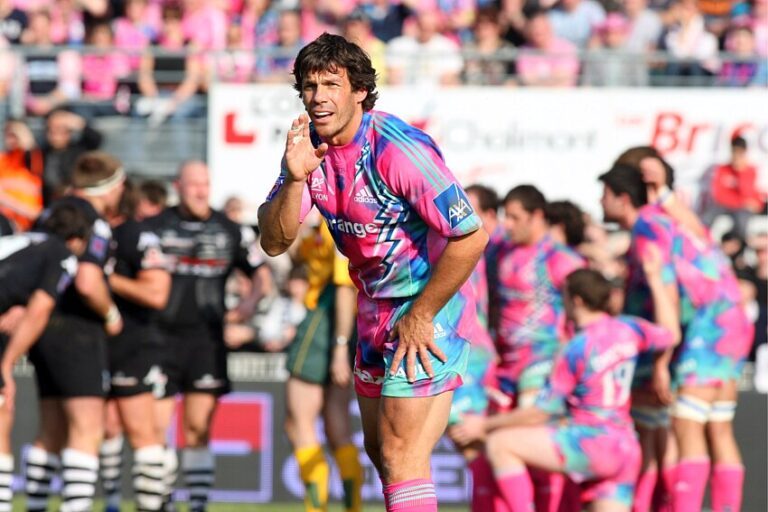
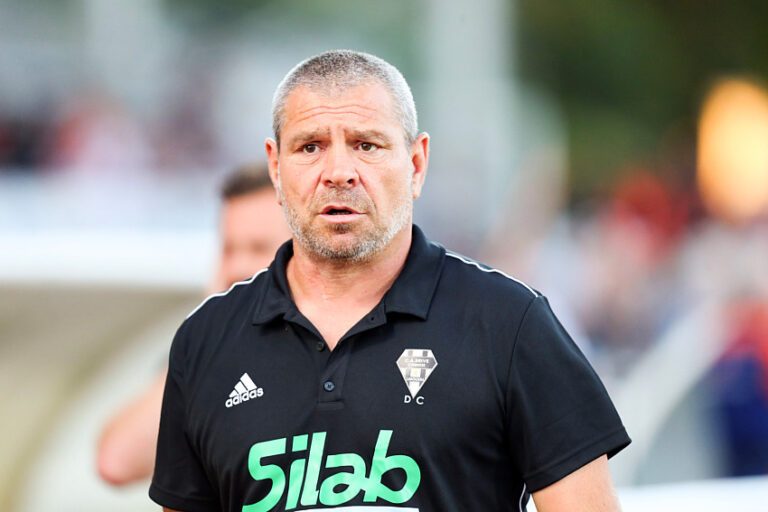
Exactly. I gave access to professional players, such as Matis Perchaud. He’s just signed a contract extension until 2030 at the UBB. He’s using it and giving me feedback. He’s also going to share his experience on his social media. There’s also Thomas Dolhagaray, who had a very tough year because of injuries but is really coming into his own at Biarritz. I gave access to Théo Duprat, from Dax, with whom I came up through all my rugby years. And of course to Hugo Zabalza, who plays at Montauban. He’s my best friend, I was best man at his wedding. I’m planning to contact Guillaume Cramont, with whom I also came up through the youth ranks at Dax. In short, rugby is a niche. It’s a very small world. Everyone knows everyone.
Comments