
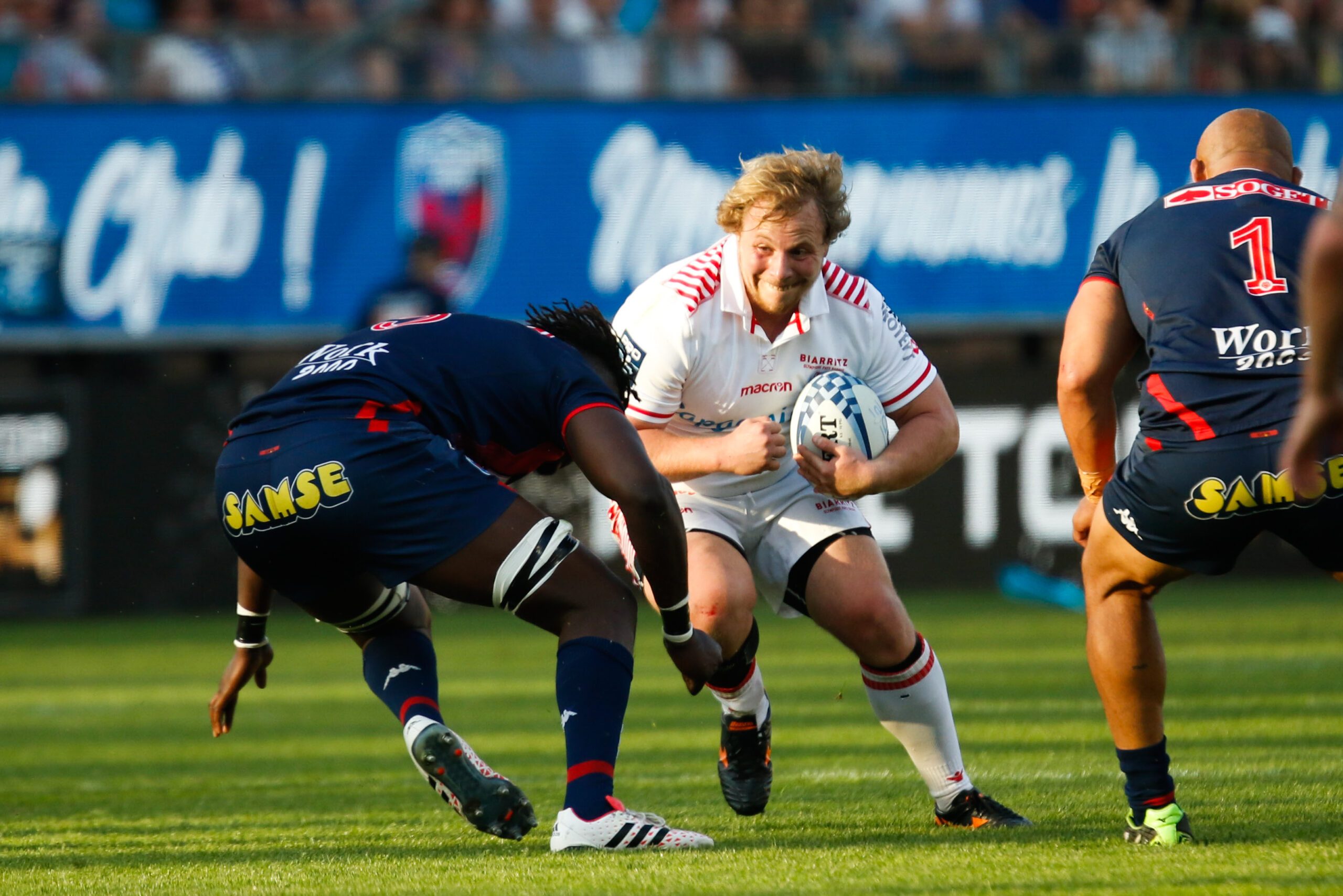
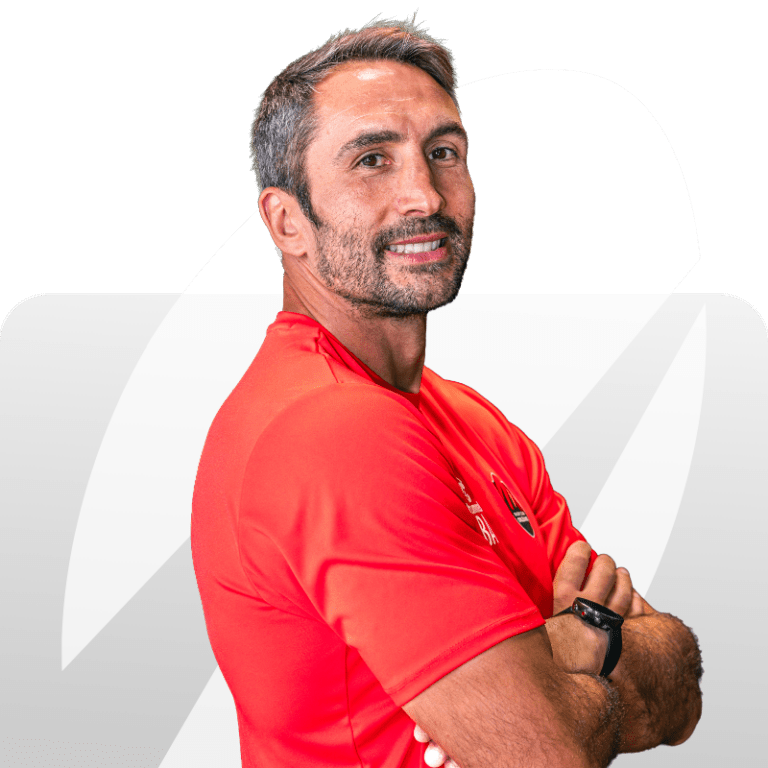
He is convinced of it: rugby can change a life. Ronan Chambord is a passionate and fascinating man. The player, who has had spells at UBB, Biarritz, Montpellier, Langon, Colomiers and Saint-Médard-en-Jalles, now plays for Bazas, in Fédérale 2. Alongside that, as an employee of the charity Drop de Béton, he runs weekly rugby sessions in five prisons in Nouvelle-Aquitaine.
From petty offenders to serious criminals, Chambord insists, even if it is not always that simple, that he “is not there to judge them or sentence them a second time”. For It’s Rugby, the 32-year-old hooker talks, with candour and humility, about an extraordinary daily routine in which an oval ball can quickly become a point of reference.
Rugby in prison, a lever for rehabilitation
IT’S RUGBY. – What made you take on rugby in the prison environment?
Ronan Chambord: My aim is to pass on what I’ve been able to experience. I do it for people who aren’t always in the best circumstances, or who aren’t necessarily very commendable themselves. Using rugby as a lever for values, for living together, to reconnect with very specific goals and find a path that’s a bit simpler, a bit more normal, that can work. I’ve been doing it for three years. We see quite a few people change for the better thanks to rugby.
Is it one strand of your work or your full-time job?
I’m employed by the charity Drop de Béton. It’s a sport for social inclusion charity that uses rugby as a tool for integration, mainly with vulnerable groups. That means, for example, people living in small neighbourhoods or small rural villages who don’t necessarily have much money, youngsters dropping out of school, jobseekers, isolated families, people who don’t go on holiday. We use rugby as an activity so that, on the back of it, we can organise trips, activities, events, take them to the stadium, for example to watch UBB. And within the charity I have one strand, which is prisons. I’m the one who runs it, in five prisons in Nouvelle-Aquitaine. It ranges from the remand prison, which is the first stage of custody when you get convicted, to the detention centre, where you go to serve your sentence once you’ve been tried. I also do rugby in the detention centres. So I see inmates who have been arrested but not yet convicted, and others who have been, with very long sentences, for offences or serious crimes. I go in every week and over the long term. There are people I’ve been working with for more than a year, for example.
Ronan ChambordIt’s inevitably a small drop in the whole ocean of things he has to do to reintegrate properly.
Do you manage to set aside who you have in front of you and coach them like anyone else?
These people have been tried. They have been sentenced. I’m not there to judge them or sentence them a second time. If I’m there, it’s also because these people will get out of prison one day. So it’s about preparing for reintegration, a kind of return to civil society. When I go in, I try, very humbly, to do my bit across the inmate’s whole rehabilitation process. Not necessarily on the professional side, by finding him a job, but through rugby, by trying to instil values in him that, later on, will allow him, when he gets out, to be more considerate, to behave better, to respect the codes and to carry himself better. Rugby is really rewarding for that. Very quickly, when you play and you have teammates, you work on getting used to contact, supporting someone, helping each other, communication, fitting into a group… It’s inevitably a small drop in the whole ocean of things he has to do to reintegrate properly. But I do manage to stay in touch with inmates who get out and who often ask me which rugby club they can go to and what they can do. I’ve worked with inmates who served more than ten years inside. When they get out, life has changed. AI has arrived, some crazy things have happened. They’ve spent ten years far away from all that, and for them it’s almost a new world. They have at least one point of reference: me, someone they saw for a year or two. I’m part of civil society, so when they get out, that gives them something to lean on when they go to see an employer, take their driving test, apply for paperwork, that kind of thing.
Did you have to train for this?
I trained on the job (smiles). All I had was a professional coaching card and a sports science degree. I turned up, I went into the prison, I ran my first sessions. At the start we really only offered rugby: bring a ball and run sessions like ordinary training. Then, the further we went, the more we began to work on personal and social skills through rugby, meaning identifying a skill in a rugby drill and building educational programmes. At that point I had to get trained, obviously, because it’s a different methodology. It’s more social work than sport.
In France there is a sport for social inclusion network led by “Impact Social par le Sport”. It’s a big organisation. I trained with them. And I also trained with the prisons themselves. I learned what a prison officer is, what the prison service management is, how a sports instructor works, what an inmate’s daily schedule looks like… It matters because, when you put content together, you sometimes have inmates locked in their cells twenty-two hours out of twenty-four and others who move around normally within the prison. When you have men or women locked up twenty-two hours out of twenty-four, you can well imagine how sedentary they are… You need to know that when you run your session, otherwise you offer things they aren’t capable of doing.
Managing the inmates and earning their respect
Is it hard to keep them in line?
Yes, of course. Most of the time I’m dealing with people who have committed offences or crimes, so who have broken the law. Most of them don’t come from rugby. So taking a knock, whether accidental or deliberate, can be very difficult in terms of accepting it and reacting to it. In the first sessions there’s often no contact. I work a bit like in team building: I put the emphasis on the group, on them getting to know each other, so that, as the sessions go on, they say to themselves: “In the end, he’s my friend, he’s my teammate.” The idea is to create a sense of belonging that limits violent behaviour and poor handling of emotions.
So I get inmates who are a bit tense, even borderline. But they’re also testing me. At first they push a lot: “Ah, so a rugby player is coming to run sessions for us. So, can you tackle? Go on, tackle me.” Except that, as it happens, I’ve played rugby, so they’ve picked the wrong guy (smiles). Very quickly, respect sets in. All the inmates call me “coach” and there’s a kind of natural authority, because I don’t impose anything. I don’t demand anything of them, just that they behave well and turn up regularly. They get into this mindset: “I’m here, I’m part of my team, I’m coached by this guy, and I’m trying to improve at rugby with my mates.” And they’re very happy.
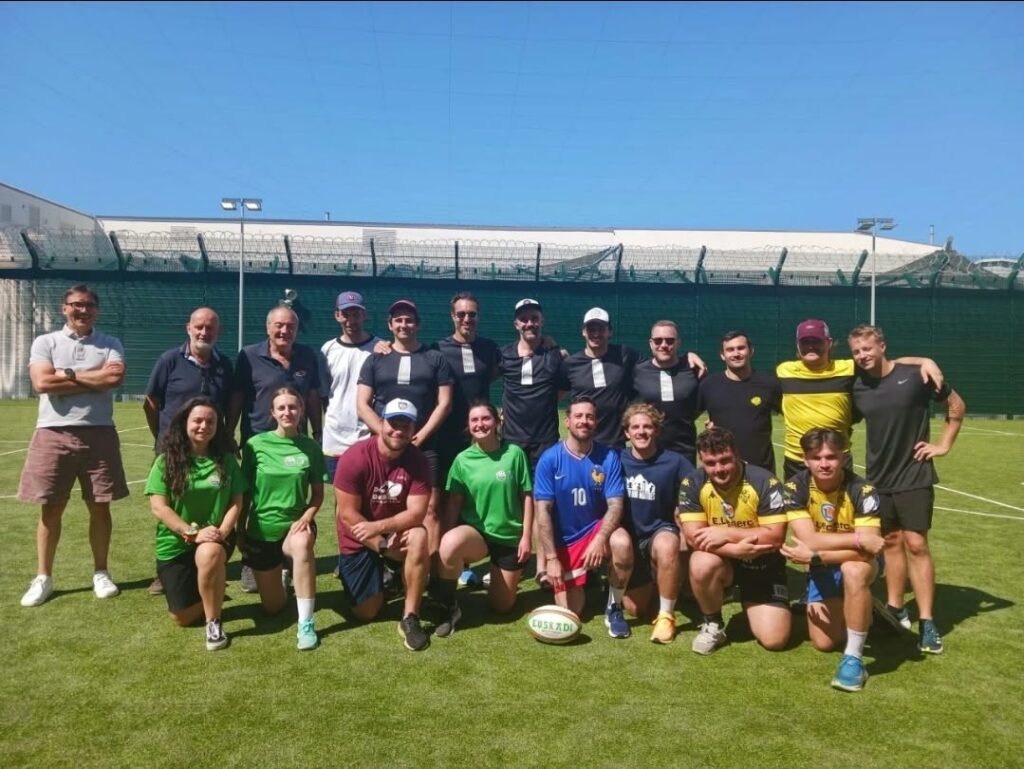
We also try, every three or four months, to organise tournaments and invite outside teams into the prisons to play against our inmates. I’m talking about ordinary rugby teams. We’ve invited the Lionnes de Bordeaux in particular, and a team of lawyers from the Bordeaux bar. They come in to play tournaments and take on our inmates. It shows the fruits of their work, their progress. When they come up against real rugby teams, they say to themselves: “Ah, that’s good, we do have a bit of a grip on rugby after all.” It gives visibility to all the work they do over the year.
Have you ever been surprised by an inmate, male or female, who was particularly gifted?
Absolutely. One woman in particular. It was at Bordeaux-Gradignan. At the time I was running a women’s programme separate from the men’s. With the women, I had six or seven people. I couldn’t do ten against ten or five against five, we really were at the basics of rugby. Then the prison allowed me to run a mixed programme, meaning bringing girls and boys together in the same training session. I came across this girl again on my mixed programmes, and I had her for almost two and a half years. When she played against the Lionnes de Bordeaux, she stood out, because she’s really good. She’s quick, she understands the game, she positions herself well, she isn’t afraid of contact. She’s out now and is looking to join a team in Barcelona. She has all the qualities to play at a good amateur level in women’s rugby. And she had never touched a rugby ball. It’s the same for the lads. Often they’re very good footballers, or guys who have done judo, combat sports, and who are reasonably good with their hands. They’re fairly comfortable on the programme. And I also have former professional players. Obviously, when they come on the programme, they make the difference compared with the others.
Those former professionals, do you allow them to tackle and play at 100%?
Yes, 100%. I trust them. Your responsibility isn’t just to be a rugby player: you’re a leader in the group, and you’re there to help the others improve. If you come flying in and break three ribs on a guy who has never played rugby, there’s no point in you being there. On the other hand, if you show him that playing rugby at a high level means having that intensity, that quality as a player, then I’m interested. So they’re in control, with limits not to cross depending on who they have in front of them, and at the same time they adapt. I get them involved a lot, in drills, in self-refereeing, in feedback. I try to surround myself with a group of leaders so that the message doesn’t come only from me and is shared. It’s like in a rugby team. A coach has his captains, who pass on his strategies and the identity he wants to give his team. I try to recreate that in prison. And it works, even better than in an ordinary rugby team, because emotions are magnified tenfold. Everything is, because you’re in a constrained, restricted environment, where your session is the activity of the week.
Supporting inmates, during and after their sentence
You follow them during the sessions, but what about afterwards? Is there any follow-up on release?
It depends. It’s not my role and I’m not paid to support them afterwards. But there are human stories behind it. I see these people for two years, I know them inside out, I know their family situation too. So when they get out, they give me a call or send me a message: “Thanks for everything that happened. Can you give me a hand, for example to find a club or a job?”. I have to answer. What I’d like, in time, is to free up time to support them all the way.
How does it work in practice? Do you write a report after the sessions?
I’m always accompanied by the prison. Either a prison officer or a sports instructor is present at the sessions. They use what they see during the rugby programme to act afterwards inside the prison. They can say to an inmate: “You behaved well” or “You’re behaving badly, why? What’s going on?” Or: “You behaved well, we’ll go and see the sentence enforcement judge to find out whether you can have a temporary release, or whether something can be done.” It’s an important lever for the inmates.
Ronan ChambordI try to win them over, to bring them along with me. But that comes down to the human side, the feel, the first impression. Sometimes it works. Sometimes it doesn’t.
In your first sessions, was there no fear, no apprehension?
I had no physical apprehension. I didn’t feel in physical danger. On the other hand, there’s inevitably the fear that the message won’t get through, that my way of doing things won’t go down well, that I’ll be too harsh or not harsh enough, that they won’t like my content. In my first sessions, I try to win them over, to bring them along with me. But that comes down to the human side, the feel, the first impression. Sometimes it works. Sometimes it doesn’t. Now I have a bit of experience. When you work in five prisons, you really see the whole prison population. It ranges from the petty offender who got six months in prison and is there because he’s looking for a way forward, to the major criminal who’s there for a long time and who has seen plenty of outside coaches come and go.
Is it on a voluntary basis?
Yes, they sign up on lists. After that it depends on their profile, because some inmates can’t be with others for reasons of behaviour or internal matters. The prison administration approves the list, or tells me to take a particular person off.
What a rugby session in prison looks like
Can you give us an example of a session?
For the first session, I start by introducing myself, talking about my career, and seeing whether I have any former rugby players among the inmates. I always begin with a rugby warm-up, a cross-shaped drill like you see in junior rugby, or with a standard warm-up. After that I only use the ball. The first drill I always do is noughts and crosses. I set up two teams, I mark out a grid, they put down cones to make lines of noughts and crosses and pass the ball to each other in a relay. What’s good is that it creates a lot of frustration. If your teammate puts his cone in the wrong place, in your opinion, or if he’s stressed, people’s true nature comes straight back out. You get guys insulting the others, guys helping them. Through this drill I can already see who manages to control himself and who doesn’t, who is fairly supportive or puts negative pressure on the others, who is more of a leader or more of a follower.
Second drill: a captain ball game, a kind of ultimate with two captains at either end. Each time, I change the rules. To begin with, only my two captains are allowed to speak, the others take orders. Again, I see who is capable of respecting the rule and who isn’t, and that matters, because there are a lot of rules in rugby. I have people who already can’t respect that one and who do nothing but talk. So I come back at them and I’m very strict about respecting the rule. Then, with the captains, I watch how they position themselves. Do I have guys capable of strategy, of tactics, or guys who are scared and can’t manage to speak, fairly introverted?
I finish with a game of touch rugby. That’s where we get into rugby. They imagine, when they do the rugby programme, that they’ll go straight to tackling. So when I tell them it’s touch, I get guys who can’t control themselves: they touch, they’re frustrated, and they ask: “When do we get to tackle each other?” Again, I see who I have in front of me, in terms of handling emotions, and what I’ll be able to do afterwards. In the second session, however, it’s tackling. For two hours we learn the tackle: how you fall, how you position yourself, how you put your shoulder in, getting used to contact. Then we do it at higher or lower speed, with bigger or smaller numbers: one on one, two on two, three on three. Then we get to a match situation.
In your work, if you had to name one thing to respect and one thing not to do, what would they be?
One thing not to do? Setting yourself above the fray. You need a lot of humility, because walking into a prison is never trivial. It’s always quite daunting and there are a lot of things you don’t control. Things that have happened that you don’t know about, criminal records you don’t have access to. If you arrive thinking you can control everything and do everything, you generally fall off your pedestal. So my advice is to be as close to them as possible and put a lot of energy into it. That means learning first names quickly, being in among the lads, showing that you’re truly committed to the activity, sometimes joining in with them. Then the buy-in becomes mutual and the lads, like the girls, follow you.
Between Bazas, Drop de Béton and family life
Isn’t it hard to combine this work with rugby at Bazas, where you still play?
I still play, yes. It’s pretty tough. First because that’s not all I do. Prison work is only one part of my job. I’m also the lead for the employment integration schemes and I handle support for clubs as well. I help clubs develop sport for social inclusion projects and go after funding. Sometimes prison work can be one of those projects. It’s always a bit frustrating, because once you’ve made a connection with the women or the men, they need that bond of trust and to see you regularly. When you go on holiday, they don’t get one. If you don’t see them for two weeks, something breaks. It’s hard to reconcile that with family life, because once a week they really need to see you. It’s also hard to get someone to stand in for you, because it’s about human relationships. The person who replaces you starts from scratch. Sometimes it goes badly. It’s such a demanding job that you would almost have to do it full time. But today, the funding for rugby coaches in prisons doesn’t allow that. As for my life as a rugby player alongside it, that was also my choice. I wanted to move closer to home and play at a slightly lower level so I could do something else. So I do still manage to combine the two. It’s a balance I’ve managed to find, even if it’s difficult.
Ronan ChambordI’m there to offer them something that brings them into a framework. If they don’t step into it, that’s their choice. I won’t go any further with them.
Do some inmates talk to you about other things, thanks to the bond that has formed?
It’s like that all the time! They don’t talk to me about rugby. They talk to me about their daughter, their child, their wife. They tell me about the week’s difficulties, because there’s been a fight or something has happened. Some break down, because they’re fed up with being there. Others have a trial coming up and are stressed. Some even ask me which prison would be best for them, advice like that. I have these conversations with them very often. My starting point is that rugby, for me, is only a tool, the excuse to be with them. My aim is to make them better as people. If I stuck to rugby, I couldn’t develop all the personal and social skills they’re going to acquire. There are lads I’ve been working with for more than a year and I know a lot about them. Sometimes you can identify with them a bit and you think: “They’re in here, damn, that sucks.” They’re not necessarily hateful people, because you get to know them. And with others, you think: “It’s just not possible.” Yet you have to do your job, you have to offer them rugby too. Going into a prison to work is never simple. We remain human beings above all.
I have three children myself. When you walk into a prison where 80% of the crimes are sex offences, with a huge number of paedophiles, imagine the state of mind you’re in. It isn’t easy. But I’ll say it again: they have been tried and sentenced. I’m there to offer them something that brings them into a framework. If they don’t step into it, that’s their choice. I won’t go any further with them. If, on the other hand, they want to enter into this kind of rebirth, of rehabilitation, I can support them so that they become better people, through rugby. In any case, that’s my aim, and that’s why I go.


Comments