
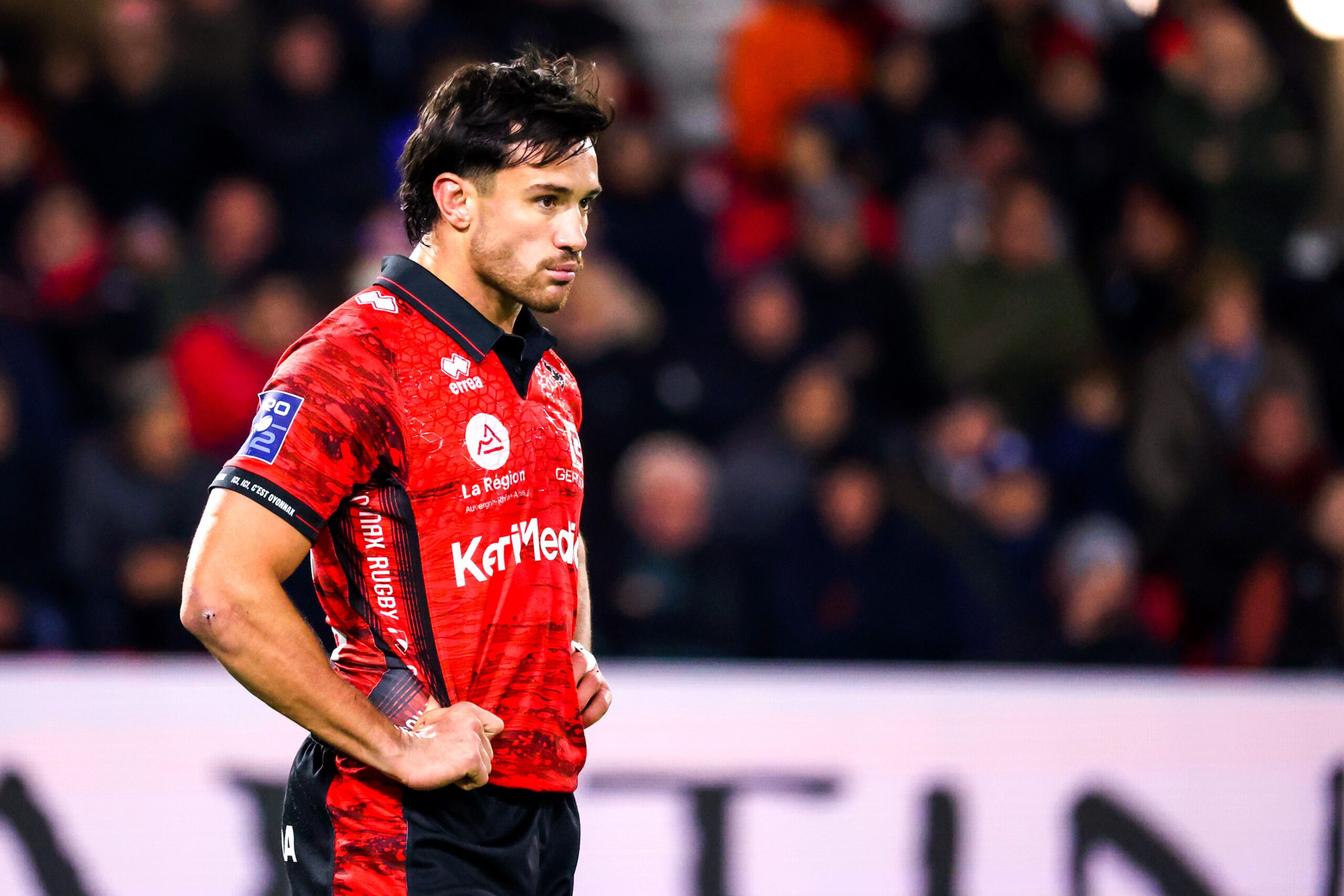
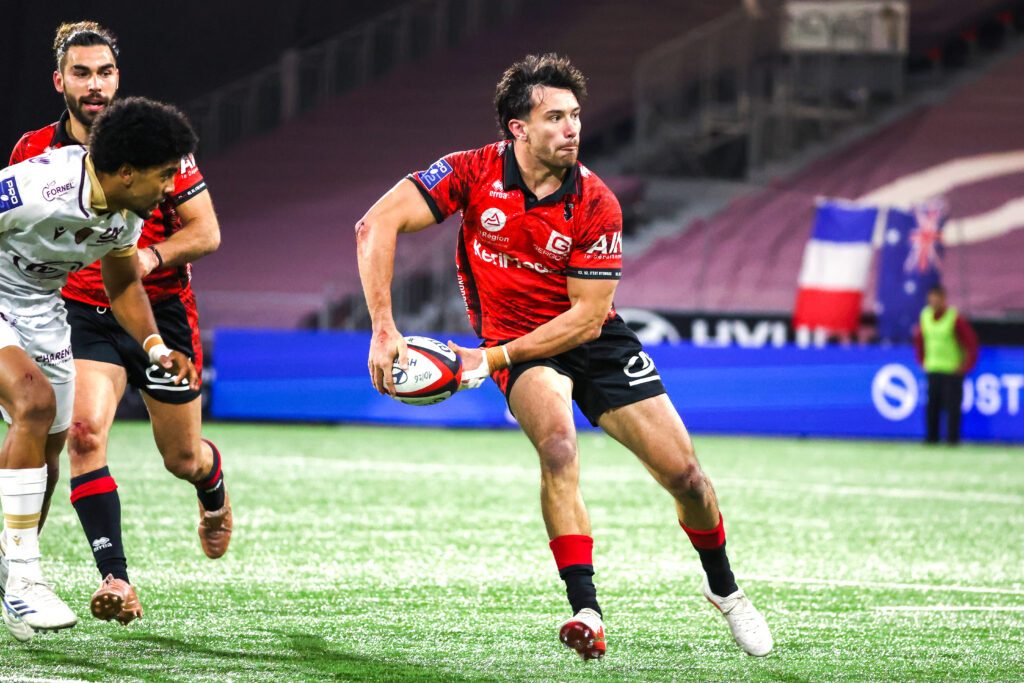
Only a few years ago, François Joly was selling burgers and helping you load furniture bought at Conforama into your car. As recently as this April, he was advising you in the fitness aisle at Décathlon in Niort. The rugby player now lives off his passion, at Oyonnax, an ambitious club in Pro D2. A unique path, for a man who has lived through the liquidation of two clubs: Rochefort and Niort.
Called up as a medical joker by Johann Authier last season, Joly is now firmly established in the Oyonnax squad and keeps earning starts. In an exclusive interview for It’s Rugby, the 25-year-old opened up at length, looking back on his journey from Puilboreau to Rochefort and then to Niort, his decision to stop playing rugby at 13, how important his partner has been in his life and career, and his “calm” personality. Among other things…
IT’S RUGBY. – François, how are you feeling about the start of the season, both physically and mentally?
François Joly: I’m very happy with how the season has gone. As a team, we couldn’t have hoped for a better start, even though there was a slip-up at Montauban (the interview was conducted before the defeat to Provence Rugby, editor’s note). I’m really pleased to be part of this group, and above all with the trust I’ve been given. I’m also really happy with the amount of playing time I’ve had in such a well-stocked squad. I wouldn’t have thought I’d be this involved in the rotation at this stage of the season. Physically, it had been a long time since I’d played this many matches in a row. I have to adapt, adjust my routine, but I’m certainly not complaining.
Nothing but positives, then. Do you feel like you’re in the best form of your career?
I feel really good. I’m also rediscovering the 13 position. I played there for a long time, but that was as an amateur, in Fédérale 3 and Fédérale 2. These are really not the same matches (smiles). But I feel very comfortable there. I’m working on both the 12 and the 13 positions. I’m also benefiting from a few injuries we’ve had. So the best form of my career, I don’t know, but I feel very fit. I just hope there will be moments where I feel even better.
You’ve come a long way and you’re now playing in Pro D2. How do you approach these matches? Is there still pressure? Are you intimidated by the players and teams you come up against?
There’s always a bit of that. I was actually talking about it in the changing room with the lads: you quickly get used to playing in big stadiums. I feel less pressure than I did at the start. I’ll admit that, during my first matches, I kept telling myself that I was really playing as a professional and that everything was being broadcast (laughs). I had my own stress to manage, a lot of stress before matches. Little by little, you get used to it. Honestly, it’s a pleasure. I really realise how lucky I am to play with and against top-level players, especially in great stadiums full of atmosphere. Given the path I’ve taken, I really do appreciate that stroke of luck.
“I’ve done fifty jobs”
Speaking of your journey, do you see yourself as privileged?
Yes, completely. Rugby has always been a passion. A pleasure. I never even dared dream that one day it would become my job. For the record, I worked quite a lot on the side. When I was a student, I took on one student job after another on top of my studies. It was hard. I remember a period when I worked at McDonald’s, another when I delivered burgers, and I also worked at Conforama (smiles). I’ve done fifty jobs. So telling myself that today I live off my passion, that I do this every day, of course I feel privileged.
François JolyPromotion with Niort, those are also incredible memories. I think it taught me a lot. And unfortunately, six months later, the same thing happened again
From Puilboreau to Niort, two clubs liquidated
Do you feel like you’ve flown under the radar? You’ve also been through the collapse of two clubs…
Flying under the radar, yes, but that’s partly down to me. I never went through a training academy because, at 13, I chose to stop playing rugby. I remember it was just before moving up to the full-sized pitch (smiles). I wanted to do something else. I was feeling a bit less connected to the mindset of the group, of rugby. I did athletics in the meantime. Except that, after two or three years, I really missed rugby. I started again as a junior, in Fédérale 3, at Puilboreau, and honestly, it was great. I have really good memories of it. It was with all my mates who had stopped at Stade Rochelais. We’d got back together saying we wanted to play together again. Those were wonderful years. That path was also something I chose. And when you start again at 16 in Fédérale 3, of course training academies are no longer interested in you. That’s completely normal. After that, I made my own way, step by step. I moved up to senior level in Fédérale 3. At first I was in the B team, which is normal when you’re young. Then I started playing well, playing for the first team, and that’s when Rochefort called me. I was really happy. It was a challenge to move from Fédérale 3 to Fédérale 2. I played straight away. I fitted in really well with the group and the style of play. I felt good. And unfortunately, three years later, there was that liquidation. The club only dropped one division, but it’s still heartbreaking. I took it a bit less badly than the others, though, in the sense that I already held a dual licence with Niort. I held on to that and I was really happy. It was a big step for me to move from Fédérale 2 to Nationale 2. Of course, getting promoted with Niort to Nationale is also an incredible memory. I think it taught me a lot. And unfortunately, six months later, the same thing happened again.
Did you feel like a black cat?
At one point, I told myself I might be cursed (smiles). I was really fed up. On top of that, at Niort, we were having a great season in Nationale. We were troubling the big clubs, holding our own. It was disappointing. And in the middle of my misfortune, I had still signed for Bourgoin right when the club went bankrupt. Niort had only given me a one-year contract, since I was a bit of a gamble in their eyes. I had Bourgoin, whereas for those still under contract, it was complicated. Since our season had been cut short, I was free. There was a gap between the end of the season at Niort and the start of the following one, and that’s when Johann Authier called me up as a medical joker at Oyonnax. I told myself it was fate stepping in. It’s also about who you meet along the way. It was Julien Audy, who was coaching me at Rochefort at the time, who introduced me to Johann. Johann had trusted me once already at Niort, and then he called me up as a medical joker in Pro D2. Despite the hardship, I was always lucky enough to find a way through. That wasn’t the case for everyone at the clubs I went through.
There’s been bad luck, privileges, good fortune. But I’ve also heard you’re a hard worker…
Yes, it’s true that I work hard. Maybe even more so because I’ve come from a long way back. When I was an amateur, I always had this thing of telling myself I was trying to work on my rugby more than others, because maybe one day a club would take an interest in me. When I was playing in Fédérale, I’d go and do extra sessions on my own, after a day’s work. I’ve always had that instinct to try to work, to improve, and I really try to keep that. Even though everything is going well today and I’m getting playing time, there’s still so much I can improve on… I’ve only recently discovered top-level rugby. I think everyone can get better, whatever their level.
François JolyI remember not sleeping all night before my first training session
“He’d sent me a 200-page PDF”
How did you manage to get up to Pro D2 standard straight away?
That’s a good question (laughs). In the same spirit, I tried to adapt. I’ll admit it was sometimes hard. I had moments of doubt when I arrived as a joker at Oyonnax. I remember Johann called me and forty-eight hours later I had to be at Oyonnax with my boots on to train. He’d shown me the game plan over video call. I was in the car and I told myself I was completely lost, that I’d never manage it. He’d sent me a 200-page PDF. That sent the stress levels up (laughs). I remember not sleeping all night before my first training session. After that, you just have to try to adapt to the level. The luck I’ve had, every time, is landing in groups with great players and above all great guys. I get a lot of help from the collective. I try to blend into the group, to fit into the way we play and follow the general flow. I think that if you manage that, you can get through it, even without much experience. You just have to listen. When you’ve got guys next to you guiding you, that helps you reach the level too.
You talk about those who’ve supported you. Wasn’t there also a kind of mutual support with Paul Marsan, who went through something similar to you? He left Niort for Valence at the same time…
Yes, definitely. Paulo and I are very close. We stay in touch, of course, we often message each other. It was a bit the same story for him and for me. Except that for him, it happened earlier. He had a huge season with Niort. I remember Valence didn’t even wait for the end of the season. It was even before Niort went bankrupt. Paulo thoroughly deserved it. We sometimes say it’s a strange twist of fate. I think neither of us was really destined to end up playing at this level. We talk about it often. I’m really pleased with how things have turned out for Paulo, and I think he’s pleased for me too.
From Bourgoin to Oyonnax, a contract signed late
What happened at the end of last season? You signed for Bourgoin again and the Oyonnax adventure seemed to be over?
I’m really grateful to them. When I was going through a rough patch, they were the ones who reached out and offered me a contract. Except that, in fact, I’d only signed a pre-contract. I had the option to be released from it under certain conditions. When Oyonnax offered me a deal, it was an opportunity I couldn’t turn down. I tried to explain the situation to Bourgoin. I felt a bit sorry having to tell them that, because they’d always been straight with me. But they understood. Stéphane Glas has experienced the top level himself, he understood how important this opportunity was, so they didn’t hold it against me. Oyonnax offered me the contract the day after the semi-final against Vannes. It really happened at the last minute. I was over the moon, but it didn’t leave me much time to get back on my feet, and to find somewhere to live, in particular. But it was nothing but happiness. When they offered me that contract, I was on cloud nine.
His partner, “a shoulder I can lean on”
A good friend of yours sent me a question to ask you: “Where do you find all this energy?”
(laughs) I’m probably asking myself the same thing, that’s why I’m laughing. (He thinks) I think it’s part of who I am. Day to day, I’m quite a calm person. I can let that energy out when I get the chance, when I put both feet on a pitch. That’s where I can let go and release what’s inside me. I think that’s where it comes from. Rugby really allows me to free myself. I’m not the same outside of it. I’m not the loudest voice you’ll hear in a changing room. I’m always there to crack a joke or two, but I’m not an exuberant person.
François JolyWhat helps me a lot, and what has helped me a lot for years, is my girlfriend, who I’ve been with for a very long time. She’s known me through every stage of my journey. She’s always pushed me, always tried to pull me upwards
And outside of rugby, are there other passions, things that let you switch off?
Of course, there are little activities here and there, with teammates and friends. But what helps me a lot, and what has helped me a lot for years, is my girlfriend, who I’ve been with for a very long time. She’s known me through every stage of my journey. She’s always pushed me, always tried to pull me upwards. She’s never told me I should just settle for what I had. Since I met her, she’s given me so much, especially in terms of self-confidence. I’m really lucky to have her. She’s a shoulder I can lean on. This journey is also thanks to her. I remember the time when I was in Fédérale 3, at Puilboreau, wondering whether I should move up to Fédérale 2. I wanted to stay with my mates, the challenge scared me a bit. It was she who pushed me to go to Rochefort. Honestly, I owe her a lot. She really helps me keep that balance. She also reminds me where I come from and everything I’ve done. When I get home, she helps me keep my feet on the ground.
And apparently, she’s also the one who dresses you…
(laughs) I know who told you that. She’s quite fashionable, so she gives me a few style tips. It’s never done me any harm (laughs).
Are you still able to be ambitious, though?
I’m living this to the full. We talked about privilege: I try to make the most of every minute I get on the pitch. But yes, I think I’m also ambitious by nature. That’s why, even when I was an amateur, I tried to work hard to go and play at a higher level. And above all, given the journey I’ve had, I tell myself anything is possible and you never know what might happen. I’m not the kind of person who settles for what I have. It fits into that drive to always keep working to improve.
“I experienced real amateur rugby”
To finish: as you keep discovering this professional world, are there things you do naturally that you perhaps did as an amateur? Or do you still feel a bit of a gap with the established lads, who’ve known the very top level?
I do still notice that gap. I’m amazed by the smallest things (laughs). When we arrive at a great stadium with a few spectators and the lads think the stadiums are empty, I struggle a bit to understand. But that’s normal, we don’t have the same point of view on that. I experienced real amateur rugby, where the lads smoked cigarettes in the changing room at the end of the match, with the mass brawls in Fédérale 2. I think I’ve got a slightly old-school streak in certain things. Grabbing lads in the rucks, I know that’s happened to me two or three times in matches. The lads would look at me wide-eyed thinking: “Who is this madman?”. But we’re so well looked after that it becomes easy. It’s never easy to prepare for a match, but we’re in a different kind of comfort to what amateurs have. There are a lot of advantages I didn’t know about: energy drinks, hydration tablets to avoid cramps… These are great things, which help performance, and I used to do without them. That’s the difference. For me, it’s nothing but a bonus. I really can’t complain.
Also read: François Joly as told by Johann Authier and two former teammates.
Comments