
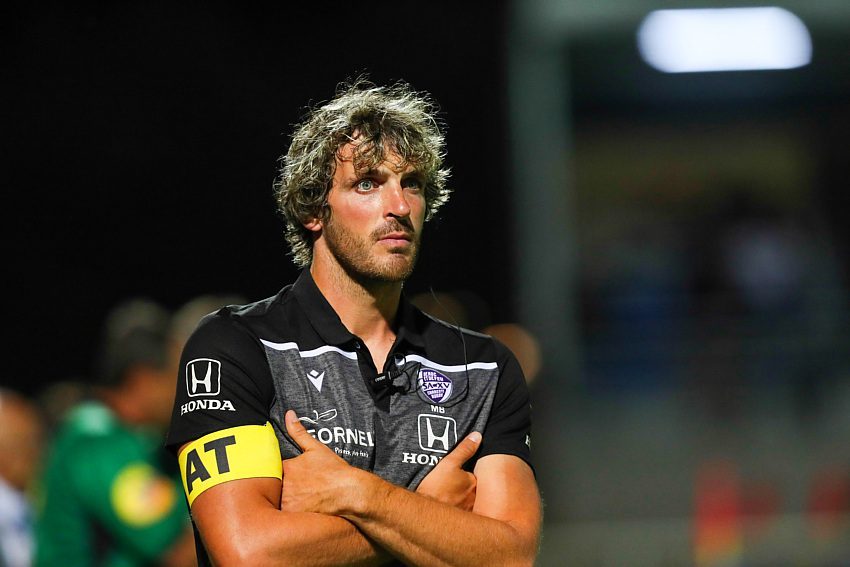
Mirco Bergamasco: « The mind is the fourth pillar of performance »
It was a LinkedIn CV that prompted a phone call to Mirco Bergamasco, 43, French champion with Stade Français (2004, 2007), 89 caps with Italy, turned coach (Aubenas, Angoulême, Nantes, Limoges) and then lorry driver. But he is coming back to the oval-ball game, with mental preparation on his mind.
Mirco, you’re back?
I was always here! I never went away. In fact, last year I finished up at Limoges. I have been a coach for seven years, it is my professional world, I need that, I need a structure, I need something concrete, and so this year I didn’t find the project I was after. So I developed everything to do with mental preparation, which I had started with a university diploma a few years ago in Clermont. Mental preparation. I wanted extra « skills » to be a better coach, to understand better, to communicate better, to have more tools to be able to manage, to run my team. And so this year, as I didn’t find anything, I threw myself into it even more, because I want to keep developing the mental preparation side, which is part of performance today.
You had a tremendous playing career, both at club level and with the Squadra Azzurra, and a fine coaching career at Angoulême and Limoges. Today, what is Mirco Bergamasco looking for?
I am looking for opportunities, for interviews just to talk, to chat, to show what I can do, but at the top level, Top 14, Pro D2, Nationale. I feel that this world is my world! I lived it as a player, I lived it for two years in Pro D2 as a coach and that environment suits me. I know I can give everything, I can give a lot, because I am a grafter, because I do my research, I have my ideas and I want to combine them with the demands of today’s rugby, with today’s players, who are not the ones I knew when I was playing. You always have to update yourself to perform and that is brilliant. I have had contacts with Fédérale teams who called me as a potential director of rugby. But today I want to live on the pitch, not the administrative side, I want direct contact with the athletes. I need a challenge, but rugby today is also mental preparation.
We imagine that what you do involves more than just a professional first team?
You can talk about it running across the club, because there is indeed the first-team squad, 35 to 48 players, but also the whole pyramid of a club from the U18s, the espoirs and so on… All of that is what interests you: the idea of carrying the project not only in the “first team”, but also developing it among the young players. I want to be part of a professional project with youngsters of 17 or 18 and with the seniors, a concrete project built around a first team. It is fascinating. I have the DU, the DE, the DES, which means I have been through the French coaching qualifications from A to Z.
Today, does performance rest on three or four pillars?
Four pillars: technique, tactics, the physical side and the mind. Today we are only starting to train the mind. It is still a bit taboo inside rugby. But individual sports, Olympic sports, devote a lot of space to it. And it is crazy to see that today there are still coaches who don’t believe in it. People need to understand it and clubs need to understand it too. Me, Mirco, mental performance coach, I am not going to talk technique with the player, or tactics, or physical work. No, the mind: making him independent in what he has to do. As soon as he is independent, he will no longer need me.
To finish, were you really a lorry driver?
Let’s say that the two years I spent at Limoges weren’t exactly a barrel of laughs… I was bored out of my mind, as they say, I needed something different. My passion is lorries, ever since I was small. And I had this opportunity to do some lorry delivery work for a friend, Grégory. I passed my HGV licence and for five months I did deliveries! I enjoyed myself like a kid, and yet it isn’t easy. When you drive a lorry, it is the same as on a rugby pitch, you have to look further ahead to work out whether there are obstacles, whether there are dangers, and so to try to anticipate what is going to happen.
Comments