
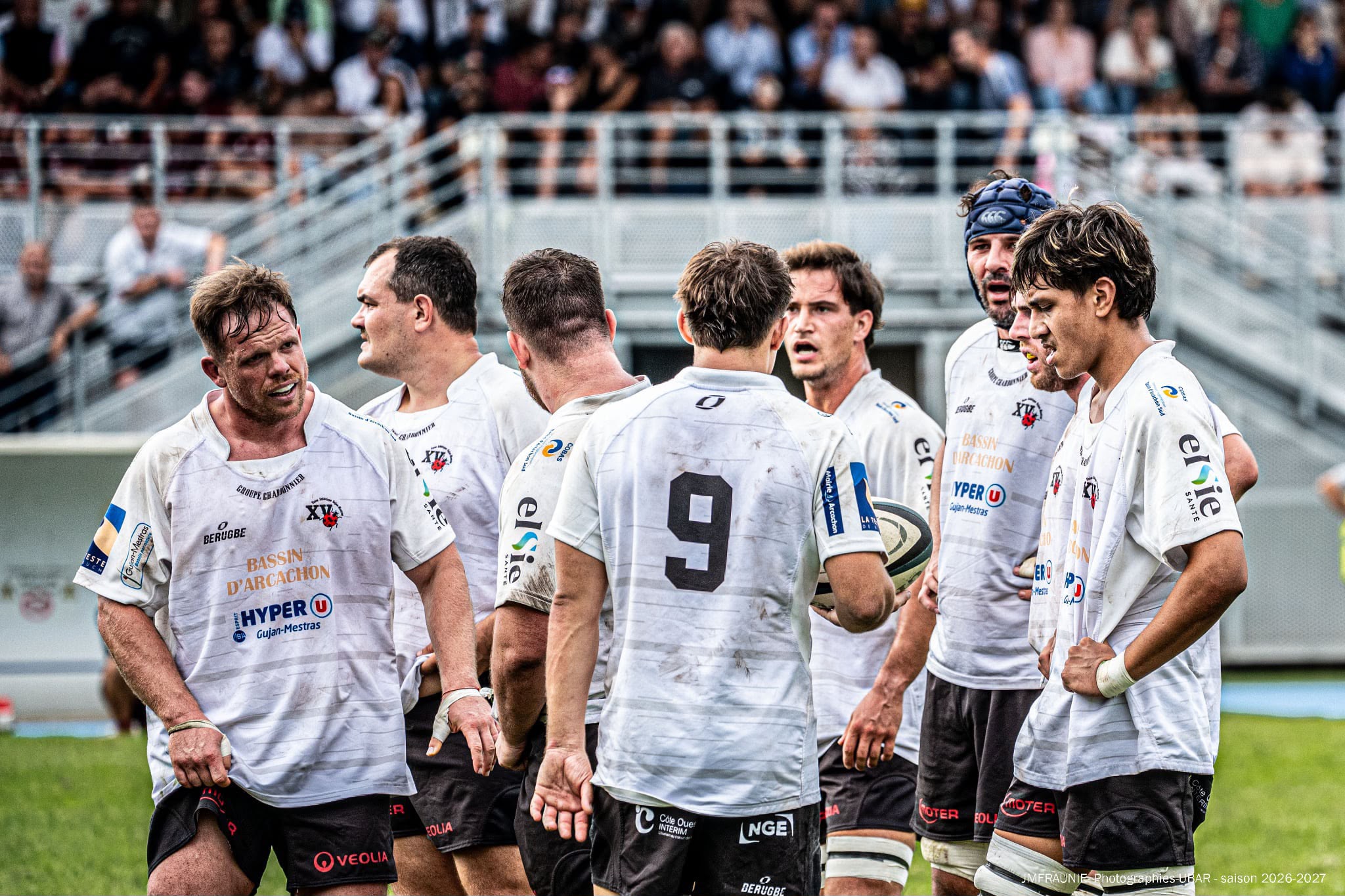
At Gujan-Mestras, the union with La Teste was not obvious, but it became necessary. On the pitch, things clicked straight away. Five wins in six Fédérale 1 rounds, and a defensive bonus point snatched in the last minute at Soustons. At 36, Thomas Bordes is the captain of this new team. For It’s Rugby, the hooker, who has played for Mont-de-Marsan, Lyon, Oyonnax, Massy, Suresnes and Bassin d’Arcachon among others, talks about the union between the two clubs, the turbulent summer, building the club, the results on the pitch, and the situation at his boyhood club Stade Montois, which “saddens” him.
Gujan and La Teste, a union that became necessary
IT’S RUGBY. – What’s your view of this union between Gujan and La Teste?
Thomas Bordes: It’s an important step forward for the area. Together, we’re often stronger. But that doesn’t take away from the respect owed to the history of the men who wrote it before us, at both clubs. It’s clearly not easy to bring two clubs together, especially when you know all the derby stories and rivalries that existed. But today, I think it was important for the basin to come together.
The summer was still a turbulent one, wasn’t it?
Yes, it was. It took an enormous amount of work from the officials who set it up. Obviously, if everyone doesn’t pull in the same direction, it can’t work. There’s still a huge amount of work to do. It’s a project under construction, and it takes time. It’s also important for the young players, who were part of a joint team. Within the club’s crossover structure, they had to choose between the two at the end of their development. Now there’s continuity. I think that’s really good. For now, we’re getting good results. We’re five wins from six. The defeat at Soustons was decided in the last minute, but we still picked up a defensive bonus point.
On the pitch, it looks like things clicked straight away…
Today, everyone involved in the project wants it to succeed. From that point on, we all have the same goal. On both sides, whether at La Teste or Gujan, we’ve had up-and-down seasons. Now we’ve found competitiveness and competition for places again. Everyone is fully committed, and I think that’s contributing to the good results at the start of this season.
Thomas BordesOur only goal is to have a huge season and manage to qualify.
Wasn’t there some frustration that the club is called Gujan-Mestras, and not Gujan-Mestras–La Teste, as a real union would be?
Since La Teste’s club hadn’t been liquidated, you couldn’t create a new entity. That said, everyone involved in the project sees it as a union, even if it isn’t called “Union du bassin d’Arcachon rugby” but Gujan. We’re fully committed. We play one match at La Teste, one at Gujan. The coming together is already there, it’s already done. The resources have been pooled. The name, the shirt colour, what you can see on it, that matters because it’s tied to our ground. But it’s secondary, because we just want to have a huge season and reach the play-offs.
The end of RCBA and a fully amateur project
So RCBA’s liquidation was fully confirmed?
The club’s liquidation was formalised in August. It was put into dormancy and is relaunching as a new entity called UST / SAA. That was the previous union between La Teste and Arcachon. For now, there’s no team at that level. They’re going to submit a file to the federation, so I think there will be a delay before it’s presented, before the Union du bassin d’Arcachon project gets going.
In your view, was this union the best possible decision?
It was the right solution. For two or three years, we kept losing one, two, three players from the core squad. Guys who were really strong. This allowed us to keep everyone.
So each needed the other…
Yes, completely. As I said at the start, the basin and the area really needed to create a sustainable club. You know the current economic climate: finding sponsors isn’t easy. They tell you: “I’ll give you this much.” And in the end, they might give you less, but they can’t help it. If their turnover was down, it’s difficult. Here, we’ve built a project on much more solid foundations, namely a fully amateur club, and that matters. It’s built on a very strong base of volunteers, officials and supporters. At first, some were reluctant, but now that they see it’s working, they also want to get involved. It felt odd for them, for sure, coming to La Teste and vice versa. But without that trio of supporters, volunteers and officials, who are committed and want the project to succeed, we wouldn’t manage it.
You said there were still big issues to work on. On the structure?
That’s right. Things had to align. Everyone had to find their place in the new set-up. And more and more, that’s settling in. It will never be perfect, but it keeps moving in the right direction. And as I said at the start, the results on the pitch also help this project live and hold together. If we’d lost the first four or five matches, it wouldn’t have been the same story.
Targeting the top six in Fédérale 1
On the pitch, did you set clear targets at the start of the season?
Yes, we set ourselves the target of finishing in the top six. We really want to get there before the restructuring of Nationale arrives. Beyond that, we’re a coming together of two squads. We knew each other a little, since we’re neighbours, but not much more than that. So we’re patient. We take the matches one at a time.
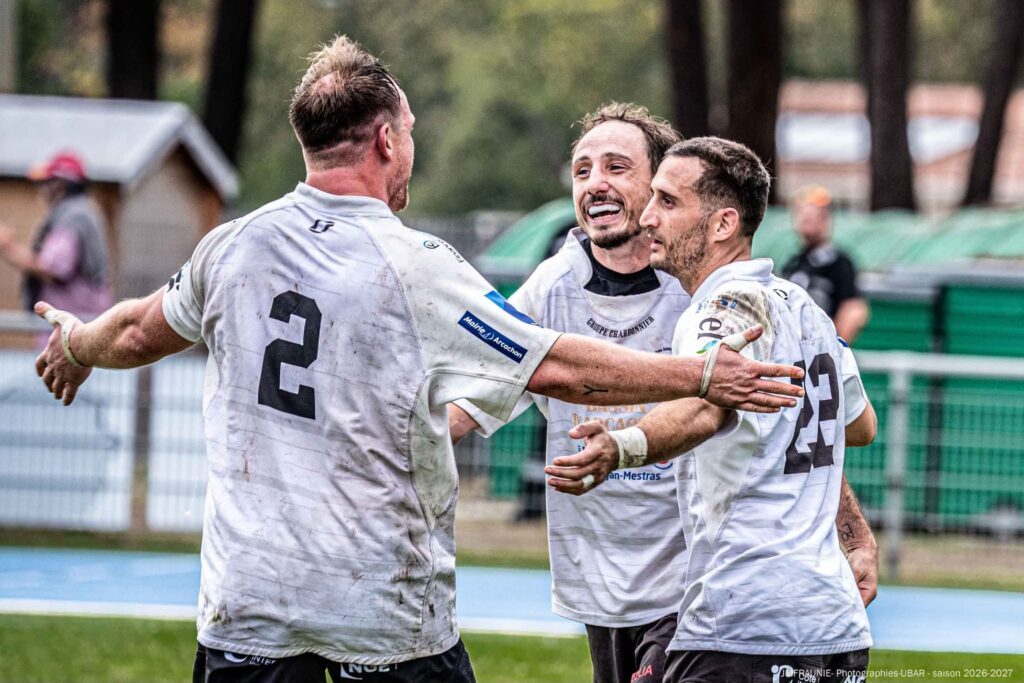
That must have changed things for semi-professional players at Arcachon, who had to find work alongside…
Exactly. We still had five players under contract. Federal rules require that if you’re under contract with a club, you need an employment contract to sign for another club. It was compulsory, so the five of us were released. There was the Georgian tighthead Sharashvili, who went to Rouen. And then the others: Benjamin Dumas, Andrew Chauveau, Yann Caillat and me.
Thomas BordesWe have gone back to expenses in line with the Fédérale norm, connected to reality. And above all, no promises that won’t be kept.
So it was a good transition with this new project?
Yes. We went back to expenses in line with Fédérale norms, grounded in reality. And above all, no promises that won’t be kept, no unpaid dues. We’re not talking about money here, it’s just that the officials put together a viable plan, without excess.
Old hands, young players and a 41-year-old elder
I get the impression there’s a real balance between the old hands and the young players…
We know this amateur level well: there are always a few old hands in the mix, who are important for experience within the group, for maturity. And it’s also important to have all these young players alongside them pushing and shaking up the old ones (laughs). It’s a good mix of hot and cold. Wisdom and experience on one side, fire and youth on the other.
What about the Fijian Gabiriele Lovobalavu? Who has played for Toulon, Bayonne, Oyonnax, Wasps and Bourgoin among others?
He’s still playing. He’s our elder. He’s 41 now. He had a bit of a problem with some tendinopathy in his knees. But he’s doing really well. You can already see all his class when he plays. His technical ability is impressive. With him, it’s smooth, easy. Physically, he’s as sharp as a blade! He keeps himself in shape too, he goes to the gym. And he’s great at teaching the young players. He’s a guy who carries huge weight within the group. It’s a luxury to have experienced players like that in the squad. And he’s so kind, too…
You’ve played in plenty of competitions. How do you view the way this level has developed?
At one point, when we dropped down from Pro D2, Nationale didn’t exist, it was Fédérale 1. There was a huge gap in quality. You’d have two or three tough matches in the year, but for the rest, you could see there were really big gaps. Now, when you look at the results, whether from this round or the previous one, it’s a high standard. The forward packs are strong. The set pieces, the scrum, the rolling mauls, it’s tough and physical. The players are powerful. And it’s played really well too. You’ve got teams capable of playing wide, from side to side, all afternoon, who know how to play after contact. We really represent the highest amateur level, even though Nationale also belongs to the federation.
At 36, “still have the fire”
At 36, how do you feel, physically and mentally?
In Olympic shape! (laughs) I still have the fire. As long as I have that fire, the desire to be out front, the desire to be the best, I tell myself it shouldn’t stop. Because the day you close the book, you can’t reopen it. I’m making the most of these last years. There’s no secret: I watch what I eat, I don’t drink much, I sleep well, I go to the gym three or four times a week.
Is your leadership role the same as at your previous clubs, or has it changed?
It’s always the same. It’s been three years since they made me team captain, but it hasn’t fundamentally changed who I am, or how I express myself. It’s a role I feel comfortable in. It’s natural, I don’t force myself to speak up, to shout at someone or to talk to the young players. It’s a kind of transmission that happens naturally. That’s how I was brought up. When I started at Mont-de-Marsan, 17 or 18 years ago now, there were old players, old hookers, who took me under their wing, gave me advice, talked things through, gave me their time. I think from a certain age, that role is essential. I’m really pleased they’ve given me this responsibility in the team. I feel fulfilled.
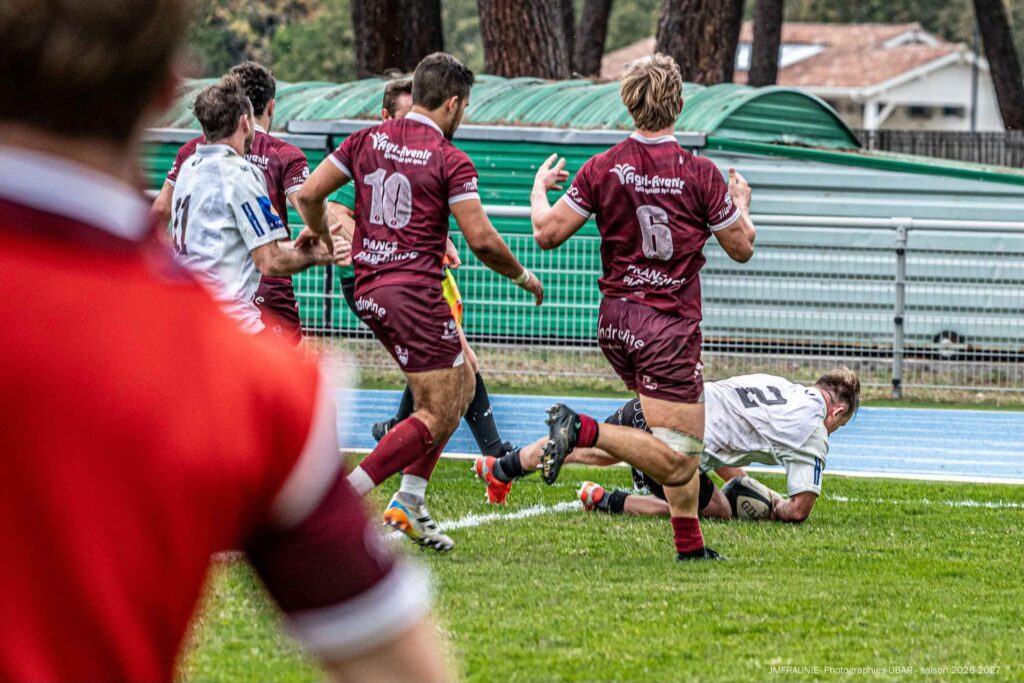
To finish, what would you wish for this union?
That it lasts as long as possible! That it keeps thriving, evolving, and that this year it manages to reach its targets. We’re only ever passing through our clubs, but it would be great if we could write a chapter of the history of this union between the two clubs.
Stade Montois, his boyhood club
Thomas BordesWhen I watched Stade Montois’s access match against Nice last year, once the game was over, I stayed seated for a quarter of an hour without moving.
A more personal note. You mentioned Mont-de-Marsan. I imagine you follow what’s happening there a bit…
Yes, it breaks my heart. When I see the difficulties they’re facing right now, and the lack of solutions, it’s hard, for sure. I understand the supporters’ frustration. On the other hand, you don’t always understand some of the nastiness behind it, because these remain people caught up in all of it. But it’s true, it saddens me. When I watched the access match last year between Stade Montois and Nice, once the match had finished, I sat still for a quarter of an hour without moving. I’m really sad about their situation.
Comments