
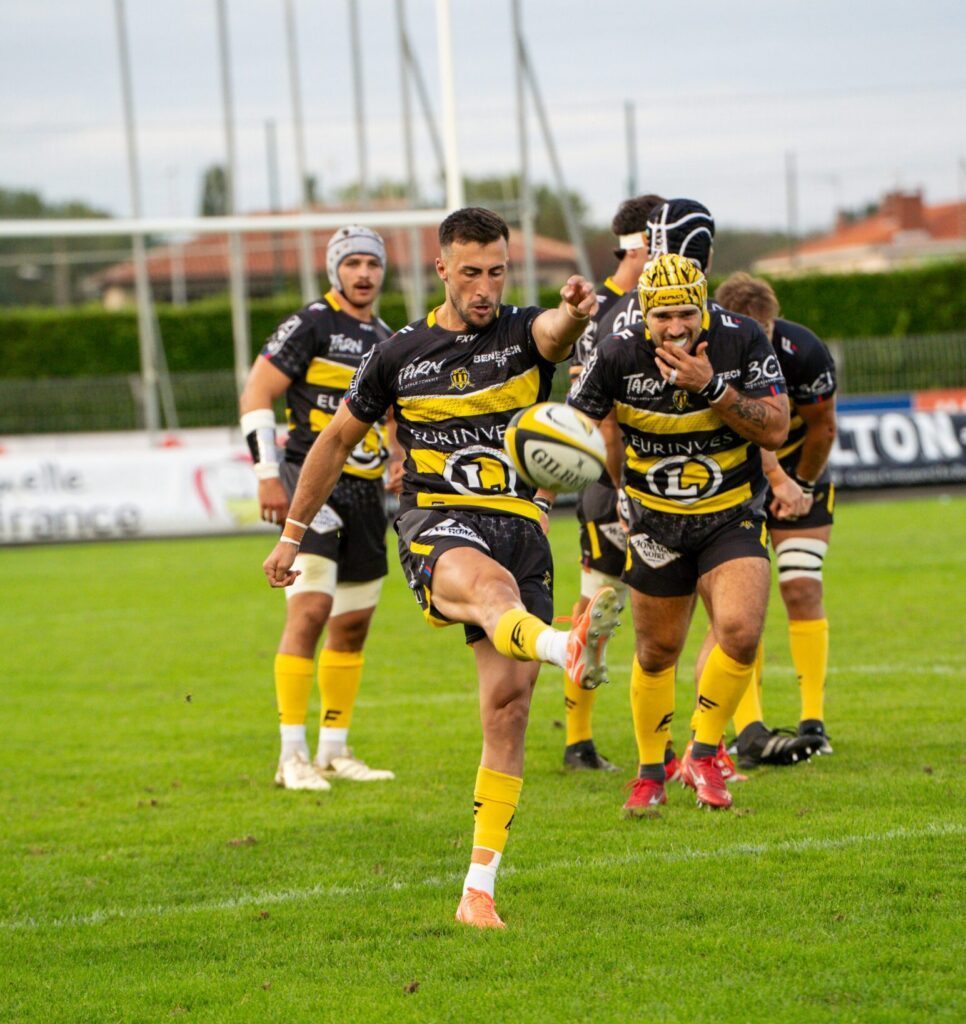
The emotion is still raw. A trembling voice, damp eyes and disappointment still plain to see. Four days after Albi’s semi-final exit in the Nationale, beaten by Narbonne on a kicking shoot-out, Albi centre Victor Pisano kindly gave It’s Rugby a few minutes to look back on a match with a cruel script.
The 31-year-old revisits that madcap finish but, above all, wants to stand by his team-mate Téo Dospital, targeted by criticism on social media and in private messages after his missed kick in the shoot-out. Pisano also underlines the mindset of a squad that could hardly be tighter. Interview.
IT’S RUGBY. – A few days on from that exit, what is still going through your mind?
Victor Pisano: A lot of things. I still have plenty of images from that evening. It was a great occasion, I think, for the club, for the squad, for rugby and for the Nationale. That in itself is a fine thing. But the way that match unfolded leaves plenty of marks, physical ones because it was very intense, but psychological ones above all. We weren’t expecting a script that crazy and we were obviously hoping for a different outcome. Today I still feel a huge amount of disappointment and a lot of sadness. Both for how beautiful our season was and the way it ended, but also because there are going to be a lot of changes ahead. I think we deserved better given everything we had achieved.
You mention that almost unthinkable script. There was extra time, then the shoot-out… I imagine you were full of questions, not least about the rules?
There are two things. Before the shoot-out, there’s that finish in normal time which is completely mad. We concede a try in the 78th minute, we hit back almost a minute later with a converted try and there’s still one more play after that. It shows the mindset of the squad and the madness of that back-and-forth. But then that shoot-out scenario, we had in a way been preparing for it for a fortnight. At the end of every training session, most of the players likely to be in that situation would strike a penalty. Even for us it felt so improbable that we told ourselves we might never get there. So when it happened, we knew the rules and we knew how it was going to work. But we had a problem: we had made too many changes during the match. And during extra time, we were no longer able to make substitutions. Unlike Narbonne, who were able to anticipate and prepare their kickers. We had to make do with the players on the pitch, taking into account whether or not they had experience of that kind of exercise.
When it happened, I’ll be completely honest. I never once had the feeling that this match was going to get away from us. I think a lot of players felt the same, and that’s also why it’s so hard. With no disrespect to Narbonne, who are a very big team, we had created something special in that group. Strong convictions, an ability to bounce back in every situation… I didn’t think we were going to lose. I told myself something else was going to happen. Even after the final whistle, I struggled to take it in. I think I only really realised it was over on the Sunday or the Monday morning.
This group never let go of each other. It goes back further than the final, in particular to what happened last season with the change of coaching staff. This group had come together. On the night of the defeat we didn't party, but we tried to spend some time together
After that finish, what actually happened within the group? Did you pull closer together or was everyone a bit in their own corner?
This group never let go of each other. It goes back further than the final, in particular to what happened last season with the change of coaching staff. This group had come together. On the night of the defeat we didn’t party, but we tried to spend some time together. The next day, we got together again. And 30 to 35 of us are heading off to Barcelona for our end-of-season trip. Those are things that don’t happen at every club. I’ve rarely experienced that. It’s proof that the group was in a very good place. After the match, few people really took it in at the time. We were still caught up in the euphoria of the way it had gone.
You also mentioned the physical marks. Do you still feel them?
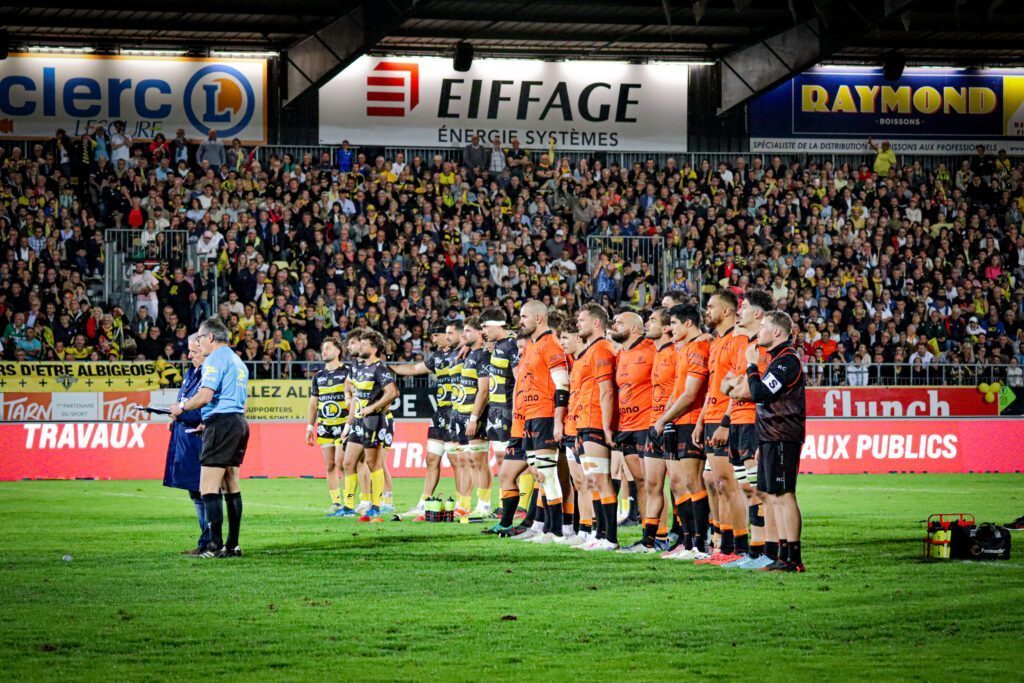
Yes, I still feel them. I played around 60 minutes. I think of the lads who played 100 minutes at that intensity. The referee Kevin Bralley, who had just come off a Top 14 match and was in the stands, told us he had been impressed by the intensity. A hundred minutes at that level, with a kicking shoot-out on top, isn’t an everyday thing. It leaves its mark. I imagine the Narbonne players found it a bit easier to recover. When you win, it’s always a little easier.
You’re a goal-kicker yourself, but you couldn’t take part in the shoot-out. How did you experience it from the touchline?
It’s never pleasant to be outside all that, not to be able to take part. All the more so as we had prepared for that scenario. Along with Ruben Courties, I was one of the players first in line to kick. But I was confident. I really didn’t think we were going to lose. Unfortunately, the coin fell the wrong way. It’s a bit of a lottery.
One imagines Téo Dospital, who missed the final kick of the shoot-out, was affected… Did you also close ranks around him?
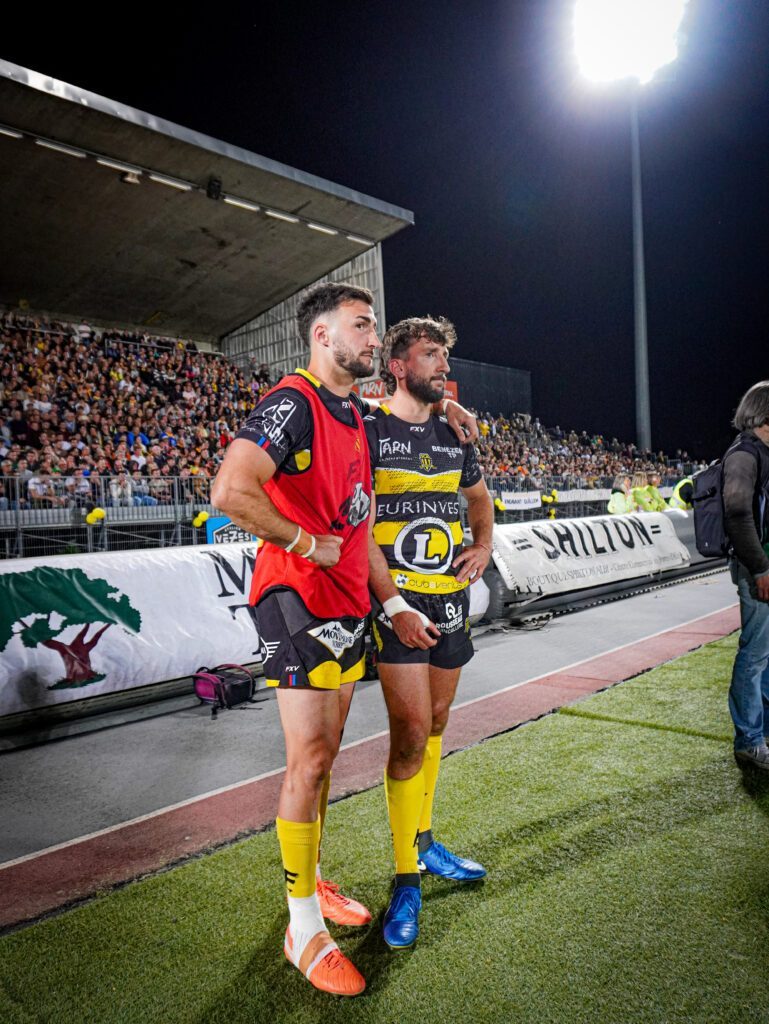
He is enormously affected, yes. Of course we’re all behind him. He knows it and that matters. Nobody blames him. It upsets me that it fell on him. He’s a lovely bloke and very conscientious. He doesn’t deserve this. Above all, he deserves even less everything that is happening outside, on social media or in private messages. I wonder where the humanity is in situations like that. Those people have no idea of the impact it has, on the player, but also on the group. We’re human beings. Social media leaves room for things that shouldn’t exist. I’m convinced he’ll bounce back very well and he knows he’s well supported.
You’re a senior figure in the squad, an experienced player: did you speak up after the game?
We haven’t had time to talk openly yet. The young lads were hugely affected, that’s obvious. But they have their whole careers ahead of them to live through moments like that again. They’re quality young players and they deserve it because they work incredibly hard. My thoughts were mainly with the players closer to the end of their careers, like Gilen Queheille, or with those who are being forced to leave the club for economic or sporting reasons. Because beyond the result, there were players whose future at the club depended directly on our results. I feel for them. The whole group was aware of it and we wanted a different send-off for those who are leaving us.
It does you good to switch off, to go and do something else. But at the same time, you know these are the last moments with certain lads you may never come across again in your career. You want those moments to last. My character, and I think that of a lot of people, is that when you go through events like this, you need to talk about it to get it out, to communicate
Doesn’t the future scare you a little too? Lots of departures, plenty of turnover… The bounce-back might not be the same?
There is still continuity in the coaching staff and in the squad. We’re keeping the same staff for two years. The club wanted to keep as many players as possible, but we can’t compete with offers from Pro D2 clubs or clubs like Nice or Narbonne, who have far bigger budgets. Albi as a club is rebuilding. What’s remarkable is that we’ve also rebuilt the bond between the public, the town and the club. For next season, the staff are doing good work on recruitment, with quality, ambitious players. But we’re going to lose players who broke through this year and showed they had the qualities to play at higher levels. I think we’ll manage to build on that experience. Several future signings were at the match on Saturday, by the way, and were just as affected as we were. That shows we can keep building on what we’ve just created. What’s hard to digest for those staying is having to break up a group that was genuinely a single unit. But I’m not worried about the future. I believe firmly in the quality of the staff and of the squad that will be built.
In a difficult moment like this, does switching off from rugby help?
It’s very paradoxical. It does you good to switch off, to go and do something else. But at the same time, you know these are the last moments with certain lads you may never come across again in your career. You want those moments to last. My character, and I think that of a lot of people, is that when you go through events like this, you need to talk about it to get it out, to communicate. And nobody can understand better than your team-mates. This week matters so that we can make the most of these last moments together. After that, the holidays will do us good. Having projects outside sport is important, to find satisfaction elsewhere. Because right now, we’re replaying that match in our heads all the time.
Comments