
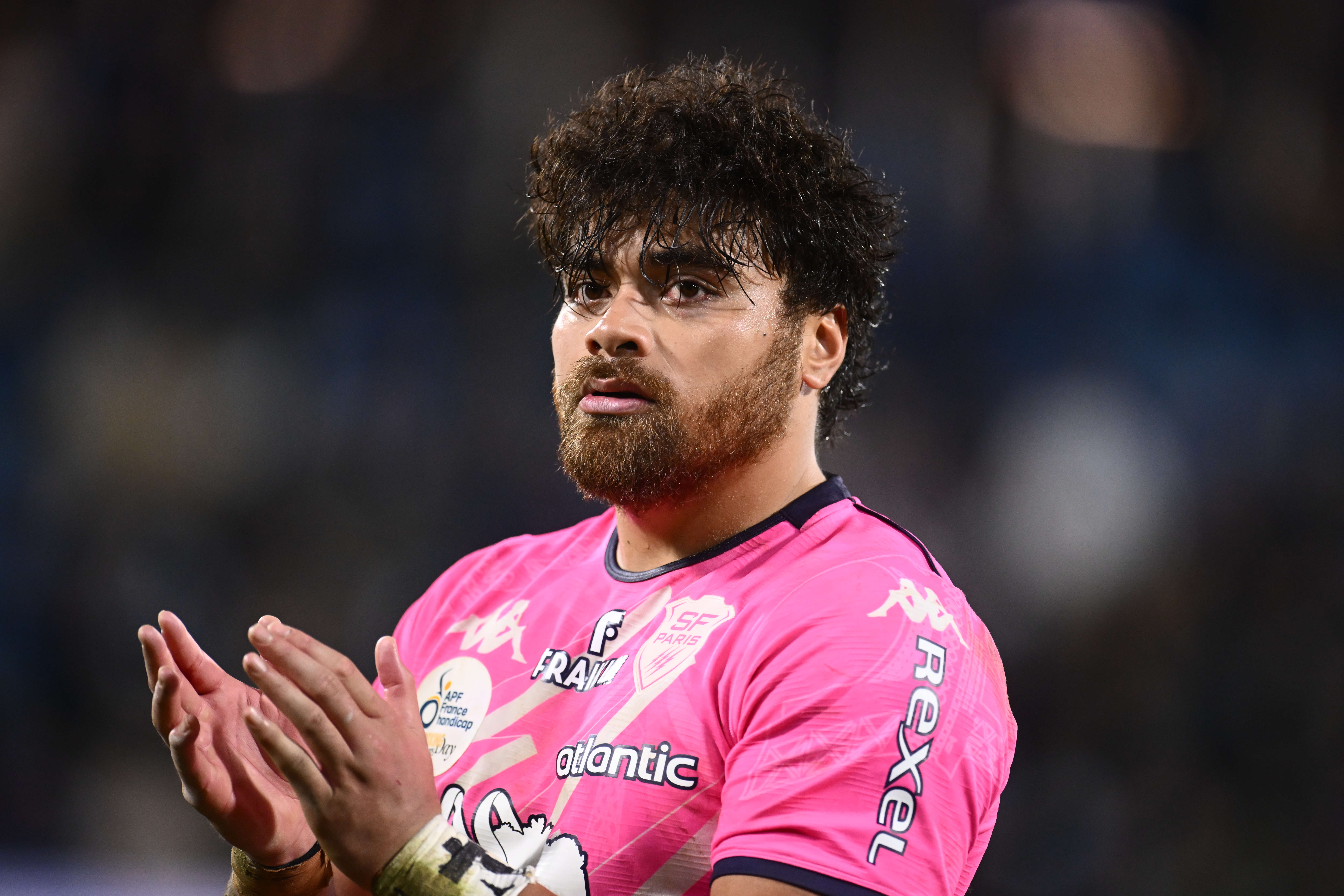
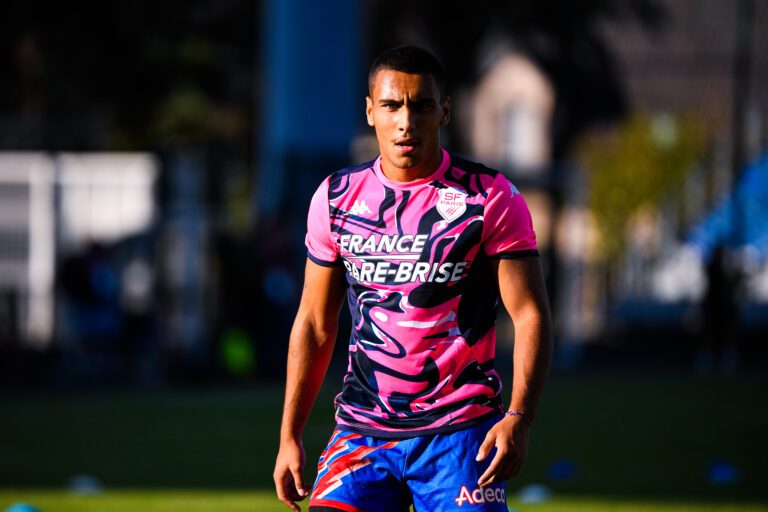
On the other end of the line, you quickly work out who Tani Vili is. A calm lad, shy-looking but who slowly opens up once he feels comfortable. Born in Brive to a New Caledonian father and a Wallisian mother, raised in the warmth of a big Polynesian family scattered to the four corners of the world, the Stade Français centre took time to understand that professional rugby was a job and not a game between mates.
His lack of maturity, the priceless help of Morgan Parra, his love for Brive, the games console and family time… The 25-year-old opened up as rarely before to It’s Rugby.
Now fulfilled and aware of his strengths, the former Clermont, Vannes and UBB player talks, without any spin, about his difficult spells and his return to form. Interview.
IT’S RUGBY. – Tani, it feels like everything is going well for you at the moment…
I’m doing great. The season is going very well and I am completely happy here. In my life right now, I feel I have climbed a long way back up the slope. I am very happy at Stade Français.
How would you describe this season? As a rebirth? The year you exploded?
The year I exploded… I don’t know. But a rebirth, yes, definitely. I went through two fairly complicated years, even if at Vannes I was able to play half a season, maybe a little less. Now I have found my game again, I feel completely confident in every match. When I go into them, I no longer have that little fear telling me I have to show more because you never know what might happen next. I was made very welcome. I liked the game plan a lot right from the start. Mentally it does me a lot of good to see the season going so well.
Do you want to talk about those complicated spells? Do you know what was wrong?
My last year at Bordeaux with Yannick (Bru, editor’s note) was complicated. Even though we got on well on a human level, because he is someone I respect and like, in rugby terms and even away from it I had personal things to deal with. I couldn’t manage it and it showed on the pitch. Then I got injured, so I fell off the wagon a bit. Even though I had a year left on my contract, they suggested I find a way out and take it. They weren’t satisfied with me and I understand that. That was my old mentality. At Vannes I was also made very welcome. I knew a few of the lads there. After that, they were Jean-Noël Spitzer’s decisions. In any case, he allowed me to get my head above water a little. Unfortunately we went down to Pro D2 and I had another way out: Stade Français.
What was the problem? Did everything happen too fast for you?
I was very happy with my first matches in the professional game. I started making good appearances when I was still at Clermont. Then came my first call-ups. I simply think I wasn’t ready mentally. I wasn’t mature enough, not prepared enough to be among the very best.
I always took things lightly. Rugby was fun with mates. But I very quickly realised it was a job and that you had to be beyond reproach in certain areas. I probably thought I had made it, as if nothing could happen to me any more
For you, rugby was simply just a game?
Yes, I always took things lightly. Rugby was fun with mates. But I very quickly realised it was a job and that you had to be beyond reproach in certain areas. I did my first France camps, which gave me a lot. I probably thought I had made it, as if nothing could happen to me any more. Once again, it was a maturity problem.
One person was very important in your revival. That person is Morgan Parra…
Morgan was my captain at Clermont. He knows me. When I was still at Vannes, he knew I had a clause in my contract, namely that if Vannes went down I was free to leave. He called me and asked how I was, whether I had changed. At Clermont he always told me that if I didn’t work, if I sat on what I already had and stayed in my comfort zone, I would play a few matches at one club, then at another, and everyone would end up forgetting me. We had taken different paths. He had gone to Stade Français and I had joined Bordeaux. We had lost touch. We always got on well. He called me and explained the Stade Français project. The club was coming off a very difficult season. Before that, I hadn’t realised any of it. All of that changed me.
Wasn’t there a little fear inside you when you signed in Paris? A sense that this might be your last chance at the top level?
A little fear, inevitably. But it was mainly that the club was starting again from zero compared with last season. And so was I, in the end. There was a bit of pressure, yes. But I was confident about what I can bring on a pitch. Having Morgan on the staff reassured me.
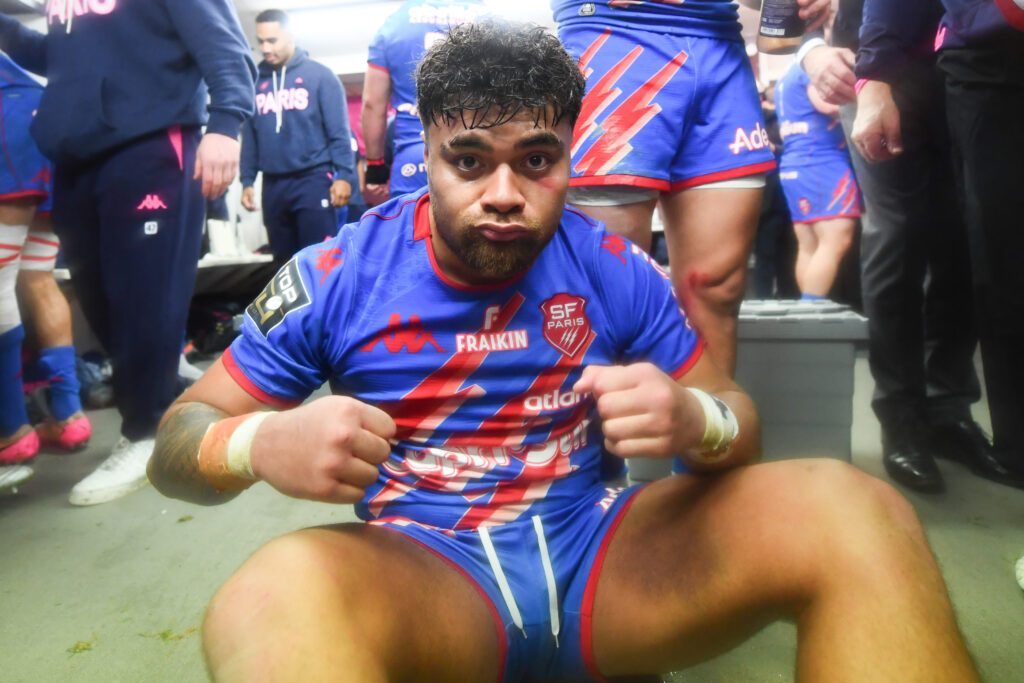
The grey weather, people in a hurry… Coming from the islands, wasn’t it odd for you to come and live in Paris?
(smiles) No, because I don’t live in Paris itself and I don’t see the traffic. Then again, I’m exaggerating a little. Some Parisians are very kind! Living in constant noise, rushing all the time… That isn’t really for me.
How would you define your personality?
Generally I am very reserved when I’m with people I don’t know or have only just met. On the other hand, as soon as I get to know them and they get to know me, they see very quickly that I always have a smile on my face, that I laugh all the time. I try to bring good spirits wherever I go. I’m not a complicated bloke! I just put out good “vibes” and that suits me completely.
On the pitch, though, you give the impression of fearing nothing…
That’s it. My actions do the talking for me. I can really let out everything I have inside. The pitch is where I have spent most of my time since I was four. It’s the place where I feel best.
You seem to run on confidence…
Yes, I’m someone who works that way. I need to see that I am being given confidence in order to be freed up and to produce the best rugby possible for the team or for myself. Being reined in, being put in a box, that isn’t what I want. Plenty of people are like that, but not me. I think my rugby is about being free on the pitch.
Your technical range has developed nicely… Do you have complete mastery of your game?
No, there is always something to learn (smiles). That’s why it’s good to have players around you who master skills you master less well. There are plenty of things I still have to learn, such as communication in defence or reading the game. I still find them hard, they aren’t my strong points. But I’m working on it.
What do you like doing away from the pitch to switch off?
I’m a big family man. Unfortunately my close family is a bit scattered. But I am very close to Yoram Moefana and Sipili Falatea. They are in Bordeaux, so when I can I go back down to see them and have a good time with them. We laugh a lot. I play on the PlayStation too, but I like spending time with mates or cousins. I’m very simple.
If I hadn't been a rugby player, I would have been a PlayStation professional. But not Yoram, because he's rubbish!
Do you win a lot when you play on the console?
(laughs) If I hadn’t been a rugby player, I would have been a PlayStation professional. But not Yoram (Moefana, editor’s note), because he’s rubbish (laughs).
Can you talk about your Polynesian roots?
Yes, my mother was born in Wallis and my father was born in New Caledonia. They came to France when they were younger. Most of my family have gone back there. I was born here but I was raised as if in Polynesia. We all live together, as a community.
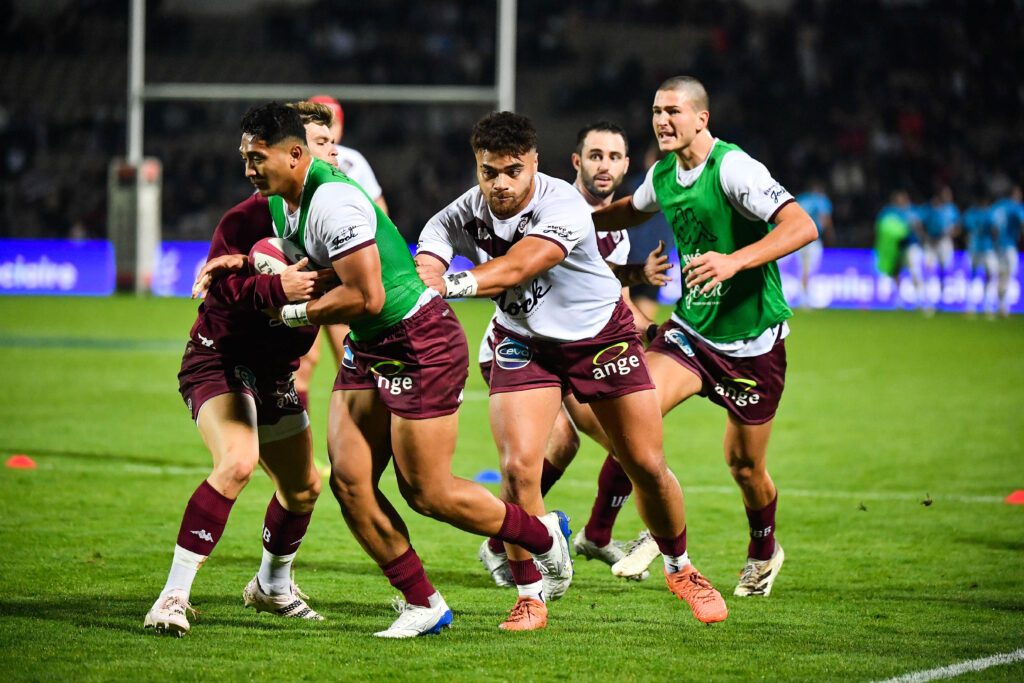
Have you been able to go there?
Yes, I have already been. The last time was in 2022. It was just after a France tour to Japan. As we were already halfway there, we decided to go with a few cousins, including Yoram Moefana and Peato Mauvaka.
Do you have any idols?
I had idols, like a lot of people. Jonah Lomu, first of all. Then there was Julien Savea, who I loved when I was little. When I turned up at Clermont, I had the honour of crossing paths with George Moala, because I used to watch a lot of videos of him on Youtube. I also liked Isaia Toeava and Tim Nanaï-Williams. They were a bit like my mentors. Tim talked to me a lot and explained things to me. When I saw them play, I was in awe. I wanted to be like them. In the end my game is a little closer to George Moala’s for the ball-carrying side.
You mention a lot of New Zealanders… Did you want to be an All Black?
(laughs) No, not at all. It’s just that my father liked New Zealand and our culture meant I watched the All Blacks a lot. It left more of a mark on me than France did.
Speaking of which, France… Is that a goal? In the back of your mind?
No. My goal in coming here was above all to find my confidence and freedom in my game again. And I have found that. As a competitor, when you put together a good season, you know you can hope to be in the frame because the France staff look at you a bit more. For now, my objective is to help Stade Français stay in the top 4 and why not do even better. Personally, I owe it to myself to gain even more confidence, to be even more active and present on the pitch for my team-mates. If France look at me, like what they see and call me up, it will be pure joy, obviously.
You came through the academy at Brive. Do you still follow the club?
Of course! Brive watched me grow up until I was 16. I did everything there, all my mates are there, my mother still lives there and so does my brother. I don’t go back down often but it’s a club I watch every weekend when they play. I pay attention to what they do, to what is happening down there. Brive remains the club where I was born and the club of my heart.
You’re a laid-back guy. Don’t you feel any pressure before going out on the pitch, though?
No, I’m not stressed at all. In the last five minutes before kick-off, when we pull on the jersey, the pressure starts to build. That’s normal. And then, as soon as the kick-off is taken, I am so focused on the first few minutes that I forget the stress.
Do you have a song or a ritual before playing?
I have songs, yes, but I couldn’t name them, otherwise I would have to take them off my playlist (smiles). Yes, on the bus I like being in my own bubble and listening to music. I go back over a few mantras I have set myself. That’s my ritual. Before the match, I tape a strap around my wrist and write things on it.
Comments