
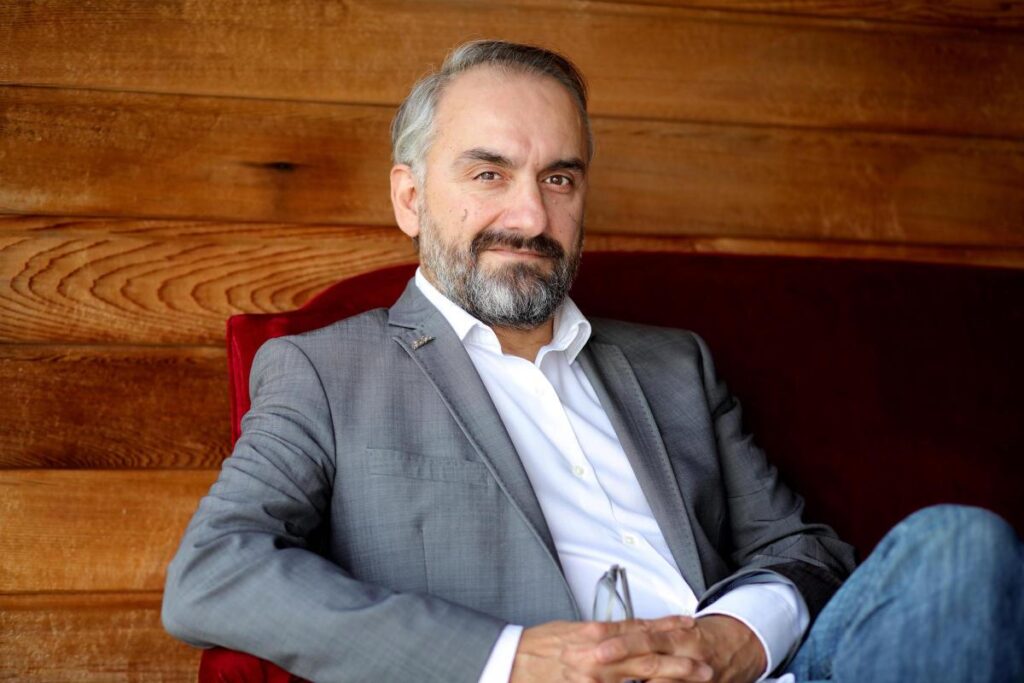
Miguel Fernandez is the president of Intervals, the union of rugby player agents, and is starting his third term. A snapshot of the transfer market, a survey of the structures in place, trends from Top 14 to Pro D2: an illuminating interview.
The role of player agents in French rugby
You know rugby inside out. How many presidents of the FFR (the French Rugby Federation) have you worked alongside? I have known Bernard Lapasset, Pierre Camou, Bernard Laporte and now Florian Grill. There is a bit of the chapter monk working on the cathedral about it, with bishops passing through, handing over the plans, the pillars of the faith. I lived through the structuring of professional rugby, the creation of the league, its first steps, its successes, very few missteps. Relations between the Federation and the League get tense, but you keep one foot on each bank, like the top players who play for the France teams but are paid by the clubs…
Enough to make you schizophrenic… One foot in the League, which represents the clubs as employers and payers, the other with the player, an employee and a potential international, yes. Defence lawyer and prosecutor at the same time, that is another feature of our rugby here in France. In the early 2000s, the late Marcel Martin was a visionary: when intermediaries arrived, given the legal context, all the clubs decided to work on the principle that the clubs would be the ones appointing agents, following Mr Martin’s advice. It was a way of controlling the flow of money and avoiding some of the excesses seen in other sports… That way of working works very well, it has carried on and it has lasted. A visionary.
It is a long time since the Assises du rugby français at Marcoussis in 2010, when I opened the report on agents with “As Michel Palmié said, a good agent is a dead agent”… We were not even invited… Today relations are a little calmer. The people who work for professional rugby, the presidents, the managers, the elected officials and so on, have fully grasped and understood the role of a sports intermediary, of a player agent.
JIFF, a revolution in the French market
Are the JIFF (players developed through French academies) a revolution in the French market? It changed the landscape in several ways. First, I have a fond memory of it, because when we started out Pierre-Yves Revol was president of the league, he brought the system in, and I debated it with him on a well-known radio station, thanks to an equally well-known journalist who had asked me on. We went through a speculative period for the first four years. In the end, you were forcing clubs, administratively, into choices that could have nothing to do with performance. In other words, it was better to have a JIFF than a good player. I am exaggerating a little. It pushed up the salaries of young players.
“Fewer than 10% of moves happen during the season”
How many players does the French market cover today? With the overhaul of the championships, a fixed-term deal about to be signed today and a legal structure that may well change, you can say there are between 1,000 and 1,200 players in Top 14 and Pro D2. 2,000 once you add “the” Nationales. Renewed by thirds, like the Senate, with fixed-term contracts of five seasons maximum, renewable, a quirk of sport. We have almost no transfers, meaning a change of club during the season, fewer than 10%, almost only moves at the end of a contract, and no transfer window like in football.
2026/27, a good vintage? I consider my job done when I have answered 100% of the requests from those who mandate me, whether they are clubs looking for players or players themselves. Good vintage or bad vintage, I have no idea. What is certain is that the market runs on a cycle today, a long timeframe, the end-of-contract moves, and a short one, the transfers, the adjustments, the medical jokers, the extra players. The long timeframe works on a four-year cycle that broadly follows the constellation of the World Cup and the star of the Top 14. There are cycles. On average, contracts run for two years. You often see sporting projects starting with players or coaches who come in just after the World Cup and stay until halfway through that period, midway between two World Cups.
Women’s rugby, the next big market
A word on the women’s game: England has the only professional league, with 400 players under contract. France is lagging behind… Rugby cannot ignore 50% of the world’s population. Rugby’s growth runs through the women’s game, I am completely convinced of that. The brands, the sponsors, the investors in rugby and in sport in general know it. We must not fall behind. At the company that employs me, we do a great deal of work on sports marketing, and the marketing world has fully understood how important women’s sport is. Every brand understands that you cannot speak to only 50% of the population today. It is fundamental for brands.
Shorter careers, salary cap and the market for coaching staff
Logan’s Run, and the crystal in your palm starting to flash at 30… How long does a career last? The average professional career lasts 8 years. It has got shorter, from 12 years two decades ago to 8 years now.
Have you ever missed out on the “deal of the century” because the wage bill had hit the cap? I have heard “I am sorry but I have to stay within the framework” ten times a season.
Is the market for a club’s coaching staff taken less seriously, handled less well than the players’ market? Ten years ago I decided to change tack and look after coaching staff. In the life of any company, whatever it is, the choices that shape it most are the ones about the people in charge. A head coach, an assistant and so on, those are structural choices, the hardest and, in my view, the most important ones for a club. After that, you still need the players’ talent.


Comments