
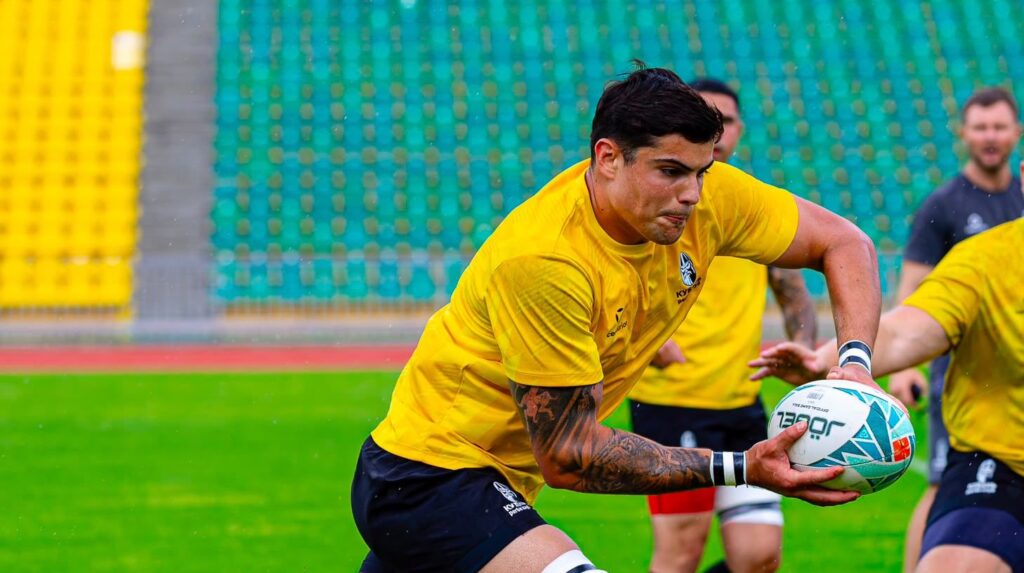
After several seasons at Tyrosse, where he built a reputation as a brave, hard-working lock, Tommy Strappazzon has settled thousands of kilometres away in Krasnodar, in southern Russia. It was a plan three or four years in the making, driven by an attraction to Russian culture, a passion for hunting and fishing and the desire for a new adventure. Now playing for RC Kuban in the second division, he talks about settling in, his first games and the new chapter he has chosen to write, far from everything he knew. Interview.
From Tyrosse to Krasnodar, a move four years in the making
IT’S RUGBY: Tommy, what made you decide to go to Russia?
Tommy Strappazzon: You have to understand that I’d been working on this for three or four years already. Russia is a country that appeals to me for lots of reasons, political and sporting. I love hunting and fishing. It’s the perfect country for that. I was also drawn to the Russian championship. Right now I’m playing in the second tier, but I’m keeping an eye on the top division. I’m giving myself every chance of getting there one day. I got on well with the Russians I knew in France and even better with the ones I spend time with here. They’re people I really like, who love French culture and respect our history. I think there’s a real friendship between our two peoples, one that nobody really explains to us in France. It’s a shame. In practical terms, I made it happen myself. I wrote to people living in Russia. They told me the good and the bad sides of the country.
On the rugby side, I first went to Moscow, where I had a trial with Dynamo, the flagship club of the top division and one of the title favourites this season. They were very interested in my profile as a lock, but in the end they found a Russian player in the same position. He probably caused fewer paperwork and language headaches than a Frenchman (laughs). To join Krasnodar, I got in touch with a Frenchman living in Russia. He knows my current coach, who is also French and has been here for four years. I talked to the club, who were very interested in me as a Nationale 2 player. One thing led to another and it all came together. I arrived in Krasnodar, in the south of Russia, not far from the Black Sea, with quite a mild climate for the region. There’s only one or two months of snow a year, which is not much by the country’s standards, and summers that reach 40 degrees. It’s a pretty pleasant place to live.
A life project in Russia, not a whim
Are you a professional there?
Absolutely. The set-up is a bit unusual. The top division is professional. In the second division, players are paid too, but on lower salaries. Even so, it’s still our full-time job.
And your job as a butcher, which you did in France?
I’ve put it aside for now. I don’t know if I’ll ever go back to butchery. In France we have a huge food culture, let’s be honest. Nothing matches our gastronomy and the way we eat. Still, I think there will be things to do in Russia on that front too. Do I want to go back to it? I don’t know. I’d rather let life open other doors for me. I have ideas and plans in mind, but for now butchery isn’t one of them.
Is this a break of a few months, or do you want to settle there for the long term?
There’s a real life project behind all this. I’m learning Russian: I have lessons every week, with homework to do every day. It’s a real integration project, almost assimilation. I honestly think a new chapter of my life is opening.
Were you scared to leave?
The only real reservation I had was the language. You switch to a completely different alphabet with Cyrillic, new letters, new words. It’s a total break from everything I knew. Otherwise, no, no fear at all, because I don’t buy into the Western view that presents Russia as a frightening or fundamentally bad country. I know it’s not paradise, but there’s no such place anywhere anyway. There’s a huge amount I like here and I knew I’d find it. Again, I prepared this move for three or four years, it wasn’t on a whim. Today I feel much more at home than I did in France. And this is only the beginning.
People aren't starving, it isn't the apocalypse, life goes on. Everyone wants it to stop, the Russians first and foremost
Do you feel the current global geopolitical situation over there, or less than in France?
No, not really. In France you hear a lot about Western sanctions against Russia. Here the economy is inevitably affected a bit by the special military operation, but it’s still very dynamic. There’s a huge amount of business, self-employed people, shops, companies. Infrastructure is being renewed and built at an impressive pace. For example, new tram lines are coming to Krasnodar. Day to day, you don’t really feel the economic impact. Of course, a war economy slows the country’s development a little, because a military operation on that scale is expensive. But people aren’t starving, it’s not the apocalypse, life goes on. Everyone wants it to stop, the Russians first and foremost.
The Russian championship, a level close to Fédérale 1
On the rugby side, has your season started yet?
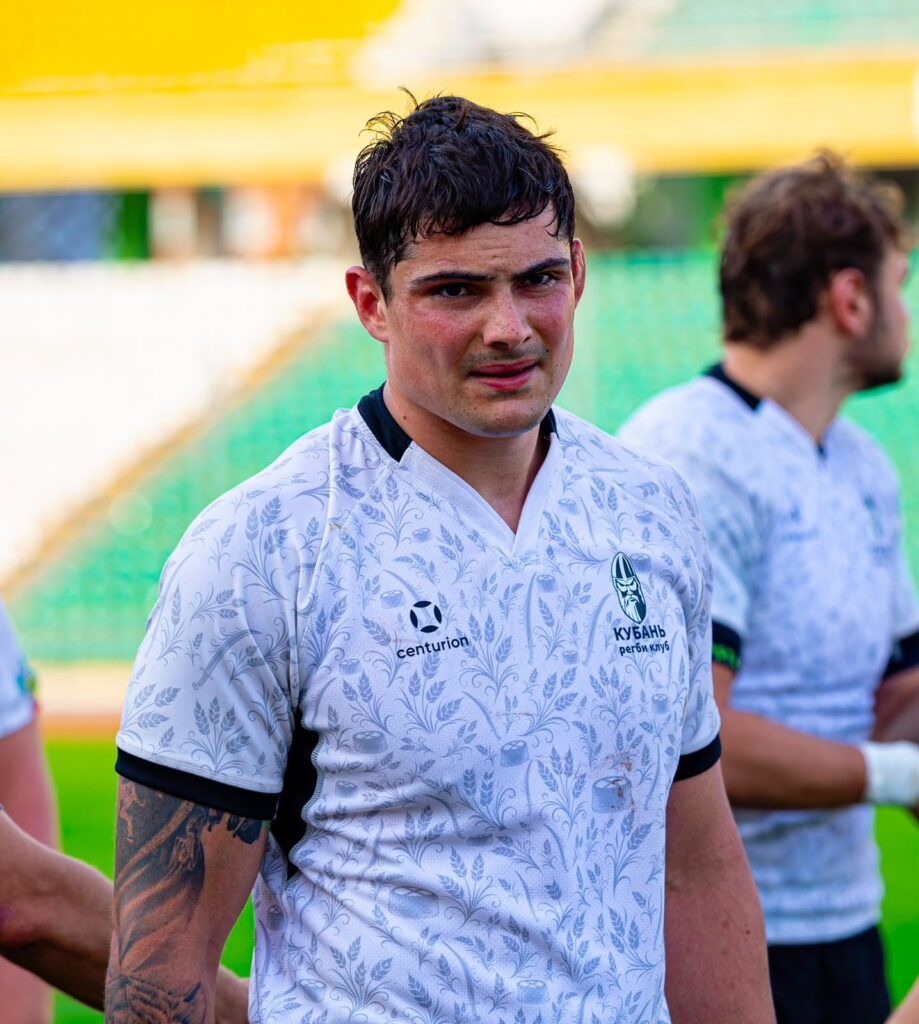
Yes! We’re on our fourth match. It’s quite a small championship, with eight matches and a lot of sevens alongside it. The long journeys inevitably limit the number of games. In France you can easily play around twenty matches in a season. Here there are fewer clubs, and rugby isn’t really the local sporting culture… It’s more hockey and football. It’s a tougher environment, with a huge country, long trips and big budgets to plan for. Every away game means at least a train and a hotel, which is a significant cost.
What are your first impressions of the standard there? What’s the equivalent level?
It’s not really the Nationale 2 level we know in France. I’d say we have four or five players in the team who could play at that level. For the rest, it’s more like Fédérale 2 or even Fédérale 1. The championship surprised me with how physical it is. They’re very good at the breakdown and on the ground, with real athletic qualities. On the other hand, there are still a lot of handling errors, and that’s clearly where they can improve. When you watch the top division, though, you see the technical skills are much more complete. The games are quick, technically clean and the hits are big.
And the national team?
They had a good side back in the day. Most notably they stayed with Ireland for 40 minutes before fading physically. They’ve had, and still have, some very interesting players. A referee once said the Russian front row was the most impressive he had ever refereed, with a very athletic, solid and uncompromising scrum. What’s hard for them today is that they’re banned from all international competitions. They’re completely cut off from the rest of the rugby world. It’s hard to improve when you can’t play the best teams on the planet, even though, honestly, they have real potential. I think the day they return to the major international competitions, they’ll naturally get back to a good level. When you look at the best teams in the championship, there are real players who could easily make their mark in Pro D2.
So your goal is to reach the top division?
Of course. I’ve fallen for southern Russia, for everything I’ve seen and experienced here so far. But my goal is still to take an opportunity in the top division if one comes up. It’s up to me to do the work.
Language is essential to fitting in, it breaks down a lot of barriers
The Russian language, the key to fitting in
How did you settle in?
I arrived with a bit of Russian, but I wasn’t using it every day. And it was hard at first. I’d had five months of lessons but felt like I hadn’t mastered anything. I was lost from the very first words. Luckily, the coaches and two or three of the lads spoke English and were lovely to me. You know, when you come from France, a country they really like here, you’re seen as a bit of a curiosity. The lads were very warm, they welcomed me straight away, we had a lot of laughs together, and they took the time to explain things to me. Today my Russian is much better. I can hold longer conversations and talk about different subjects. I don’t understand everything yet, but the conversations are much fuller. And when you feel you’re making progress with the language, everything becomes easier with people. Language is essential to fitting in, it breaks down a lot of barriers.
You mentioned a life project earlier. Do you have concrete ideas?
I’m passionate about hunting and fishing. In a few years, I’d like to be able to take French people on hunting and fishing trips. That would really interest me. Hardly anyone offers that kind of trip for French speakers. It’s something I’d like to develop. I know there are customers interested in hunting and fishing. It would also let enthusiasts discover a country that people rarely talk about, a beautiful country with incredible landscapes and wild nature that can quickly become dangerous if you don’t know your surroundings.
Tyrosse is a wonderful club, with a fantastic rugby school, very symbolic and very important to me
Tyrosse, the club that left its mark
Was it a wrench to leave Tyrosse?
Of course. It was a real wrench, because Tyrosse is a wonderful club, with a fantastic rugby school that’s very symbolic and very important to me. I met some really good lads there, we had a laugh and we performed together. You always go through ups and downs, everyone at their own level, but overall Tyrosse is a club that left its mark on me. I’m proud to have played there and worn those colours. The supporters are incredible, with a character all of their own (smiles), but that’s also what you expect from them. Life choices are hard to live with, but this one was thought through. I have no regrets.
If you had to pick one memory of Tyrosse, what would it be?
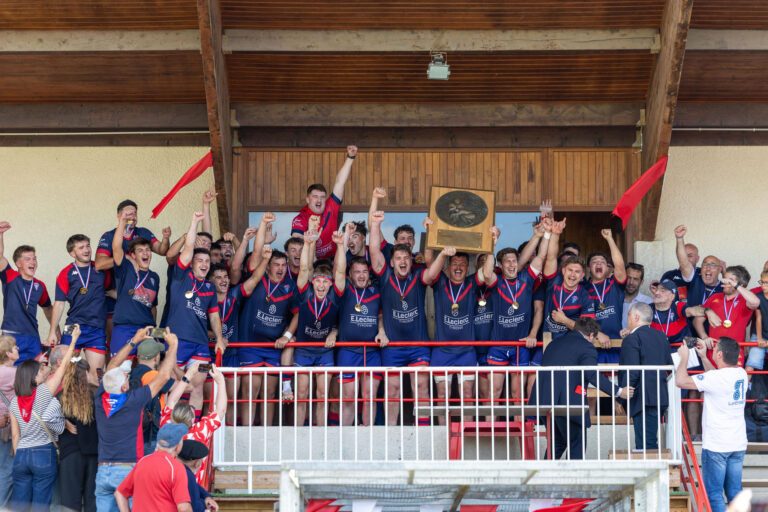
Good question. There’s the Fédérale 1 French title, with the slight disappointment of not being able to play because I was coming back from injury. But I think another memory really stayed with me. I can’t remember exactly who we were playing that day, but I remember the rugby school came to cheer us on in the dressing room before a big match. Kids applauding the first team, those are very powerful memories, because it puts those children in the spotlight, and they’re a real treasure. At Tyrosse, the enthusiasm around the first team and the Espoirs made a big impression on me.
Comments