

There is one symbol that almost sums up this contradiction on its own.
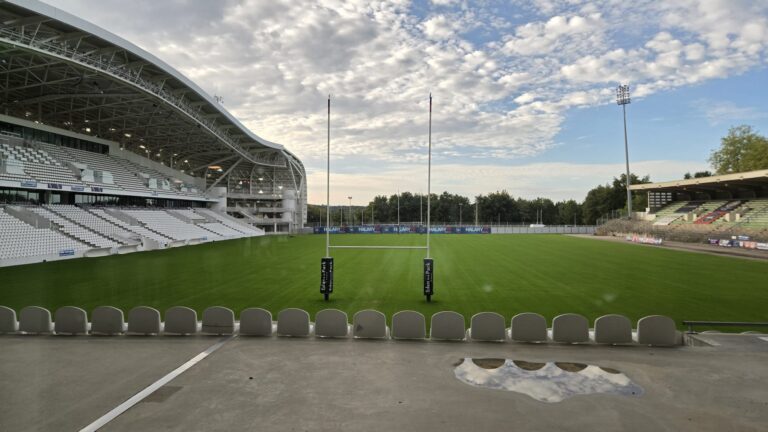
In Limoges, the Stade de la Porcelaine tells a story many would rather forget. In the early 2000s, with USAL playing in Pro D2, the city believed in its rugby destiny. A modern stadium was built. It was given a name that matched the worldwide identity of Limoges: porcelain, refinement, craftsmanship. The idea was simple: to make rugby a new shop window for the area.
Twenty years on, the stadium is still there. It still welcomes the most loyal supporters. But in spite of itself it has become the monument to an unfinished ambition.
USAL have never really found the stability they hoped for. Promotions have often been followed by relapses. Projects have come and gone. So have presidents. And every new season seems to carry the same promise: that of a comeback that is always slow to arrive.
A development region among the best in France
The paradox is all the more cruel because, over the same period, the Haute-Vienne has never stopped producing top-level players. It is probably one of the very best development regions in French rugby.
Pierre Villepreux left an enormous mark there. Alexis Palisson grew up there before becoming an international. Damien Chouly, Demba Bamba, Pauline Bourdon-Sansus, Agathe Sochat, Lina Queyroi, Jean-Baptiste Gobelet… the list is startling in its density. Few départements of that size can lay claim to so many names who have worn, or still wear, the blue jersey.
And yet almost none of them flourished for any length of time in the colours of a Haute-Vienne club. As if the area excelled at manufacturing talent… for other people.
“Our problem has never been development, explains a long-standing coach in the département. We know how to develop, spot and support young players. On the other hand, when they turn twenty, we no longer necessarily have the structures capable of helping them grow here.”
Demba Bamba is probably the most striking illustration. Developed at Limoges, then a France international, the prop had to carry on his progress a long way from the département he came from. Like many before him. Like many after him.
The shadow of Brive and the mirage of a merger
The proximity of Brive obviously plays its part. An hour down the road, CA Brive offer what the Haute-Vienne still struggles to build: an established club, a recent history at the highest level, national visibility, professional facilities and a genuine career prospect. For a young player, the choice is often a natural one.
For a while, some even imagined bringing the two clubs together. The idea of a merger between USAL and CAB did the rounds in conversation. It quickly raised more smiles than convictions. On both sides of the Limousin border, many saw it as an impossible marriage, almost against nature.
The problem, deep down, was not one of geography. It was one of ecosystem. Because the Haute-Vienne is not a region short of rugby: it is short of an economic model capable of supporting its ambitions. That distinction is essential.
When public money is no longer enough
Local authorities have never completely turned their backs on the oval-ball game either. They continue to support the clubs, particularly on facilities. The investment around Beaublanc and the work undertaken on sports facilities bear witness to that. But the message has changed.
Everywhere, elected representatives now point to the same reality: public finances will no longer make it possible to fund clubs’ wage bills or sporting ambitions in any lasting way. Public money can build a stadium. It can no longer, on its own, build a team. The rest depends on the business fabric. And that is precisely where the Haute-Vienne runs into its limits.
“The partners are out there, says a Limoges businessman. But everybody is asking them for something. Between CSP, handball, cultural events and rugby, everyone makes their choices. There is no longer one sport that crushes all the others.”
That competition is not a handicap in itself. It becomes a problem when a club wants to take another step up. Because going up a division no longer just means signing two or three extra players: it means professionalising an entire organisation. Strength and conditioning coaches, video, communications, administration, medical staff… Amateur federal rugby increasingly resembles professional rugby, without always having the income to match. Plenty of clubs have burned their wings on it.
A passion that holds firm
And yet… Despite the relegations, despite the frustrations, despite the aborted projects, something holds firm.
You only have to watch a training session at the rugby schools of Limoges, Isle or Saint-Junien to understand that the passion has never left this area. The coaches keep welcoming dozens of children every Wednesday. The volunteers are still the first to arrive and the last to leave. The USAL Gazelles, meanwhile, keep progressing and are probably the most dynamic face of Haute-Vienne rugby today.
As if, amid the disappointments of the men’s first teams, the area were stubbornly carrying on preparing its future.
The real challenge: turning riches into success
Perhaps that, in the end, is the paradox of the Haute-Vienne. A département that has never stopped believing in rugby. That keeps manufacturing internationals. That has coaches recognised all over France. That has built facilities worthy of higher divisions. But that is still looking for the formula capable of turning those riches into collective success.
Because deep down, Saint-Junien’s relegations, Isle’s difficulties, the decline of Saint-Yrieix and USAL’s thwarted ambitions do not only tell the story of four clubs. They tell the story of an area that produces more talent than it manages to keep. A land where people still learn to play rugby remarkably well, but where it is now hard to build clubs capable of lasting.
And that is doubtless the greatest challenge facing Haute-Vienne rugby: finally making what it develops match what it becomes. Making sure the Haute-Vienne is no longer just a wonderful starting point for other people’s careers, but becomes, one day, a destination again.


Comments