

57-34, 52-27, 43-31, 71-17… All season long, Top 14 scoreboards (in particular) have been running wild. Defences have not disappeared, but they have never been put under so much pressure. Even before Saturday’s final between Montpellier and Toulouse, the 2025-2026 campaign has already gone down in history. 1,357 tries were scored during the regular season, or 7.5 tries per match. An all-time record for the top flight.
The previous record, set only a year earlier with 1,099 tries, has been blown away. It had in fact already been passed by round 22, proof that the phenomenon goes far beyond a simple statistical blip. The Top 14 has gradually turned into a league where matches producing fifty, sixty or even seventy combined points have become almost commonplace. The same goes for the Pro D2 of course, the Premiership and the European competitions. 85 points scored in the Challenge Cup final, 60 between UBB and Leinster in the Champions Cup… Nobody is escaping the trend.
For the Top 14, it is obvious that Montauban, not equipped to compete, helped a great deal. Almost every team helped themselves to a merry-go-round of tries and points against the bottom club.
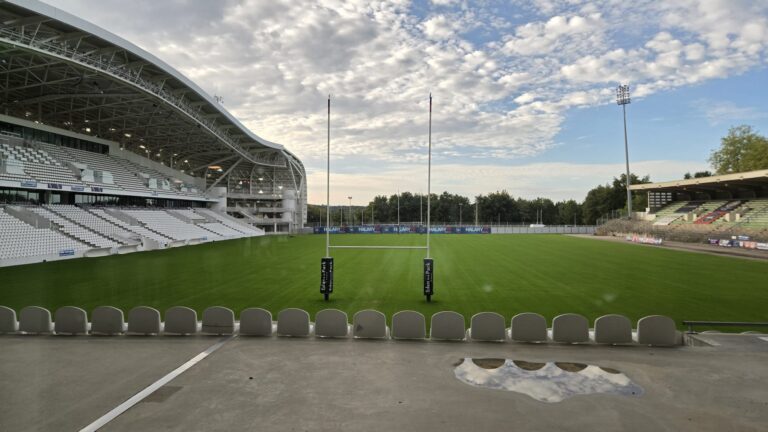
“The scores are getting bigger and bigger and thankfully so, because plenty has been done in that direction. Hybrid pitches have brought a far better quality of surface. Before, we were a winter sport played on pitches in a dreadful state. Today, even in the rain, whether on hybrid or artificial surfaces, you see quality rugby“, points out Didier Retière, the new national technical director of French tennis.
A form of leniency?
For the former France forwards coach (2007-2011), several developments have added up. The playing surfaces, first of all. Then the laws. “Refereeing has always been steered in that direction. The attacking bonus point, the 50-22, the laws around it and a direction driven in particular by the southern hemisphere nations have all had concrete effects on the game. The aim is also to democratise rugby. We want to create more big moments in the stands and make matches attractive on television. When there are tries, it is obviously more spectacular“.
What really makes the difference today is the front five. The teams who play total rugby are the ones with players from 1 to 5 who are able to do jobs outside their usual repertoire.
Adel Fellah says much the same. The Tyrosse manager (Nationale 2), who has previously worked at Clermont and Agen, sees a deep-rooted trend in this development. “It’s in the air: positive, attacking rugby, where you look to cross the line. It’s perhaps also a bit societal, this desire to make things more positive, more appealing“. The comparison with Super Rugby, long mocked in Europe for its matches with eye-watering scores, is therefore not really relevant any more. “Purists are sometimes a little thrown by it, but it is part of the overall evolution of the game“, Retière adds.
Adel Fellah, for his part, makes an interesting point: “Now, every team has a good fly-half, good centres or quick wings. But what really makes the difference today is the front five. The teams who play total rugby are the ones with players from 1 to 5 who are able to do jobs outside their usual repertoire. Keeping a sequence of continuity going, whether in contact or in space… The individual skills in those positions are decisive“.
The Tyrosse man, who specialises in forward play, defence and set-piece, also points to substitutions to explain this ever more attacking rugby. “You have eight tactical changes plus four players allowed back on. That lets you keep enormous intensity between the 60th and the 80th minute. And sometimes that’s where matches swing. What makes the difference is the players’ capacity to sustain sequences physically. If you blow up in the chaos, if you can’t hold on through sequences of a minute and a half, two minutes, sometimes more, that’s when you concede tries“.
We're picky about a jackler who puts a hand on the ground but not about the support player who lies across his team-mate
One question remains: is the balance between attack and defence still being respected? Didier Retière tempers the general enthusiasm. “What worries me is the leniency granted to the ball-carrier’s support at the breakdown. On the pretext of continuity, we let attacking teams do everything and defending teams almost nothing. We’re picky about a jackler who puts a hand on the ground but not about the support player who lies across his team-mate. There’s no fairness left“. The coach highlights the many instances of “sealing off”, in other words players diving on the ball-carrier without being penalised. “I love attacking rugby, but at some point, it shouldn’t mean anything goes“, he concludes.
Rugby has to live with it. Players are now more complete, more powerful, quicker, and spectacle has become an openly stated priority. The insane calendar in the various French leagues – and notably in the Top 14 with an opening block of 11 consecutive matches – creates significant turnover in team selections. As a result, some games are one-way traffic. The numbers from this record season are ultimately only the expression of a revolution that began several years ago. And one that is probably not over yet…


Comments