
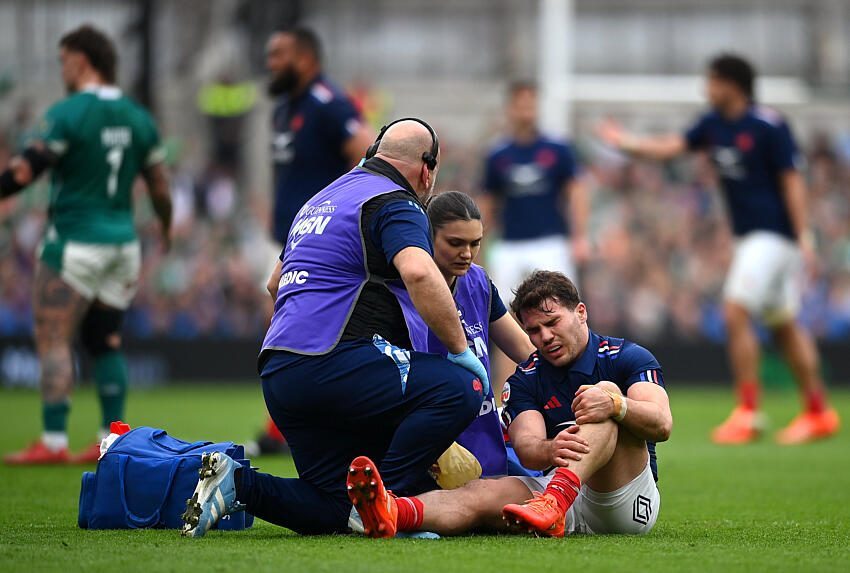
With bodies breaking down at every level, among male players, female players, professionals, amateurs and coaches, and with injuries both physical and psychological, not forgetting all manner of excesses (alcohol, doping, violence on and off the pitch, drug taking): rugby does not sit outside society. So how is the fight against physical injuries being tackled?
The state of play: 7% of players out of action every round
Twenty years ago, every round of the professional championship in France ended with 7% of players signed off, meaning at least 48 hours of inactivity. After every round, more than 40 players were out of action for at least the following match. Concussions, fractures, sprains, ligament or tendon ruptures, deep bruising, open wounds, eye injuries…
Concussion: the end of an inevitability
In 20 years, major progress has been made under the combined impetus of the Fédération, the Ligue and World Rugby. On concussion, growing awareness has been anything but trivial, and even less a matter of fate.
The technical levers have multiplied: HIA protocols (Head Injury Assessment), smart mouthguards, independent match-day doctors, education of coaching staff and players. Add to that collective action by the players and the rise in the cost of the licence and insurance.
And then there were the powerful testimonies from players to get the message across: Jamie Cudmore, Shautane Ape, Steve Thompson, Sébastien Chabal.
Spear tackle, video refereeing: professional rugby disciplines itself
In the professional game, video refereeing and tougher sanctions for contact offences have raised awareness and begun to reduce the aberrations that, it has to be said, built our rugby. The emblematic example: the eradication of the spear tackle.
Fractures, sprains, ruptures: day-to-day prevention
At every level, campaigns have multiplied and continue: teaching good tackle technique (coach education), recommended specific strength work, educating players to recognise symptoms and report them without delay. Also a reduction in the number of full-contact training sessions.
On fractures, there is nothing revolutionary to report for a collective contact sport with countless full-on collision points, the famous “winning the collisions”. The answer rests on four pillars: strength work, work on body position in contact, effective and appropriate equipment (mouthguard, shoulder pads, strapping), and an impeccable lifestyle on the nutrition side.
The same logic applies to preventing sprains, often associated with ligament ruptures (ankles and knees mainly): appropriate equipment (boots, studs, pitch surfaces), quality of strapping, specific strength work.
Health before performance, from the rugby school to the Top 14
If at rugby school the game must come before the result, every age group now needs to develop the primacy of health over performance.
A Top 14 player knows he will be signed off at least once a season. La Rochelle and Clermont have had more than 30% of their squad signed off.



Comments