
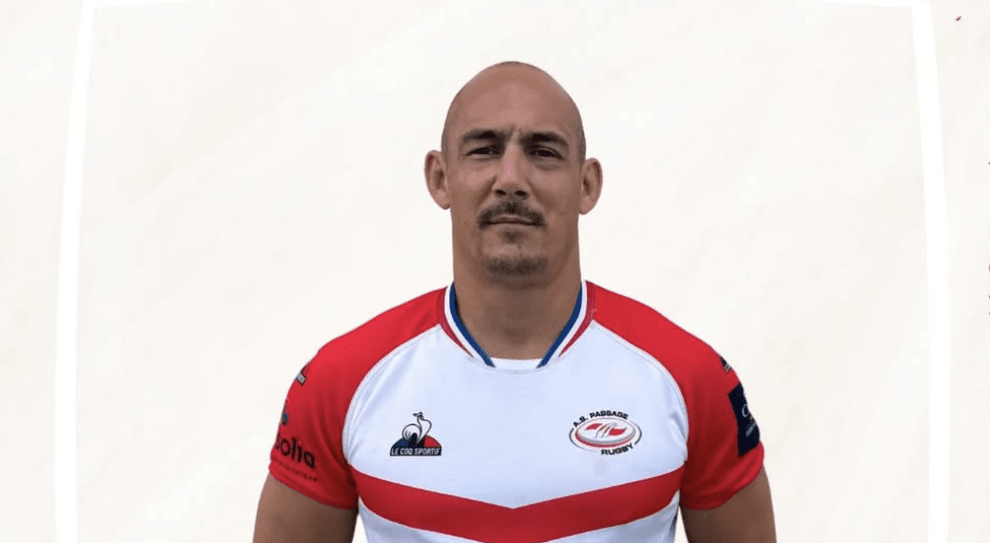
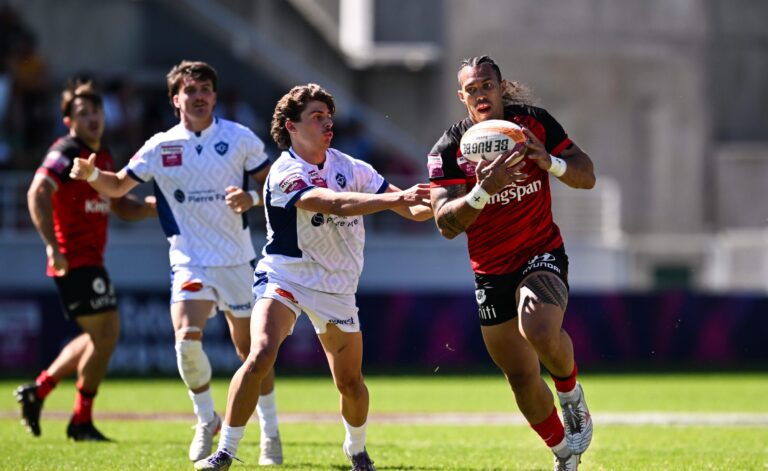
It is in the colours of AS Passage that Damien Cler keeps on writing his story. Now 42, he still plays with his passion intact, having turned out for Stade Montois and La Rochelle as well as the France sevens team. The winger, centre and full-back also played at the 2016 Olympic Games in Rio.
For It’s Rugby, Cler talked about his longevity, his unbreakable love for rugby, his professional career and his amateur one, Uini Atonio, whom he played alongside, the brutal demands of sevens and his new life as a business owner.
IT’S RUGBY. – Is this move to Passage a new challenge or a last challenge?
Damien Cler: I want to say a last one, but I’ve been saying that for ten years (laughs). After my professional career I signed for Layrac and I said: “I’ll finish the season and then stop”. That was back in 2016! This is my 11th year in the amateur game (laughs).
Why do you want to keep going?
I’m a very active person in life. I have a lot of passions, I do a lot of sport. And rugby, I’ve done it all my life. I love the game, the atmosphere, the mates, and the beer after matches.
What is it like training with lads of 18, 19 or 20?
A lot of them are my daughter’s age (laughs). I’ve known that for a long time now. But alongside that there are still the old hands, the old mates. Even so, I’m still the oldest, nearly every time.
Isn’t there a gap between you?
Yes, completely. In life I stay with people who share my passions, or who have things in common with me. But as long as they’re good on the pitch, that’s what counts.
How did this move to Passage come about?
I was really hesitating about stopping. But the club has taken in plenty of lads who played at Layrac and with whom I won the Fédérale 2 title. They kept on at me until July to get me to come (laughs).
What position will you play?
I told them: “listen, I’ll play wherever you want”. Nicolas Deltour (the club’s coach, editor’s note) even told me I’d play at No 8! We’ll see. For now I’m training with the backs. If I have to play second row, that’s no problem. I can play anywhere, from 4 to 15! (laughs)
I do quite a bit of weights, paddleboarding, golf... For me, sitting on a sofa doing nothing isn't possible. Except for a nap
What is the secret of such longevity?
I don’t know if it’s a secret, but I’m active in life. I do quite a bit of weights, paddleboarding, golf… For me, sitting on a sofa doing nothing isn’t possible. Except for a nap. Stopping completely wasn’t something I could consider. For others it’s easier. But I’d struggle to do nothing…
Having played at the very top, are you surprised by the standard in Fédérale?
It’s not ridiculous at all. When you’re not on the pitch, it’s easy to criticise. I went to watch some Régionale matches a few years ago and I thought it was going to be tough. But this year there are about ten of us who have come down from a higher level, so I really don’t know how it will be, I don’t know the standard that well. That said, in Fédérale they’re starting to play proper rugby.
What is the greatest memory of your career?
In fifteens, the two promotions to Top 14 that I was part of, with Mont-de-Marsan and La Rochelle. But my finest sporting memory is still the Olympic Games with the France sevens team in Rio.
Were the Olympics a target, or did you not really believe in it?
It was absolutely a target. In my last year at La Rochelle I played a lot less. My best mate, Vincent Inigo, had been playing sevens for a while. He told me I should try it. Honestly, to play sevens you need at least a year to get there. Unless your name is Antoine Dupont. You can’t just be dropped into sevens, it’s impossible. So La Rochelle weren’t against the idea of signing me for another year, but the sevens head coach Jean-Claude Skrela, who had already been in touch and whom I already knew, asked me to come. I did a year before the Games and I set myself the target of making them. I got there. Mind you, in terms of the final standings it wasn’t great. As an athlete, taking part in the Olympics is the holy grail. The ceremonies, the village, the restaurant… All the stars of the planet are there. It was incredible.
Can you tell us about sevens?
Sevens and fifteens are genuinely two different things. Top 14 is a very high level. Sevens, physically, is two notches above. There’s no comparison. Top 14 training, honestly, is child’s play next to a week of sevens training. I don’t think you can carry any body fat in sevens. That’s part of what you’re chasing. When I left La Rochelle I weighed 105 kg. During my sevens years I was down to 99. Maybe I worked a bit harder than the others. I did extra weights. But I was far from my family. My wife and my son had stayed in La Rochelle. The aim was to make the Games. I couldn’t imagine anything else. I gave everything out of respect for my wife and my son, whom I had left behind in La Rochelle.
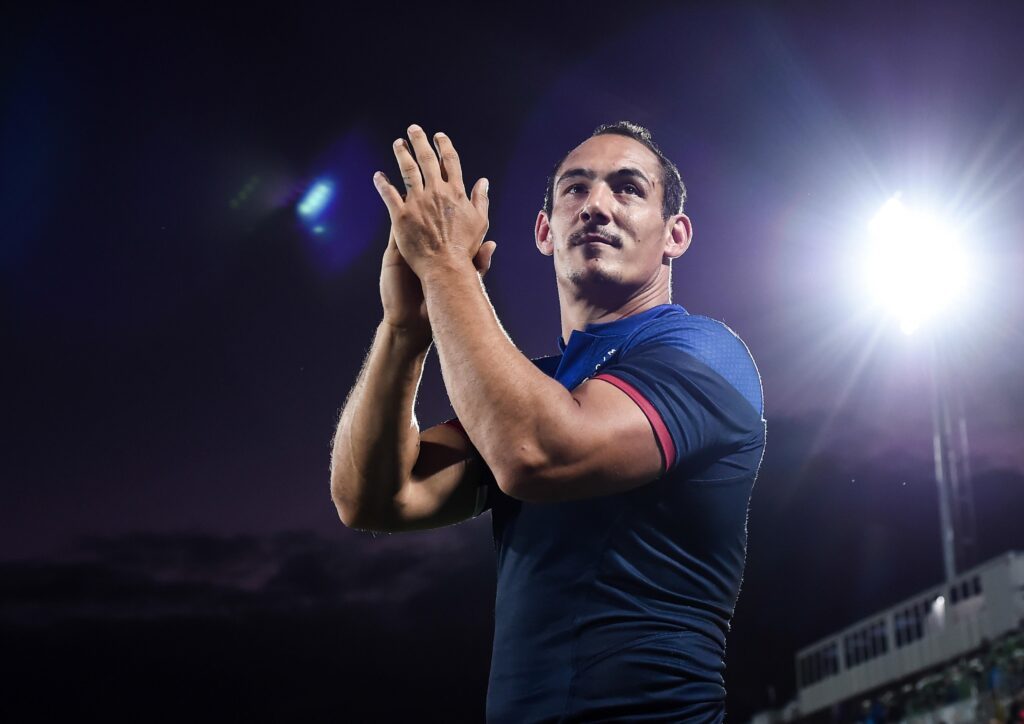
Speaking of stars, who is the most striking player you have played with or against?
There was Sonny Bill Williams. I faced him in sevens. He was playing prop and so was I (laughs). We came up against each other several times, it was cool. Back then there was also George Gregan, who came to play at Toulon.
You also played with Uini Atonio…
Uini and I arrived the same year. His progress has been crazy. He was never an obese, monstrous guy to begin with. When he arrived he was already physically impressive. But once he got serious, we already knew he was going to have a career. There are lads like that, you see them and you know they’ll go far.
Such as?
There were others at La Rochelle. I’m thinking of Kévin Gourdon and Loann Goujon. I said they’d play for France and I wasn’t wrong.
What about the Stade Marcel-Deflandre?
It was incredible. Back then we already knew what a sell-out was. All of that goes back to Pro D2. It’s nothing new. The appetite for rugby down there is enormous.
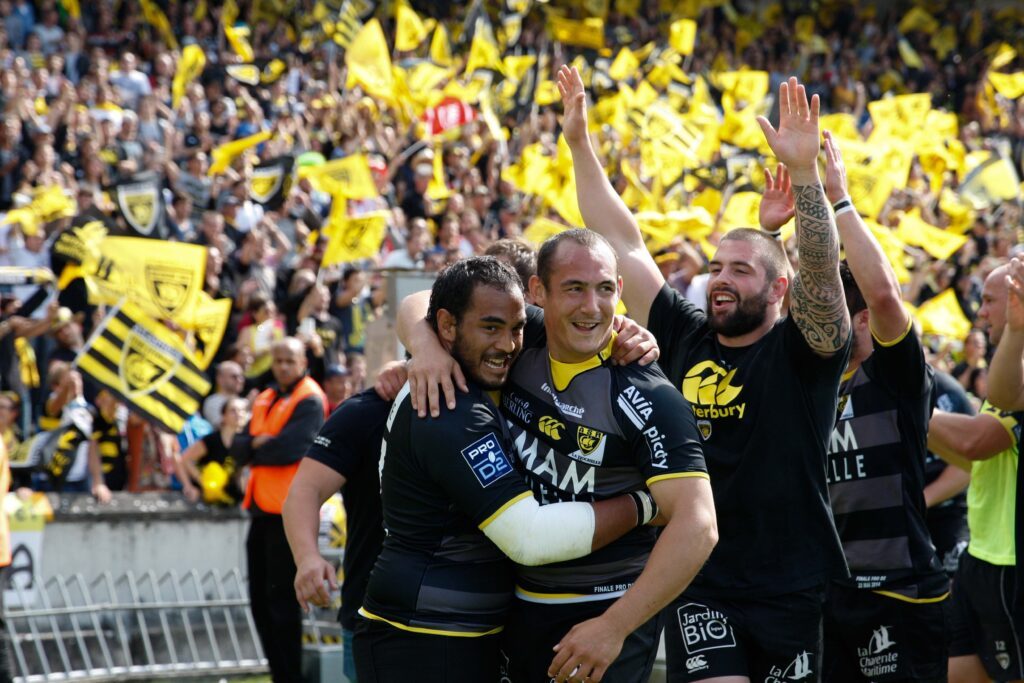
Mont-de-Marsan, your former club, on the other hand went through a very difficult season…
Yes. It was even historic, because they had never gone down before. But as I say, it’s cyclical, like Dax dropping into Fédérale back in the day. Mont-de-Marsan are among the smallest budgets. And they produce good young players by the dozen, then have them poached. The Fijians in particular, who were part of the Stade Montois story. It’s hard for them, but I hope they’ll come back up.
I beat Gregan and Matfield, it was a huge moment for me
Is there a try you remember in particular?
Yes. It was with Mont-de-Marsan, in 2008. We were at home to Toulon. And I scored the winning try! I beat Gregan and Matfield, it was a huge moment for me.
Can you tell us about your early years in rugby, having lived through the start of the professional era?
When I signed at La Rochelle it was no longer the same thing. Every Monday we were weighed. Every day we urinated on a strip to see whether we were properly hydrated. Every training session was done with GPS units. The years with Patrice Collazo and Xavier Garbajosa were already full professionalism. Before that, when I was at Mont-de-Marsan, I was on a semi-pro contract. I had passed my exam to become a police officer. I worked nights and trained in the afternoon. In the evening, after playing, I put my police uniform back on and headed off, while the others went out partying (laughs).
Do you consider yourself privileged?
Completely. When you’re a rugby player, you don’t know working life. When you compare real life with rugby, I tell myself that as a rugby player you have no right to complain.
In the past you were perhaps not prepared for life after rugby…
No, but that’s part of life. There are a lot of people who end up with nothing. It’s hard. I went through that difficult period too after my professional career, but you can’t be mothered or fathered everywhere. It’s up to you to make yourself. A rugby player’s career isn’t long. You have until 30 or 35, if you avoid injuries. You have to prepare for what comes next.
How is life juggling several jobs?
I run a Columbus Café. I had three but I sold two. I kept the one in Boé. The day-to-day is the hardest part, because being a rugby player isn’t really a job. You play sport with your mates, you earn a decent living, but your life is dictated by schedules. When you’re a business owner, you’re the one setting the schedules, you’re the one deciding everything. Given the current climate, it’s sometimes hard. What I didn’t know was stress. As a player I had no stress. I played and the pay arrived. Now it’s different.
Comments