
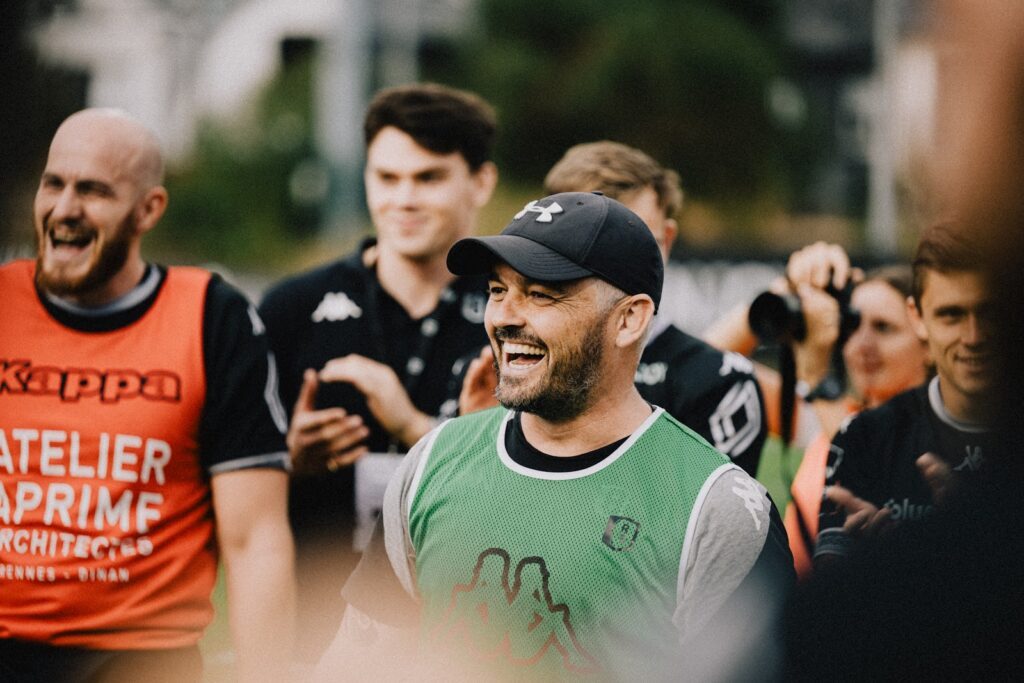
The Rennes Étudiants Club coach never leaves anyone indifferent. Endearing, demanding, dependable. Breton.
Kevin, how long have you been manager of Rennes Étudiants Club?
This is my eleventh season at the club, and I’ve been manager for six years.
At what level were you when you took charge of the club? What are you proudest of?
The two championship titles, the first two titles in the club’s history, won in recent years (in Nationale 2, editor’s note). Beyond that, there are other smaller sources of pride, around defending our Breton identity and the club’s ability to react quickly, which gives it extra charm.
Doing a lot with a little
How would you sum up, in a few words, the way you drive Breton rugby forward in Rennes?
Without overthinking it! And with minimal resources, I’d say. Being able to regularly develop young players who grow as athletes and as men: it’s a pleasure to keep that player development identity. It’s about getting the most results and potential out of the least resources. Doing a huge amount for years with very little is a real hallmark of the club. Obviously, we’d like things to improve. But there were years when the players got changed behind their cars before training, when they travelled more than three hours to play and stopped at the roadside for a picnic. That’s what defines us: doing a lot with a little.
Am I wrong to say you have players in Rennes who are “switched on”?
Being switched on matters, that’s for sure! As much as possible in everyday life, because that’s the reality of life, and in rugby terms too, because we’re not big fans of one-dimensional players, and we don’t like asking these guys to do the same thing over and over. We ask them to lean on one or two strengths to get the season off to a good start, but we need players who, over time, will build the richest possible rugby skill set.
A Nationale with no relegation
A “Dead Poets Society”? A strange championship, with no relegation…
I think we could have added a bit of interest, with a play-off against the losing semi-finalists, for example. We don’t claim we’ll be fighting for the top places. What we do claim is that we’ll do better than in the past. We’ll work towards that to help our young players grow, because they have to be able to deliver on our sporting project, which is coming over the next three or four years. We’re here as a development club, and I think we’ve now taken a path that is fairly consistent with our objective.
You were struggling at hooker in the middle of winter, and now it’s tighthead prop that’s causing problems…
That’s for sure. I hope the news will be fairly reassuring, because we’re allowed to believe. We also know we still have young players on the tighthead side, and we’ll work on that. In the heart of winter, we’ll see how it goes. Culturally, REC has often had tougher winters: since we want to play rugby, it’s not always easy to do that on a pitch that doesn’t suit it. But we also have qualities that should let us do things differently. We’ll inevitably open up as a team. I hope our tightheads won’t be too badly hit.
From the round ball to the oval ball
How did Kevin come to rugby?
Wednesdays with the family and Saturdays in front of the TV, it’s very simple. We were hooked on Five Nations or World Cup matches, with the sound turned right up, a challenge for the whole neighbourhood, so we could follow them from the yard! And then, rather than following the matches from a distance, the whole family sat down together around the table, in 1995, 1996, 1997, 1998. Once we’d well and truly caught the bug, it was hard to stay away from the rugby club. One was set up in the 2000s in Bain-de-Bretagne, my home village, and quite naturally we started there, leaving the round ball behind for what really thrilled us.
What was your original training?
I started out as a car mechanic, but I didn’t see my career that way. I started coaching, working as a youth coach at my club at 15 or 16, with the youngest children in the rugby school. I then spent my volunteer years at the club until 2009, when I was 21. I coached the rugby school and the under-16s, and I had the senior side for the last three years. In 2008, I met someone at the club who worked at the regional youth and sports directorate. He told me about a course that was opening for a professional diploma in “physical activities for all” and a professional diploma in rugby. I took the plunge, it got me my first employment contract, and I made it my career.
What position did you play?
Utility man! Every position apart from the tight five. I played in the back row but, given my build, I wasn’t exactly a high-flying back-row forward!
You’re a warm ambassador for Breton rugby. Why did you stop playing?
I had two neck problems, and I didn’t have the talent to justify an operation so I could carry on living rugby to the full. I never got the chance to “see out my playing career”, so the flame is still very much alive, very active in me. But I’ve been lucky and fortunate enough to live it for many years through players, men and women, who are generous and rich as people, and that helps me handle that sadness better.
From Spitzer to Guardiola
Are there people who inspire you, who help you, who you can count on?
There are people I’m eternally grateful to for always being willing to listen. Jean-Noël Spitzer, when I need to talk things through, reassure myself or answer questions. He supervised my first coaching courses when I was 17, so I’ve had the chance to talk with him for twenty years, and he has always been very kind to me. I’m happy about that. At the club we’re also lucky to have people who really know how to listen, who you can talk to and swap ideas with. And above all a few guys in the championship I’ve built bonds with, inspiring people: I really like drawing inspiration from what they do.
There are also coaches from other sports, managers, tacticians, strategists, the Guardiolas, Luis Enrique, all those guys who have a real identity they want to defend and put in place whatever it takes. They refuse to betray themselves to fit the common codes. Football coaches inspire me quite a lot. I’m also lucky to know a few Rennes business leaders who started from nothing and built fine, successful companies through willpower and hard work: I’m thinking of our chairman and our vice-chairman. How could I not mention, thank and congratulate the club officials, the volunteers, everything that makes up the soul of the club? And finally, there are all those who have the chance and the courage to get on a boat and cross the oceans.
Last question, Kevin: when will you turn your cap the right way round?
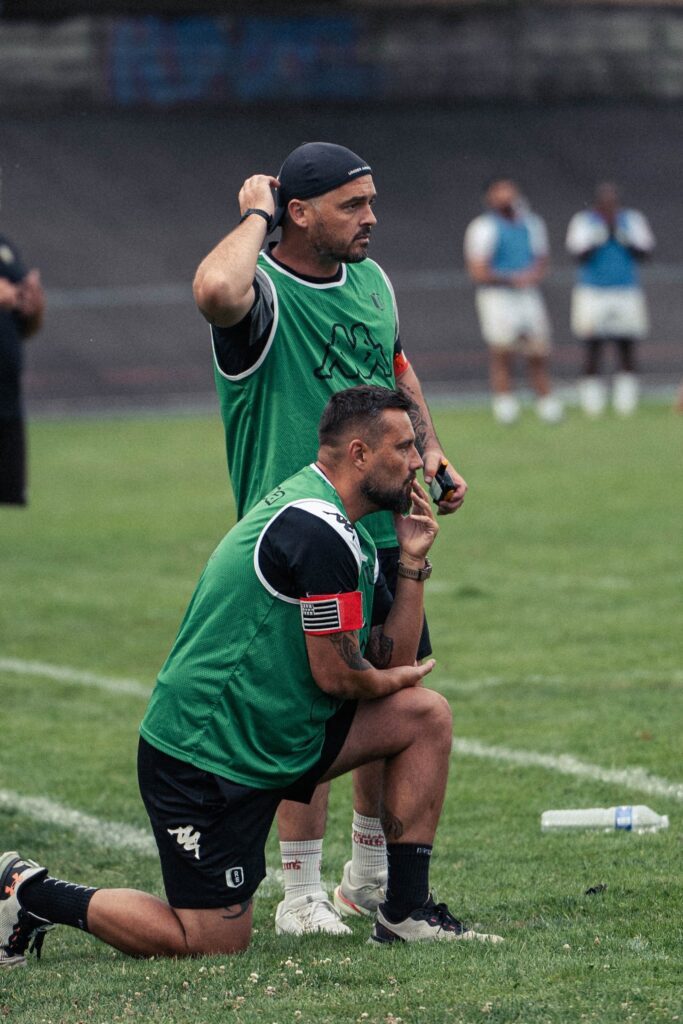
It helps me manage my emotions a little, to avoid shouting or losing my temper sometimes. I can be very fragile or very on edge, so I try to control myself better, because I know it can have an impact on the guys defending the shirt on the pitch. It’s a way for me to keep my emotions in check.
Comments