
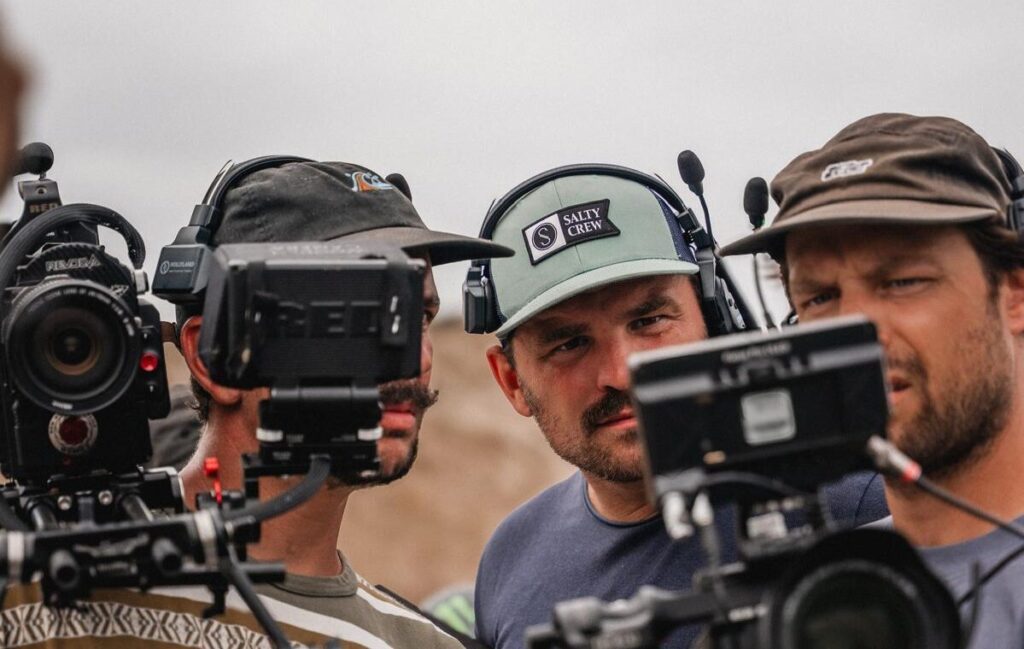
Out on the pitch, Thibaut Lesparre used to give his forwards a rollicking. The Dax man also bossed his team-mates around and ran the game. Off it, he switched registers. Jokes that landed – or did not – and non-stop wind-ups, the former scrum-half could do it all.
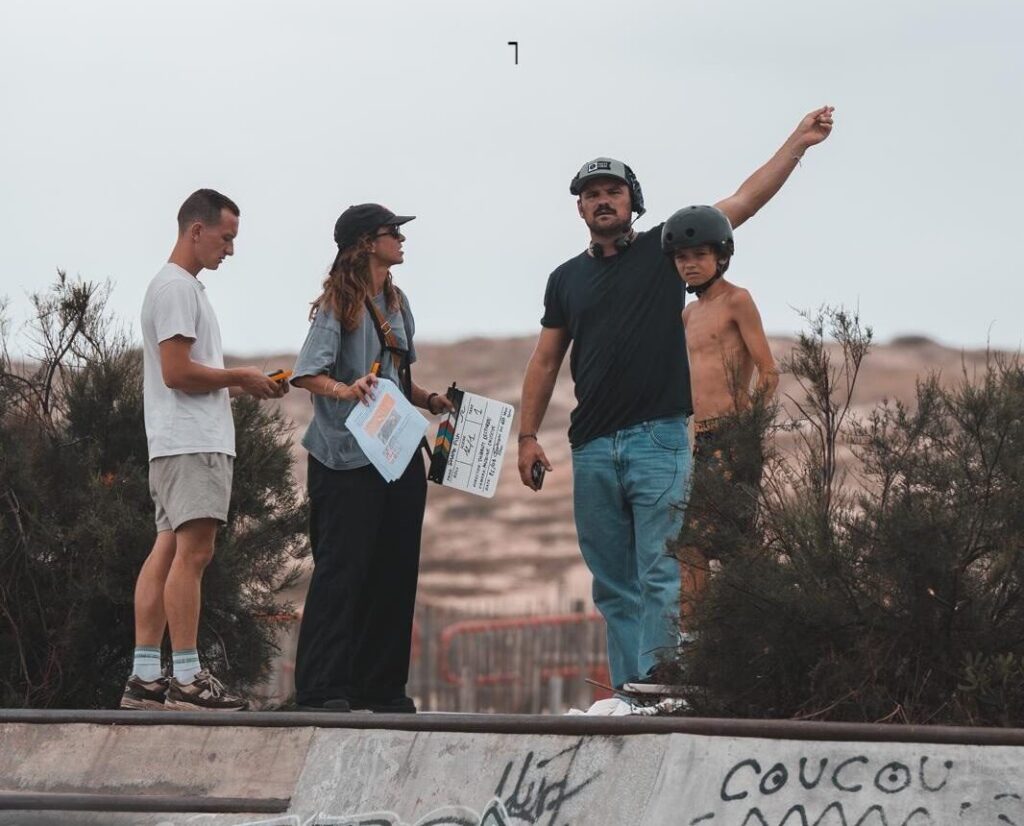
These days, the thirty-something has changed playing fields. Suits have replaced the jersey and shorts. Lesparre now juggles cinema, theatre and comedy. He has just finished his first short film, “La Rampe”. A long haul of a project.
For It’s Rugby, the former player looks back on a contrasting professional career, its joys and its disappointments. He also talks about his admiration for Jérôme Daret, the former France sevens head coach, and describes his new daily life. Not to mention his unforgettable rugby spell at Saint-Denis, his love of the stage and his adoration for a certain Philippe Guillard.
IT’S RUGBY. – How would you introduce yourself?
THIBAUT LESPARRE: As a guy from the South West, now exiled in Paris (smiles). I was a professional rugby player. I work in film production and theatre production. I am also an actor. And I have just finished my first short film as a director. It is about to go out to festivals. It is called “La Rampe”. Today I am really starting to jump in at the deep end and to make all of this my job. I have been in Paris for six or seven years. I am settling in. The money is starting to come in. So yes, I can say my transition is complete.
On that note, how did that move to Paris go?
I wanted to move on to something else. I was coming back from the United States and I had decided to stop playing rugby. Except that I get a call from a coach at Saint-Denis, north of Paris. I think: why not? I take the call because he is a guy I had been introduced to by someone I played with at university in Pau. He asks whether I would be interested in playing rugby up there. I tell him no, not at all. I want to move on. I have other ideas in mind. It is very clear in my head. I wanted to change careers. He offers me a small salary. Then I realise there are quite a few lads from the South West there. I start thinking, and I tell myself: ‘do not be an idiot’. You are arriving in a new city, it might just build you a network.
I do a first season and it goes really well despite Covid. I do a second season, because we go up to Fédérale 1. Back then, the Nationale did not exist. In the end I find myself in a team with ambition and something at stake, when at the start that was exactly what I no longer wanted.
And then?
I decided to stop. I started coaching an FFSE (Fédération Française du Sport d’Entreprise, the French corporate sport federation) side. It was linked to Saint-Denis and was called les Nawak. They were alumni of the ESSEC business school. I told them I had coaching qualifications. I figured it would keep a foot in rugby without playing. The group was fantastic. We reach a semi-final, everything goes well. Then I stopped again, because alongside that I was a restaurant manager in order to pay for the Cours Florent. I had three restaurants to run, the Cours Florent and rugby. That was a lot. At some point you have to accept that you are choosing a direction. I cannot do everything. So I stop rugby. And then I get a phone call from a guy: “Yes, we are a team in the Fédération Française du Sport d’Entreprise, we are looking for a coach.” Lads, I have been trying to stop for four years (laughs). Honestly, I am not interested. It was a player from the first team I had coached who passed on my contact details.
We start lunch at midday and finish at two in the morning, completely roasted. Very quickly, we become friends. These guys are film producers. Their team is called le XV de la Pelloche. I have been coaching them for three years now. Today we are an association of 200 people from the film world, namely technicians, distributors, producers, actors and directors. It opens up your address book and lets you meet a huge number of people in good conditions, sharing a bit of rugby and a few drinks. Within the association, they also put things in place to help members. There is one scheme in particular that they created, called Rencontre à XV. It is a committee of 12 people: producers, distributors, screenwriters, directors. They look at the projects of members they consider invested in the association and who they might be able to give a hand to. I had them read a script I had written on the side, self-taught. I bought books about it. I did my research. I had screenwriters read my text and they gave me lessons. It was not perfect when I handed it over, but I knew that. When they read it, something clicked. They liked what I had done, in the sense that I come from nowhere. People often pitch scripts about rugby, but that can quickly feel run-of-the-mill. I tried to write an original story, one that moves me too. And they liked it.
Is that how you were able to get started?
Yes, off the back of that I went into partnership and set up my film production company with three big names from the industry. First there is Benoît Quainon, of Les Films du Worso. He produced a film that opened the Cannes Film Festival last year. There is also Pierre Mazars, who works for a major international film sales company, Charades. He won an Oscar with a film he sold. So he is well established too. And then there is Thierry de Courcelle, who is retired but was head of acquisitions at UGC. So he is very solid as well. Those guys steer me. It is great. They do it out of friendship, not out of self-interest at all. There are four of us, and the fifth partner is Olivier Klemenczak. He plays for Pau of course, but he is a fan of cinema and theatre. He often went to Paris, especially when he was playing for Racing 92. I pitched him the project and he was won over.
Nobody was surprised when Jérôme Daret was voted the best coach in the world. It made sense, he should have had that award for the past 10 years! He has known me since I was tiny. I saw him as a player, I saw him as a coach. He took me under his wing, as he does with plenty of people by the way. He guided me as a rugby player but above all as a man
Rugby took up a huge place in your life, but you decided to tackle it into touch…
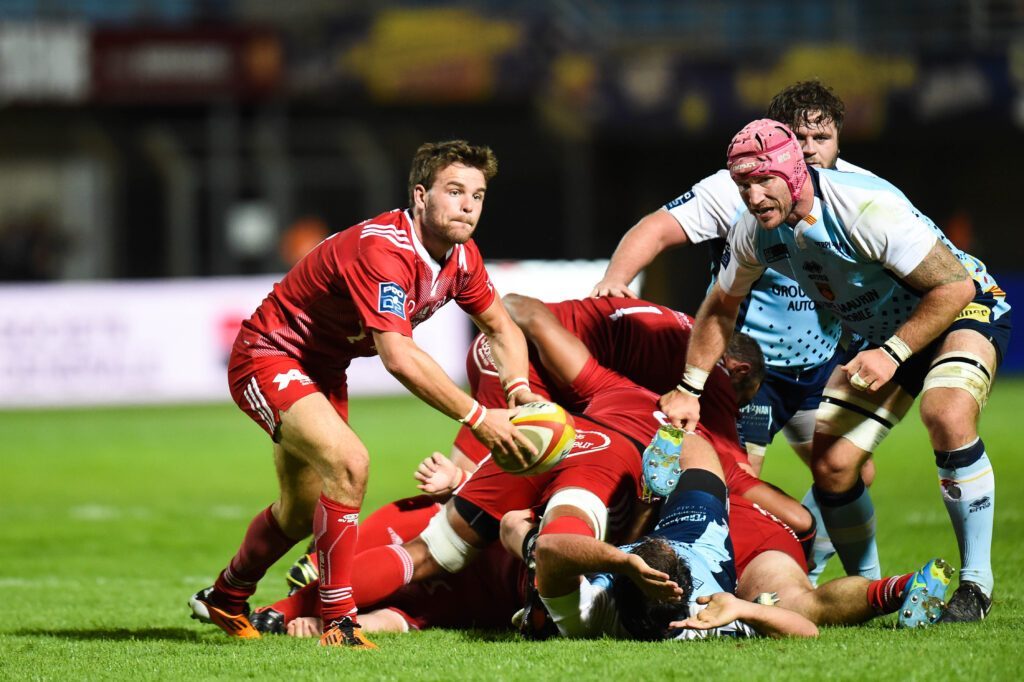
My rugby career is an unusual one. First of all, I am not naive. At 16, even if you dream about it, you know full well that becoming a professional rugby player is a one-in-God-knows-how-many chance. The difference is that at Dax we had Jérôme Daret. He ran the academy. And the club academy’s success rate was exceptional under his watch. We had meetings at the academy where people explained the famous idea of the dual career project to us. Jérôme handled it remarkably well. It never fell on deaf ears with me. I kept things going alongside rugby. I got a DEJEPS coaching diploma and also a DUT in sales and marketing techniques. I always wanted to keep a door open. I told myself that rugby might not be my whole life.
You mention Jérôme Daret. How important has he been in your journey?
He was and still is my mentor. Nobody was surprised when he was voted the best coach in the world. It made sense, he should have had that award for the past 10 years! He has known me since I was tiny. I saw him as a player, I saw him as a coach. He took me under his wing, as he does with plenty of people by the way. He guided me as a rugby player but above all as a man. When I wanted to go to the United States, he immediately put me in touch with a Dax man living out there. He is always behind the people he cares about. If I made it as a professional, it is thanks to him. He is an example.
He was there for you in particular when you had to change position…
My path is an unusual one there too. Until I was 18, I played in the back row. Then I get selected, a camp at Cahors with France. Everything goes really well, I have a great game, I get marked down as one to watch. I remember the head of the Bayonne pôle espoirs coming to see my father to tell him we had missed out and that he was sorry. I am in the Aquitaine side in the back row, we are French champions. Truly, everything is going really well. After that game, I am very confident. I am told I have been marked down. And then they come to see me and say: “Listen Thibaut, we need to talk to you. You are not going to be picked by France for the Six Nations.” That is hard enough on its own. But on top of that, they are going to change my position. I am told I am going to become a scrum-half. Jérôme had replied: “I will take care of it, we will get him playing there.” I had to learn how to pass, which I absolutely could not do (smiles). I remember Jérôme supporting me enormously. He backed me, telling me he felt like he was the only one who believed in me. I did not really believe in it myself.
How did the end of your professional career go?
The first man to trust me and play me in the first team at Dax was David Darricarrère. Then everything blows up inside the club. Jérôme Daret leaves with the France sevens team and Richard Dourthe is sacked. They trusted me. They accepted my mistakes, played to my strengths and made me work on my weaknesses. Unfortunately, new coaches come in and do not have time to develop players. They are Pro D2 coaches. They want results and bring in new players. In fact, I stop developing because the context was very particular. I then become what I am, an average scrum-half in an average Pro D2 team. I can see very little room to grow. I tell myself that if I am not playing enough, that is no good. I also wonder whether I love rugby enough to move to Fédérale 1 at the other end of the country. I am not sure about that either. The more time passes, the less I believe in it. In the end, I decide to stop. We go down and Benoît August tells me to stay. I was fine with that. Except that I do not get on at all with the coach who comes in. With hindsight, I know it was entirely my fault. I was the one who no longer wanted rugby. So I only saw the flaws. Mind you, he did not stay at the club. So I was a little bit right as well.
After a while, I said stop. I play rugby, I am paid for it and it is going very well. But we are very badly paid, it has to be said. As an aside, I remember a journalist from Canal +, I think it was Guilhem Garrigues, bumping into Richard Dourthe one day and telling him: “Blimey, you have got the cheapest half-back pairing in Pro D2.” That was Ilian Perraux and me. I was burying myself in the South West. I was starting to get older, I was 26 at the time. I tell myself a decision has to be made. So I decided to do what I wanted to do. I went off travelling in the United States and it set me free. I got out of that rugby bubble.
The first time I set foot on a stage, missing rugby was immediately replaced by the acting and the adrenaline. There are so many links between theatre and rugby, it is incredible. Training and rehearsals, the bond between a crowd and an audience, the performance, the way you feed off each other
Then theatre came into your life…
When I got back, I did a course at the Cours Florent. The first time I set foot on a stage, missing rugby was immediately replaced by the acting and the adrenaline. There are so many links between theatre and rugby, it is incredible. Training and rehearsals, the bond between a crowd and an audience, the performance, the way you feed off each other… That link is stronger than you imagine. So there I was, leaving at 26 and then finding myself at the Cours Florent at 27, with youngsters who were 19. I had to make do. And they brought a huge amount of energy, in fact. It was a very enriching side of it, very cool. And it helped me too.
A certain Philippe Guillard has also been important along the way…
Philippe is a wonderful encounter. One day, in my second year at the Cours Florent, Olivier Gleveo, the Saint-Denis president, calls me to wind me up. He tells me he has seen something about Philippe Guillard sending a casting call out to loads of clubs in the Paris region. He forwards it to me with a photo, along the lines of: “You should just go for it.” I told myself I had to do it, except that my first reflex was to call Richard Dourthe. I was in a cafe and I ask him whether he is mates with Philippe Guillard. He tells me yes, of course. I tell him he is holding a casting session for a film and that if he can find out more, that would be great. He tells me not to move, that he will call him and call me back. I have not even finished my coffee when Richard calls me back to say his casting director is going to call me. That is where rugby takes you. I was torn between the idea of leaving rugby completely behind and realising that it was bringing me a huge amount. I went to the casting session, I met Philippe.
Unfortunately, I arrived a little late, the casting was already done. So I could not be taken on for the film. But he had kept me on standby, in case somebody dropped out. As nobody dropped out, he told me: “Come along anyway.” And I thought that was brilliant. He gave me seventeen days on set. I had an incredible experience. He put me in with the actors as if I were one of them. That is how I met Philippe. He is the one who got my first foot into cinema. And now he has become the patron of the XV de la Pelloche. This guy was a French champion as a player and now he has made five films. Of course I take inspiration from someone like that.
You have always liked making people laugh, haven’t you?
(Smiles) I love clowning around. But there is a difference between clowning around with your mates and doing it on stage. I work with people who make a whole room laugh. You need “cojones” for that! When I said I was quitting rugby to be an actor, some people said to me: “You are not going to quit rugby at 26, Thibaut! It is a kid’s dream, you cannot do that.” Others said: “Well, that does not surprise me coming from you.” That pleased me.
I would have liked to react a bit earlier, to tell myself that I really was no longer in the right place. But that is part of the road. I went through a phase that was not easy. A kind of depression. The word is overused, some people do not dare say it. I had to wait until I was really very low to tell myself I had no choice left
Looking in the rear-view mirror, do you have any regrets?
In rugby terms, yes. I would have liked to react a bit earlier, to tell myself that I really was no longer in the right place. But that is part of the road. I went through a phase that was not easy. A kind of depression. The word is overused, some people do not dare say it. I had to wait until I was really very low to tell myself I had no choice left. That is my regret. Recently, with time, I have started coaching again and I love it, it is going very well. I have been offered small roles here and there. Ah, actually there is one other regret. Not being part of that Dax team with Jeff Dubois when the club went back up to Pro D2.
Your rugby experience at Saint-Denis reconciled you with the game in the end…
I am going to be very honest, I was completely put off. I did not want to hear about rugby any more, I did not want to touch a ball. I had had enough. At Saint-Denis, when I arrived, the squad was split. Half of them were Black and Arab lads from the estates. The others were white guys from the South West. But it was all incredible. We were all mates. We stand up for that mix. I met people I had never met before. You realise that I have far more in common with a guy from an estate in Saint-Denis than with a guy from the 16th arrondissement of Paris. We did not necessarily have huge means. We came together around rugby. We defended the same jersey.
Comments