
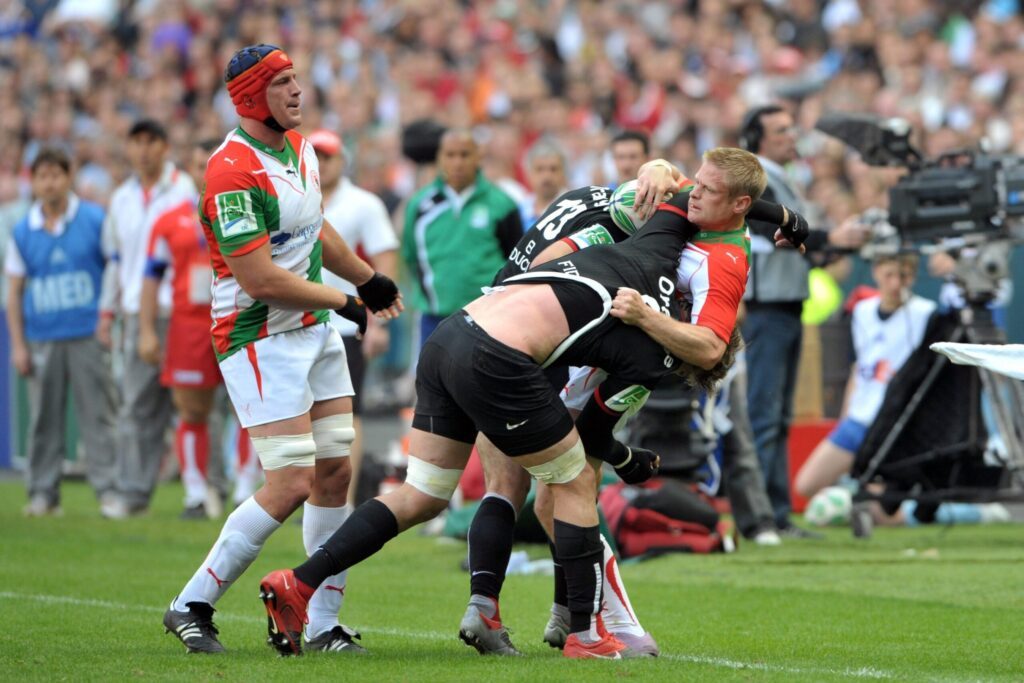
There are the joys, the titles and the crowns, national, European or global. But sport is not only that. It is also the emotions, the setbacks and the disappointments. The 2010 HCup final remains a painful memory for the players, officials and supporters of Biarritz Olympique.
Up against the great Stade Toulousain, the Basque side lost at the Stade de France (19-21), suffering in particular from a clear Toulouse dominance in the scrum.
For It’s Rugby, former international Jérôme Thion (54 caps), the BO captain and now a pundit for Canal +, agreed to go back over that all-French final that did not turn out in BO’s favour. Interview.
IT’S RUGBY. – What memories do you have of that 2010 final?
Jérôme Thion: We were having an average Top 14 season but the European Cup allowed us to get a bit of confidence back. We ended up in the final, which is already huge. All the enthusiasm of the public was behind us. We were up against a very dominant team. In terms of results, we were nowhere near their level at that time. For us, it was almost a lap of honour, particularly for the older ones, of whom I was one. We knew it would probably be one of the last finals we would all play together, with Dimitri Yachvili, Damien Traille or Imanol Harinordoquy. We belonged to a generation that had already been French champions, and that had lost the 2006 final against Munster in Cardiff when we had the means to win it. This time, we did not want to let the chance slip. We wanted to win something together. Unfortunately, we did not do it.
Did the semi-final against Munster leave its mark ahead of the final, physically in particular?
Yes, inevitably. When you play a semi-final against one of the best teams in Europe, you use up an enormous amount of energy. On top of that, they were a very solid side up front. We came into the final with quite a few injuries. We had no tighthead prop left. Alexandre Barozzi, who was part of the squad and was our only tighthead capable of playing at that level, had not been registered on the European Cup list. So we had to make do with what we had. Against a team like Stade Toulousain, with an overpowering scrum, it was very hard to compete.
It is a match that could have swung at the end. We could even have gone in front, despite our problems in the scrum. That is clearly the area where we suffered most. We were under pressure constantly. Psychologically, when you are dominated like that, it is hard to rise above it
And yet, despite the Toulouse dominance everyone talked about at the time, the score stayed tight. How do you explain that?
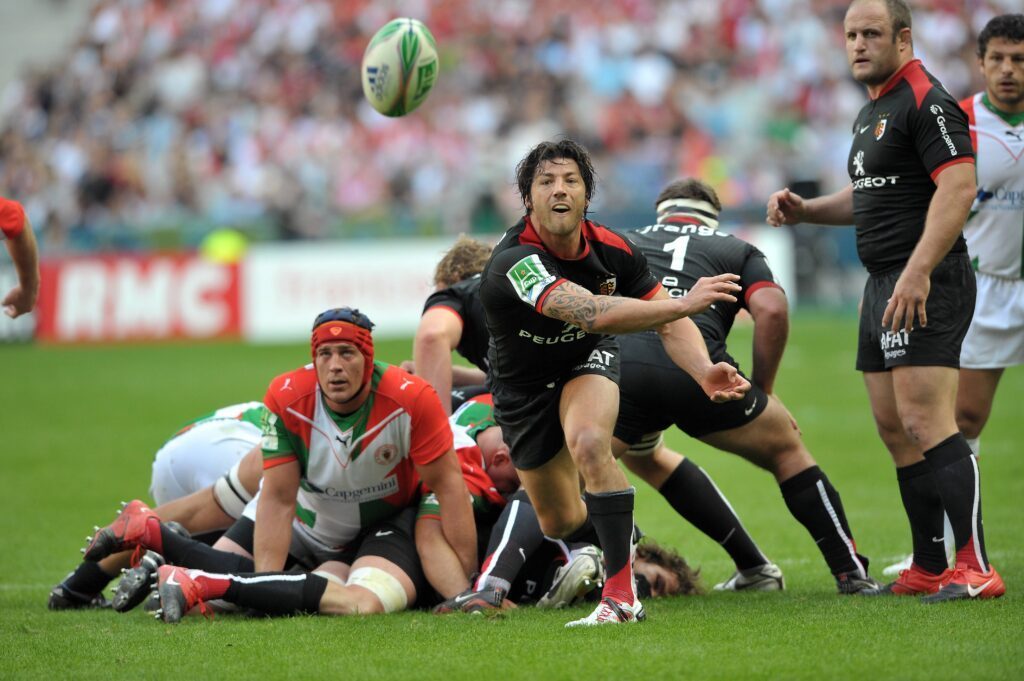
It is a match that could have swung at the end. We could even have gone in front, despite our problems in the scrum. That is clearly the area where we suffered most. We were under pressure constantly. Psychologically, when you are dominated like that, it is hard to rise above it. For us, the scrum was usually a strength. Inevitably, when you are being beaten up front, it is hard to send the ball out to your backs. Toulouse were very clinical. As soon as they got into our half, they took points.
What do you take from the atmosphere of that final at the Stade de France?
There were close to 80,000 spectators. It was enormous. A final at the Stade de France, and an all-French one at that… You could not dream of better. We had already played finals there and we had won them. So it was not something that caused us a problem. We knew the atmosphere, the pressure, and we were used to playing in that sort of setting. The build-up and the final were incredible to live through. Unfortunately, the result was not the one we were hoping for.
Do you remember a standout individual performance during that match?
I remember the matches we won more than the ones we lost. The defeats, we tend to try to forget. What I mostly remember is certain players who had previously been our team-mates and who were now on the other side, like Thierry Dusautoir or Census Johnston. It was frustrating to play against players we were very fond of and who were getting the better of us.
Losing a final is always very hard, especially when the season is not over. The Top 14 was still going on, and nothing was assured. We still had to fight to finish the season well. We were part of a generation that knew these would probably be its last play-offs
As captain, how did you experience the aftermath of the final and getting the group going again?
It was complicated. Losing a final is always very hard, especially when the season is not over. The Top 14 was still going on, and nothing was assured. We still had to fight to finish the season well. We were part of a generation that knew these would probably be its last play-offs. We made the most of it, but the defeat made the end of the season difficult.
Is it one of the most painful memories of your career?
No, but it is up there. There are two that are particularly painful. The finals against Munster and against Stade Toulousain. They are two matches where we had the chance to win, and where we have huge regrets because it all came down to the finest of margins. As we saw again last weekend, it is the details that make the difference. At that level, everything comes down to details. And if you do not master them, you cannot hope to win.
Comments