
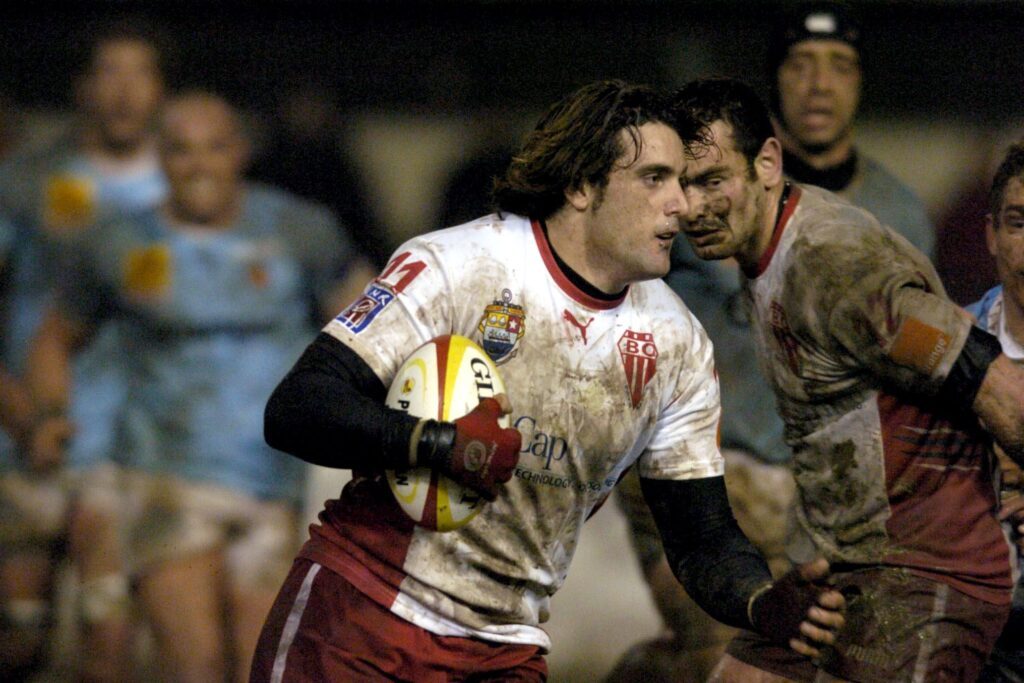
He scored a decisive try in a Top 14 final, played in a European Cup final, was a key figure for France Sevens… So where has the great Jean-Baptiste Gobelet got to?
The BO wing, French champion in 2005 and 2006, had in a way slipped off the mainland’s radar with his sevens career. We got in touch with him from Mauritius, where he was offered a “fascinating” mission built around the development of rugby.
“I arrived in Mauritius in 2017… a bit by chance, because there was a need to structure performance“, he says. At the time, Mauritian rugby existed, but remained scattered. With no clear pathway and no real international projection. “It has existed for decades, but there was a need to restructure the performance pathways after the Island Games“, he explains.
He arrived with a background forged at the highest level, by way of Biarritz Olympique, and immediately made a clear-eyed diagnosis. “I saw that there was a level of rugby in the Indian Ocean that was interesting… you see real rugby players with real attitudes.”
Training and development
The potential is there, raw, scattered across Madagascar, La Réunion and Mayotte. So he stayed, and began to build. Structure, train, organise. “We work on the performance pathways, on training and on the development of rugby“.
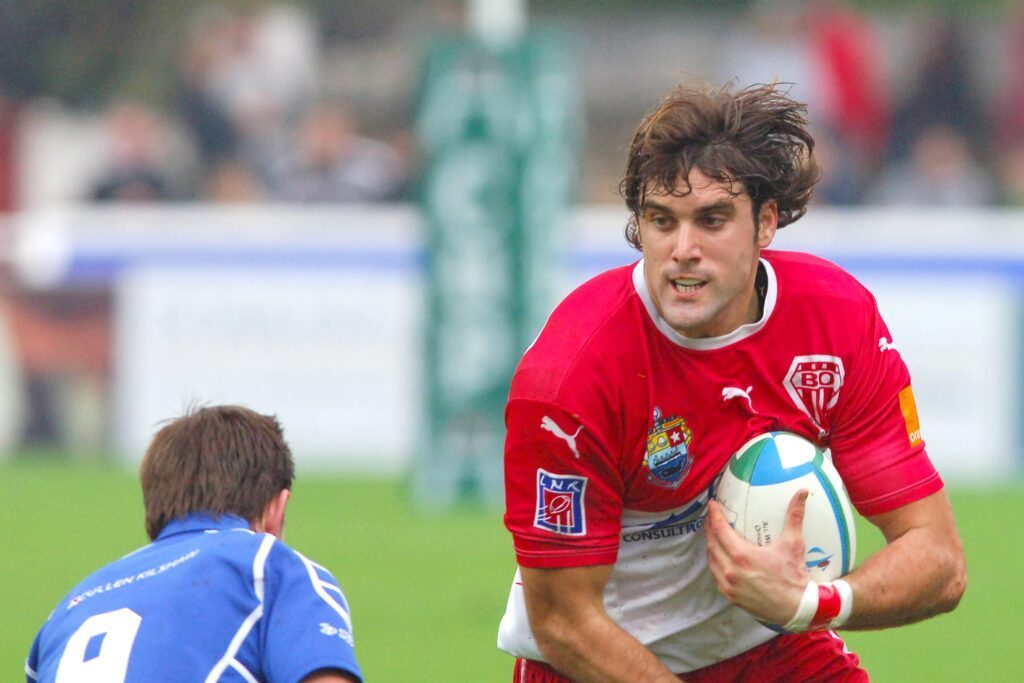
A broad mission, an almost total one, but immediately up against a structural limit. Numbers. “We are dealing with a small population.” A little under 1,000 registered players only, where South Africa have hundreds of thousands (around 700,000).
From that point, the choice is clear. “We are far more about quality than quantity.” Three major clubs, age groups running all the way down to the youngest, children of five or six discovering rugby. A fragile but coherent base, which seeks to make up for the lack of volume with higher standards.
Those standards come through one simple but unavoidable principle. Leaving. “For each generation, we take the youngsters to a different competition.” Unable to create sufficient density at home, Mauritius exports itself. Monaco, South Africa, Dubai, Bangkok. The world becomes a learning ground, a permanent laboratory.
And the results follow, quietly but surely. He is pleased about it: “We have managed to position ourselves in a top 10, top 12 for eight years now, in certain competitions.” A consistency that validates the groundwork.
A brake on performance?
The women’s game embodies that rise. “We didn’t have a junior team when I arrived… today we have U18s and U15s.”
Rapid progress, in step with the global growth of the discipline. But behind those advances, the ceiling remains visible. “The brake on performance is the number of competitions you are going to play in a year.”
Too few matches, too little exposure, a chronic lack of contests that mechanically slows progress.
Imbalances
And to that is added a deeper imbalance, an almost cultural one. “A Pacific player is far more “bankable” than an Indian Ocean player. When you take the NFL or the NBA, they go shopping in Africa to tap into obvious potential, with programmes and scouting. Rugby is perhaps missing out on huge potential.” The gaze of world rugby falls elsewhere, towards territories already identified, already valued.
“There are very high-quality players… but they are not taken into account“, regrets the man born in Corrèze and schooled at JA Isle, in Haute-Vienne. A clear-eyed assessment, with no beating about the bush, that reaches well beyond Mauritius.
That imbalance in world rugby is also found in the economic and institutional logic. “The funding distribution system is not set up to develop those regions.” Little investment, few competitions, little visibility. A vicious circle that locks those territories into a form of sporting invisibility.
And yet the potential is immense. “There is no limit for Mauritian rugby“, Gobelet assures. A statement that might seem optimistic, almost naive, but which rests on a precise strategy.
The big man (1.92m, more than 100 kg back in the day) is at the same time developing a multi-sport performance structure and genuine Olympic academies in Africa and the Middle East, convinced that rugby cannot develop on its own. “My mission goes beyond rugby… it is really about developing the athlete as a whole.“
He goes further still: “We offer elite performance packages for young Olympic athletes within international school systems.“
A holistic approach
Nutrition, mental preparation, medical monitoring, workload. A holistic approach, conceived as a foundation. “The only way to get hold of young people on a regular basis and train them like pros is school.”
So he adapts the model. “You put sport in every morning from 7am to 10am as part of specific sports preparation programmes… and you put them in an elite environment.” A gradual acculturation, which involves the players as much as those around them.
Currently 100 Olympic athletes from 20 different sports. “We are also going to have to educate the parents about what an elite athlete is.“
Rugby then becomes one tool among others, built into a broader reflection on performance and development.
Economic realities, natural borders
Behind the technician, there is also a career path that shapes the view. Before Mauritius came France, the Basque Country, the United States. Multiple experiences that now feed into the way he approaches rugby. “I have lived in the USA, I have lived in Europe… in different places.”
A journey made of moves, of adaptations, of questioning. What strikes you about him is that ability to think about rugby beyond its natural borders. To see it as a global system, connected to economic, cultural and educational realities.
His past as a top-level player is never waved about like a banner, but it seeps into every decision. Into the standards he imposes, the rigour he passes on, that constant desire to bring Mauritius closer to international standards without denying its particularities.
The momentum he generates also rests on a gradual structuring of the local fabric, which is essential. Today, Mauritian rugby rests on a core of around three historic clubs able to field teams from the rugby school right up to seniors, a relatively rare case at this scale.
“You really have nine major clubs in Mauritius and Rodrigues, three of them core clubs… from U7 to senior“, Gobelet details. Around them, some fifty teams orbit, creating a form of territorial network. On top of that comes school development, where “we manage to capture a lot of kids“.
That broader base remains modest in volume, but it offers continuity, progression. And above all, it allows rugby to be anchored in local habits, well beyond a simple expat or niche sport. A slow but strategic implantation, “aimed at embedding the game for the long term“.
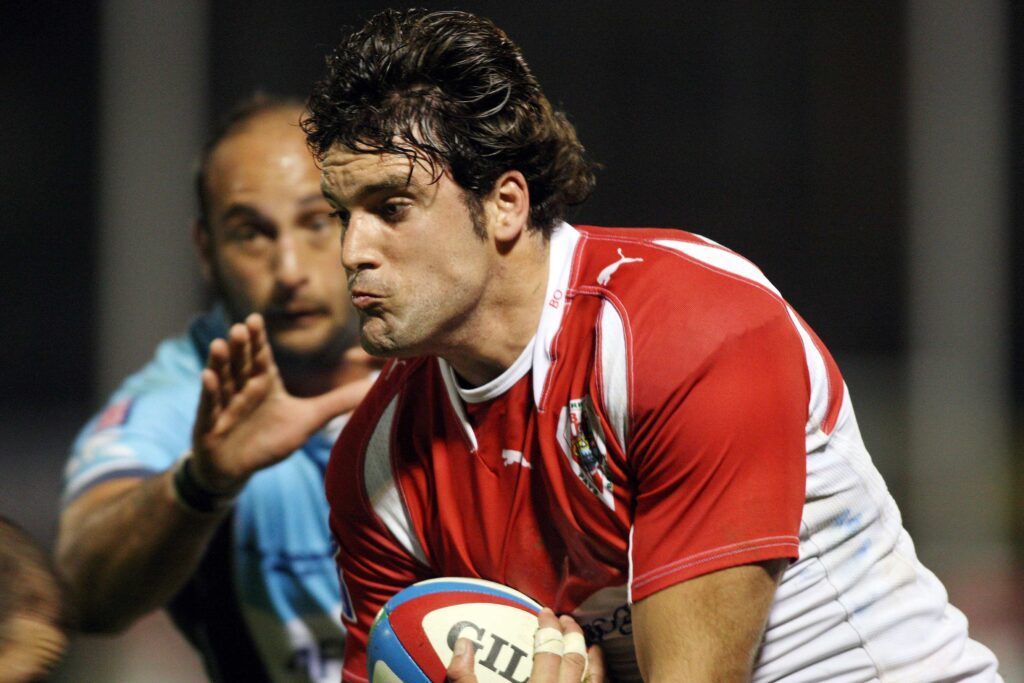
In that construction, the comparison with other African territories comes up constantly, as a reference point. “When you compare with other countries… they have 35,000 or 40,000 registered players but only eight clubs.” Another reality, an inverted one. Plenty of players, but few structures.
Mauritius, for its part, is going the other way. Relatively few registered players (for 3,500 “members“), but a denser, more structured organisation, able to support players throughout their progression. One look at neighbouring La Réunion and “it shows that the work being done in Mauritius is of high quality.“
A statement that rests on a fragile but coherent balance. Banking on long-term development, on continuity, rather than on sheer numbers. A logic that takes time, but which could, in the end, produce more complete profiles, better suited to the demands of the top level.
“This is only the beginning“, Jean-Baptiste Gobelet assures.
Definite progress
Finally, there remains the purely sporting ambition, the one measured in results and in the pecking order. Gobelet is not selling an unreachable dream. He sets a realistic course. “The aim is to be able to stay in the African top 10.”
Not competing with the best nations on the continent just yet, but establishing themselves durably in the landscape. And above all, continuing to exist against sides made up largely of players based in Europe.
“We are amateur rugby against professional rugby.” The challenge is immense. But it does not rule out the occasional big performance, notably on the sevens circuit, where the Mauritian sides are starting to emerge. “The girls won the Winter Sevens… we are climbing the ladder.”
Slow but tangible progress, confirming that the project, beyond the constraints, is heading in the right direction.
Along those lines, Mauritius is also trying to exist in another way. Hosting, organising, making itself visible. “Making the quality of rugby in Mauritius known throughout the Indian Ocean.” The territory becomes a platform, a meeting point. Hosting South African teams, organising tournaments, creating events capable of drawing attention.
A clear-eyed strategy. When you cannot yet fully compete on the pitch, you build legitimacy elsewhere. And behind it, a broader ambition is taking shape. “The Indian Ocean runs from Australia to South Africa and on to the Emirates.” An immense area, then, still barely structured, but rich in connections.
Mauritius is positioning itself there as a potential crossroads, able to connect scattered dynamics. In a two-speed world rugby, that capacity to adapt becomes essential. “When one team plays fifteen competitions a year and another only two, the speed of development is not the same.” The observation is once again unforgiving. But it is not inevitable.
Between passion and roots
Deep down, the project goes beyond the purely sporting. It is also part of a life choice, an almost philosophical one.
Because there is the settled man, almost rooted. In Tamar, in the south-west of Mauritius, far from the nerve centres of world rugby, he has found a form of balance. “I have always needed a relationship with the sea… finding an environment like this one again suits me very well.”
His life is split between the federation, his business and his family. A South African wife, a daughter, regular trips back and forth to Cape Town. An intimate geography that mirrors that of his sporting project.
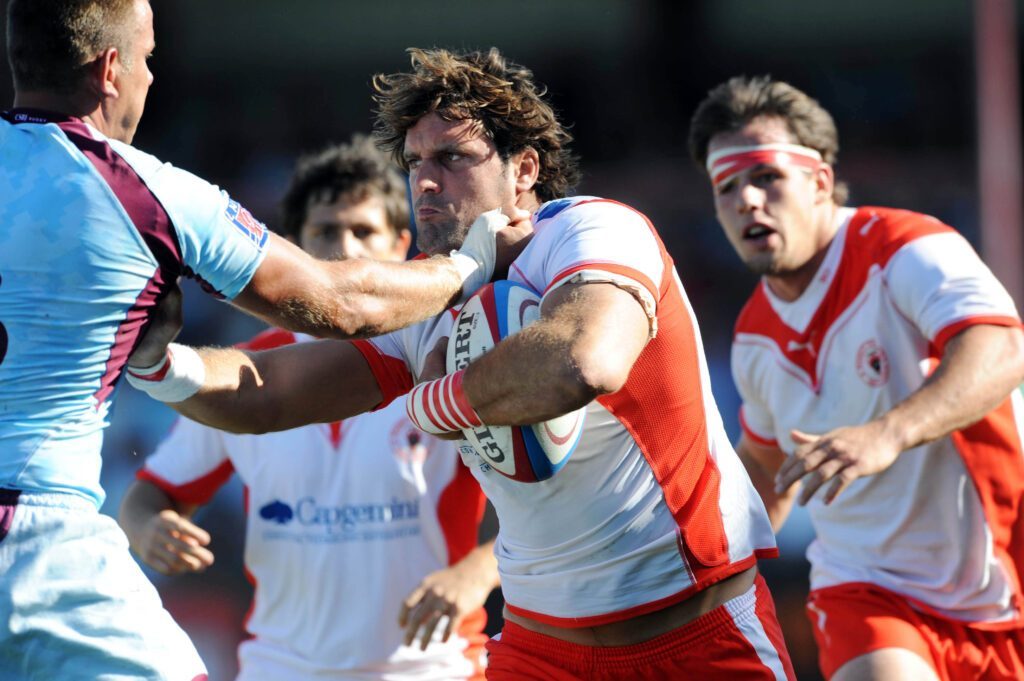
Here, he is no longer only a former player or a technical executive. He has become a local figure, immersed in a culture he is learning and lays claim to. “It’s really pleasant to be able to share with the people here.”
A way of remembering that behind the strategies and the figures, rugby remains first and foremost a matter of human bonds, of territories and of roots.
That immersion feeds his vision of a rugby without silos, capable of emerging far from its traditional centres. A rugby that is no longer limited to its historic powers, but which reinvents itself on its margins.
In Mauritius, that movement is still discreet. But it is under way. And driven by a simple, almost stubborn conviction.
Gobelet has the last word: “There is no limit for Mauritian rugby.” Except in terms of performance vis-à-vis World Rugby…

Comments