
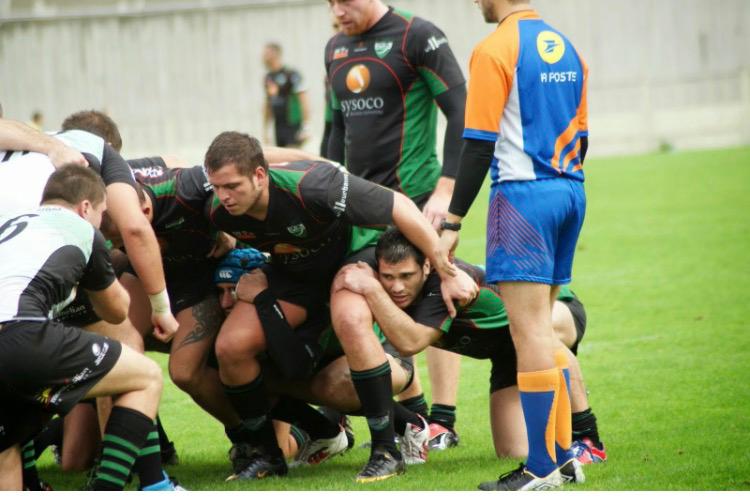
Anthony Calteau, 35, speaks plainly. No detours. Just as he plays. “I think that if you want to play at a level other than the one you get on La Réunion, you have to leave.” The sentence lands, clear-cut but calm. It sums up a career path, and also a reality that every player on the island of La Réunion knows.
He started early. “I started rugby at the age of 9 at L’Étang-Salé.” A childhood in a club that gives structure, that develops players, but that quickly reaches its limits. So he progresses, strings together age-grade selections, gets a taste of competitions off the island.
“I started out like everyone else“. A club kid, developed locally, raised on a game still played in the shadows on the island. Very quickly, he realises something is stuck. Not in his game. In the environment. On La Réunion, rugby exists, but it is not enough. Until the question really comes up. Stay or leave.
From RC Étang-Salé to the LOU: Anthony Calteau’s journey
So he does what many do without always saying so. He leaves.
Destination mainland France. Lyon. Studies, and more serious rugby. “I get recruited by LOU Rugby, in the espoirs.” The level goes up a notch. So do the demands.
Then everything stops. “I get injured, I do my cruciate.” A short sentence, but a turning point. The kind of moment when a career can tip over. It tipped over.
He hangs in there. Comes back. Drops down a level. Moves from club to club, Villeurbanne, in Fédérale 2, then Saint-Genis-Laval Rugby. Three seasons in Fédérale 3. Rugby in the shadows, but an education.
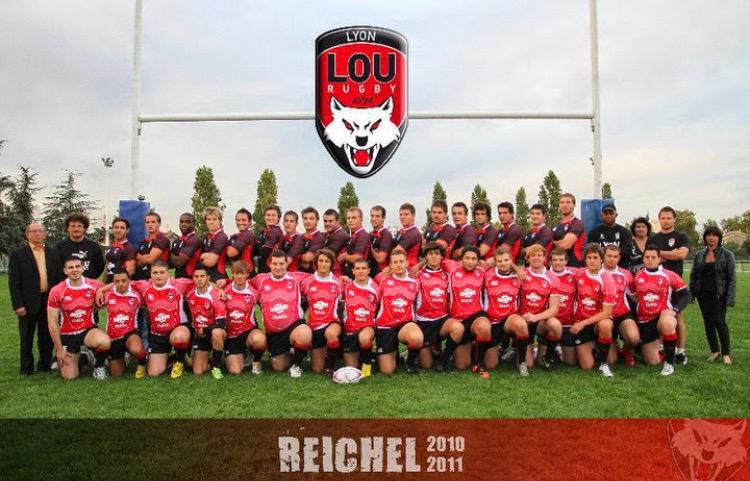
Rugby on La Réunion: why you have to leave for mainland France
“Once I was back on my feet, I signed elsewhere, I carried on.” Behind the sobriety of the words lie the years spent rebuilding. Learning to understand the game differently. Taking in what La Réunion could not offer him on its own.
Because his assessment never changes.
“Today, if you want to play higher, you have to leave.” Not an option. A necessity.
Because on the intense island, the level exists, but it remains uneven. “Apart from a few teams, the standard isn’t necessarily what it used to be.” The opposition is missing. So is the repetition.
So an entire generation makes the same choice. Leave for mainland France. Test themselves. Learn. And sometimes, come back.
He came back in 2020.
“The urge to go home.” Almost self-evident. But he does not come back alone. “There were a good ten of us who left… and we all ended up coming home.” A silent wave.
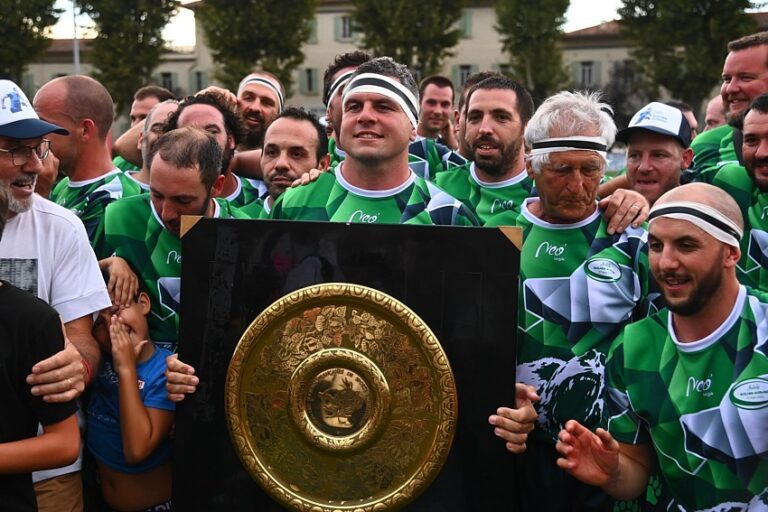
At Rugby Club de L’Étang-Salé, the effect is immediate. The level rises. The club moves into another dimension.
“That’s why it’s been going well for 5 or 6 years“, smiles the president, most of whose teams are champions of La Réunion. A simple explanation? The return of players developed elsewhere.
Player, coach, president: Calteau’s triple role
Calteau, for his part, wears several hats.
Player. Coach with the youngsters. And president for the past two years. “I think I’m the youngest president on La Réunion.” He almost smiles as he says it, but the responsibility is very real.
He defines his role without hedging. “I think I’m a president who listens to my club, to the volunteers and to the players.” A hands-on president. One who knows every path, every difficulty.
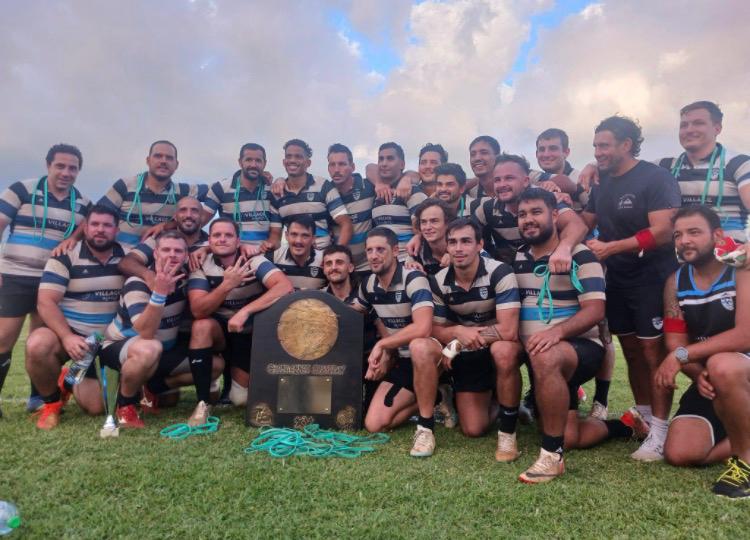
But what obsesses him is not just winning. Even if the objective is clear. “The project is simple, it’s to win the sixth star.“
Develop, leave, come back: the cycle of rugby on La Réunion
No. What counts is passing it on. “It’s about trying to repeat everything we learned.” What he took from mainland France, he gives back here. To the youngsters. To those who will come after.
He can already see it. Maël Turpin, a U20 international, is the example… A Mont-de-Marsan player, he will surely be recruited by a Top 14 club. The cycle goes on.
The model is set.
Develop here. Leave for over there. Then come back.
There is also, in him, a form of obsession with detail, almost invisible in the results but essential in the building. Calteau insists on what the club concretely gives its youngsters. “The kid gets a jersey, shorts, socks… he gets a snack every Wednesday, the bus is paid for.”
Logistics that look simple, but that say a great deal. On La Réunion, attracting and keeping players goes through that too. Creating an environment where families find their place, where children are looked after from start to finish. “People understand that by coming to us, there’s something serious going on“, he explains.
RC Étang-Salé: a structured club with limited means
That structuring of daily life, inherited in part from what he saw in mainland France, becomes an almost silent lever. It allows the club to pick up youngsters who would never have come to rugby.
And above all, it establishes a culture. That of a club which takes charge, which supports, which does not leave its players alone in the face of the constraints.
In a territory where means remain limited, that groundwork becomes almost an act of activism.
The exile of La Réunion’s rugby players, an investment
Finally, there remains the question of identity. Because if the model of leaving imposes itself, it does not dilute local roots for all that. Quite the opposite.
Calteau insists on this idea of roots. “I’ve always been at this club since early childhood.” And around him, the same story repeats itself. Players who left, came back, and now form a hard core again.
A loyalty that is rare in modern rugby. It creates a particular alchemy. “We’ve been through everything together“, he adds. Wins, defeats, departures, returns. That shared experience gives the club a stability many would envy.
And that is perhaps where the real strength of this model lies. Leave in order to progress, yes. But come back in order to belong. In that permanent back-and-forth, rugby on La Réunion does not lose its identity. It strengthens it.
Jérôme Agenor, Maël Turpin: the relay runners of a generation
“We had coaches who developed us properly“, he says. Among them Jérôme Agenor, a former president and coach, the man behind a game plan, a vision and an identity.
Today, it is therefore Anthony Calteau’s turn to take up the baton. And to push youngsters to leave, even if that may seem paradoxical.
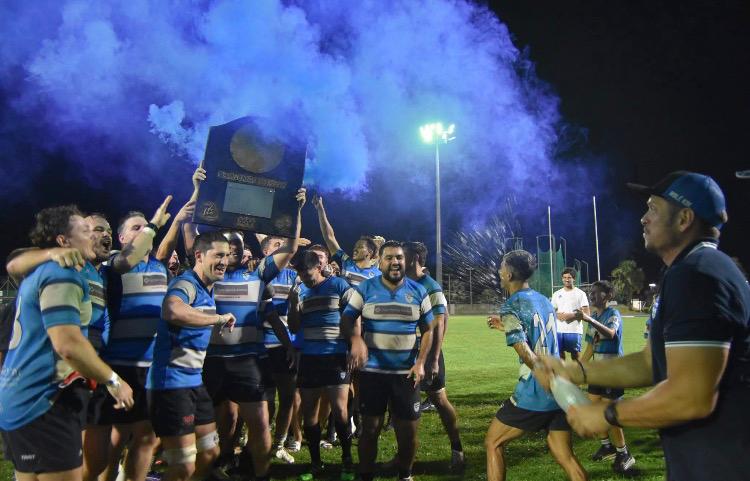
Because in his eyes, leaving is no longer a loss. It is an investment.
In a game still fragile on La Réunion, the club of L’Étang-Salé stands as the driving force. More than 500 registered players. A structured rugby school. Results.
But also a make-do economy. “We get grants from the town hall… all the rest, we generate ourselves.” Sponsors, the bar, merchandise. A precarious balance, but a controlled one.
And all around, the field is widening. Madagascar, Mauritius, Mayotte. Indian Ocean rugby is structuring itself too. “The standard is really good… very physical, very solid.” But there again, the comparison comes back. Always.
Indian Ocean rugby: Madagascar, Mauritius, Mayotte as benchmarks
Anthony Calteau does not try to dodge that reality. He looks it in the face. And he uses it.
His path is not an isolated example. It is becoming a method. “We don’t change names… we all came back.” Words that sound innocuous. But behind them, a revolution, without a sound.
Because on La Réunion, rugby is no longer built only on the island. It is built in the leaving. And above all, in the coming back.
1 comment
Oh wow Toto brilliant !!! So proud of you ! ❤️❤️❤️❤️❤️
Automatically translated