
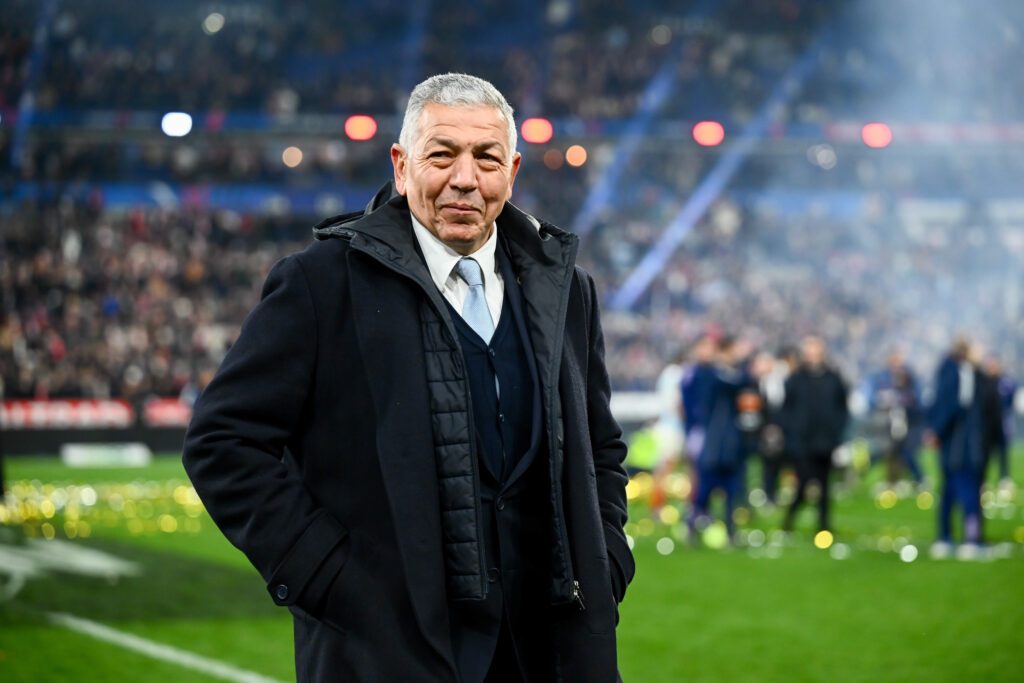
The phone call came from John Eales, the Australian rugby great who now chairs the World Rugby Hall of Fame panel. Twenty-three years after his last cap for France, that is how Abdelatif Benazzi learned he was joining this very exclusive circle of world rugby “legends”. It was news he had stopped expecting, and it left him surprised and emotional.
Speaking exclusively to It’s Rugby, he talks about the honour, his arrival in rugby “by chance” and his gratitude to those who crossed his path. Interview.
The call from John Eales and the weight of the nomination
IT’S RUGBY. – How did you take the news of your induction into the Hall of Fame? And how did it happen?
ABDELATIF BENAZZI: It all started with a simple phone call from the chairman of the institution, John Eales, the former Australia captain. He called me personally to tell me. Obviously you wonder what is going on, because it comes a very long time after the end of my career. You have moved on, even if you have stayed involved in rugby in a different way. Still, you get the feeling there is a kind of lucky star following you, and then all of a sudden they tell you this. I took it with a lot of surprise and astonishment, and of course with emotion, because I have some idea of the weight of this nomination. At the same time it is a responsibility. Since we are still involved in rugby, we have to protect this sport, defend it with the federation, with our convictions, and go even further. I realise that you are a rugby man all the time, even when you are no longer on the pitch. And because it is a magnificent sport, an exceptional way of life but a fragile one, with all the structural problems we know about, right down to the clubs, and the health risks, we absolutely have to stay vigilant. That is why I feel this nomination as a bit of a weight, a responsibility, after receiving recognition from an international institution. Of course it is flattering.
I was born in the middle of the desert, surrounded by football and 10,000-metre and marathon runners. So I never expected any of this
From Oujda to Cahors, falling into rugby by chance
Could the kid from Oujda, in Morocco, ever have imagined a career like this?
Not at all! As I often say, I fell into rugby by chance. I was playing football with my friends and because I was tall and lanky, they told me to go in goal. I went to complain to my school PE teacher, and he said: “Here, come on, I’ve got a ball for you. See that line over there? Go and put it down behind it, and you’ll see how it feels.” Since you have to do what your teacher tells you, I gave it a go, and I knocked over three or four kids before everyone piled on top of me. It gave me confidence. I immediately felt at home in that sport. It gave me the greatest gift in the world, it lifted a weight off me, the weight of shyness and reserve, and it taught me to take care of things. Just finding a passion at a very young age is already a big victory. The results followed, at school, with my family, everywhere. I found a release. People often say rugby is a school of life. It is absolutely true. And yet I did not come from that culture. I was not born in the South West, I am not from Tyrosse, Dax, Agen or Cahors (laughs). I was born in the middle of the desert, with a round ball and 10,000-metre and marathon runners all around me. So I was not expecting any of this. But when I was given the chance to join a club, first in Oujda with great coaches who taught me the basics, then in Cahors, everything followed. I will soon be 60 but that wonderful year in Cahors still comes back to me. It was a real family, like in Oujda.
What is wonderful about this sport is that we are all wired the same way, psychologically. There are no levels, no barriers. When you are a rugby man, you belong to a world of your own, full of values, despite life’s troubles, the jealousies or the problems you may have come across. You think about the emotions you share together, you realise that on your own you are nothing and that the team ethic is essential. That is why it is always awkward to receive an individual honour. You know all the work that went on behind it, as a team, the teammate who held up the scrum, the one who threw in a perfect lineout, the one who made the right pass… It makes me feel a bit isolated to receive this alone, and that is why I would like to share it with everyone I can in the rugby world.
It is also a fine recognition for your clubs Cahors and Agen, which meant so much to you and put their faith in you…
Yes, absolutely. Oujda, Cahors, Agen, Saracens, the Australian teams: those are the stages of my journey. I have always been an observer, someone who feels things and listens a lot before acting. I was a good pupil. Today it is an important part of my life, and I can see it carrying on with this nomination. Fortunately, I have stayed involved with Florian Grill and our whole team at the French Rugby Federation. We are trying to promote our values and our model. I think the work we have done since arriving at the Federation also played a part in this recognition, because my only concern has always been to put our values, our system and our model at the service of rugby. I believe we are getting there and now all that is left is to become world champions (smiles). In terms of respect, collective work and building this sport around the world, we now have a seat at the centre of the table.
Philippe Sella and the French members of the Hall of Fame
You have joined your great friend Philippe Sella in this institution. Yesterday you were with him at the Biarritz match. What did he say to you about it?
I called him and told him to come with me because I was a bit shaken by the news (smiles). He reassured me, of course, and we joked about it, we had a good laugh. We will see each other from time to time, and I hope other French players will join this wonderful Hall of Fame family.
On that subject, is there a French player who, in your view, deserves to join you there?
There are lots. In the end they all deserve to be there. But it is not up to me. Maybe in future I will be able to suggest a few names if I am asked. There are some I am already thinking of. In any case, there are never enough French players in this kind of institution, there should always be more, given how much we have given to this sport.
“Rugby is part of life, not life itself”
Do you often think back to your career?
To put it simply, I always talk about passion. I have often said it: I did things 100%, I made important choices in my life, including for my family, and I never talk about sacrifice, only about victory. I gave everything. Of course there were matches lost, injuries, but you only keep the positives. I have always considered rugby to be part of life, not life itself. Perhaps honours will extend it. So much the better if that happens, but life is about other things too. Above all it is about keeping the behaviour and values this sport has passed on to us and putting them to use in our daily lives, because society is complicated. Many young people, girls and boys, need reference points. If rugby can offer them that space for freedom and expression, so much the better. In any case that is what we try to pass on to them: not to see rugby as just a contact sport but to understand what it stands for, that shared effort with people who differ in size, personality or religion, yet speak with the same voice and share the same vision.
Berbizier, Villepreux and the words that mattered
To finish: you mentioned the words of the teacher who sent you towards that famous line. Were there other words, from a coach, that stayed with you during your career?
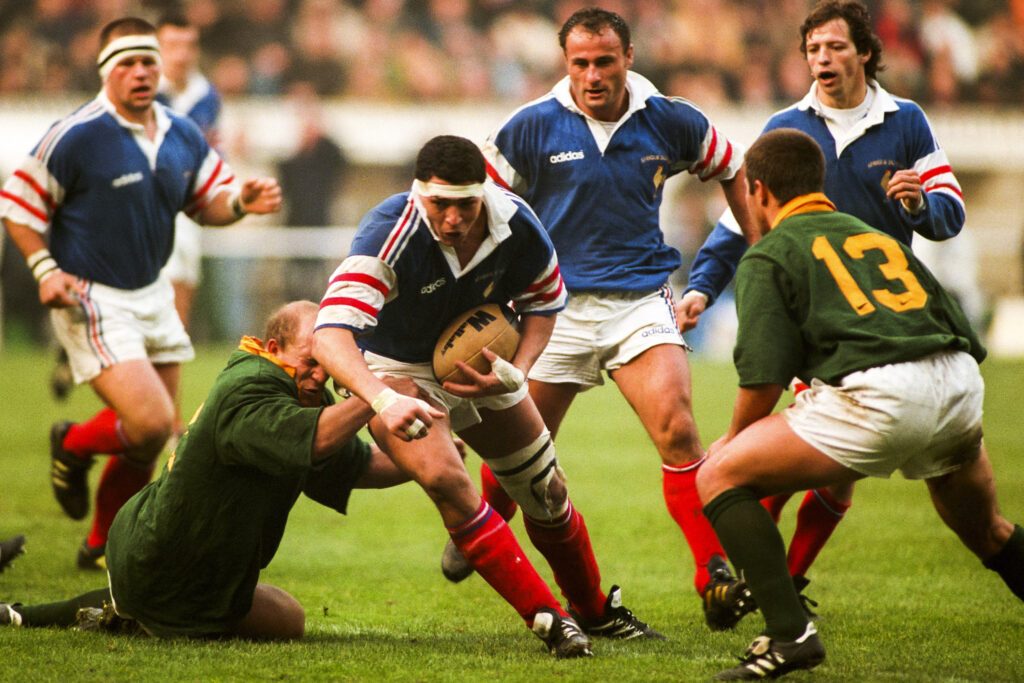
Yes, there were. I think of a coach at Agen, at under-17 level, who told me: “Beyond your physique, you can bring a lot to the continuity of play.” At first I could not really focus on the technical side, because I first had to calm down a few teammates who did not want to play with me (smiles). I had to show them I had guts. Physically, I always put the physical side ahead of what we call “skills”. But once I was established, I improved a lot thanks to several people. First Pierre Berbizier with the France team, then Pierre Villepreux on reading situations and on how not to waste too much energy, to stay available and fresh for the continuity of play. And then that under-17 coach at Agen, who debriefed me after every match and gave me advice. Even people outside rugby helped me, like athletics coaches, on the way I ran, fell and got back up. You had to broaden your horizons, explore lots of things to progress in a career. Today it happens naturally because players are professionals. Back then you had to do it yourself, go and find it on your own to make the difference. You had to be different from the others and go beyond what the club provided. Matches also helped me improve. Watching how the All Blacks, the South Africans, the English, the Australians played… My time in Australia was also very useful. Every period of that life brought its share of progress. After that, what I always say is that you have to see things through so you have no regrets. When it ends, at least you tried. Even without winning a title, it does not matter. You have to do everything to get there.
Comments