
Italy-Scotland: a duel in the storm and revenge for the Azzurri
Rome, a leaden sky, a greasy pitch and a Scotland side convinced they were finally going to have a quiet weekend in Italy. Wrong. Very wrong. In conditions that could send a prop sliding ten metres, Italy played an old-fashioned match with a tried and tested recipe: tackle, jackal, defend… and start all over again.
The Squadra struck quickly, hard, and above all at the right moments. Two tries in the first half (Lynagh and Menoncello), a brick-wall defence, and Scotland were left chasing the game with a ball slipping faster than a bar of soap, and their certainties going the same way. Despite a very Scottish share of possession (65%) and a tense finish, Italy held on. Closed ranks. And gritted their teeth. And earned an epic win… except in terms of the rugby played.
Menoncello thunders over the line for @Federugby ?#GuinnessM6N #Since1883 pic.twitter.com/wC4Hv2UzHb
— Guinness Men's Six Nations (@SixNationsRugby) February 7, 2026
Final score: 18-15. No fireworks, but a win full of sweat, solidarity and symbolism. The 2026 version of Italy may not be flamboyant just yet, but it has become horribly awkward to play against. And in this tournament, that is already a small revolution. Italy are confirming that they are no longer the guaranteed stop-off but the treacherous detour.
England-Wales: a demonstration and a statement of intent
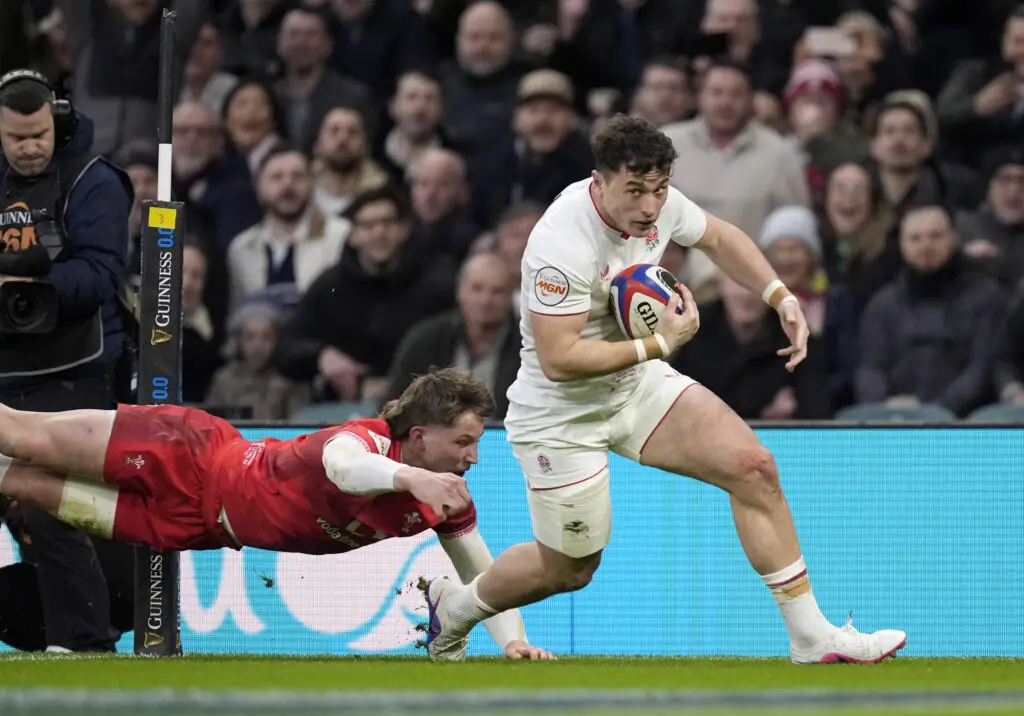
It took only a few minutes to work out that it was going to be a long afternoon for Wales. A very long one. From the kick-off, England took hold of the ball, of the tempo and, before long, of the match. Surgical kicking, dominant forwards, a defence coming up in formation… the plan was clear and perfectly executed.
In that ideal setting, George Ford produced the full conductor’s repertoire. The right tempo, clean decisions, and that discreet little smile of a fly-half who knows everything is going to plan. Behind him, the England lines advanced methodically, constantly finding space in a Welsh defence already on its heels.
HIGHLIGHTS
— England Rugby (@EnglandRugby) February 7, 2026
Relive the action from our Guinness Men's Six Nations opener against Wales ?
And then there was Henry Arundell. The England wing did not merely score a hat-trick: he reminded everyone why Twickenham loves players who turn a half-chance into a full-blooded, length-of-the-field try. Every time he touched the ball, the threat was immediate. Footwork, acceleration, a devastating step, and suddenly the try line was coming up very fast.
Wales did not shirk it. They tackled, they tried, they kept at it. They even scored a try to save face… But against this England side, every initiative seemed to cost two extra efforts. Too many errors, too little quick ball, and a set-piece that was regularly disrupted. In those conditions it was hard to stay in the contest for any length of time. Time is pressing for a Wales side who now see France coming to Cardiff with a knife between their teeth.



Comments