
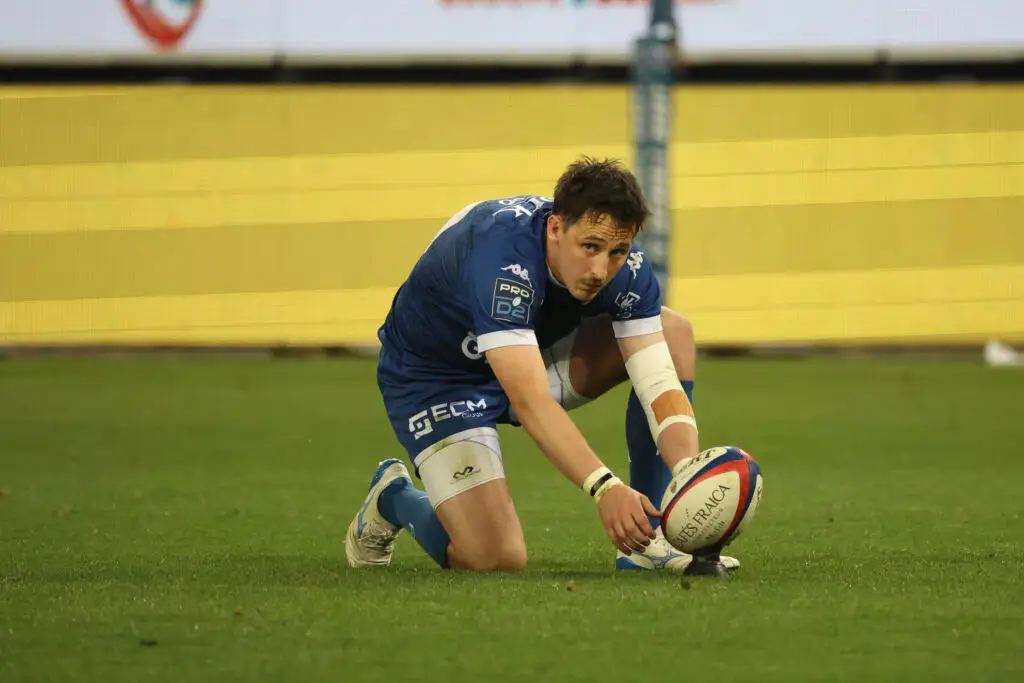
Sam Davies is going through a genuine ordeal. Grenoble’s fly-half is struggling to make it back onto the pitch after several setbacks. But on Instagram on Sunday, the Welshman explained that he is living through a very difficult spell. He is in fact suffering from a staph infection.
“After a few difficult months, my first suspicion has been confirmed: a staph infection, probably picked up on the artificial pitch at Provence, which spread to my adductors before reaching the bone. The infection attacked my hip and the adductor area so aggressively that I could barely move“, says the FCG’s brilliant goal-kicker.
Davies is referring here to the trip to Provence on 8 January. He has not played since and has featured in only two matches this season. “The long waits for a diagnosis, the repeated hospital stays and the lack of answers have made me incredibly frustrated and angry. After fighting hard to come back from a dislocated shoulder last year, going through this in my first match as a starter felt unreal“, he goes on.
Confirmed by the Institut national de santé publique du Québec
That is not all. The Grenoble man explains that he has lost 6 kilos. He also says he went through “the worst pain of his career“. Davies does not yet know when he will be back on the pitch but remains completely motivated and confident for the rest of the season “with his brothers”. “Even though the season has been complicated for the team, on and off the pitch, I remain convinced that this group will soon find the competitive level we are aiming for. I can’t wait to pull on that shirt again — it means an enormous amount to me — and to represent the red and blue of Grenoble once more“.
Sam Davies is therefore pointing the finger at Provence’s artificial pitch. As we know, that type of surface is now installed in most Top 14 and Pro D2 stadiums. Less maintenance, less damage, faster surfaces… These artificial pitches have become the norm. But they also raise questions.
In an article published by the Institut national de santé publique du Québec, “the sterility of artificial fibres” is singled out. “That sterility is thought to contribute to the proliferation of staph-type bacteria. The combination of heat, moisture, sweat, saliva and blood during play on an artificial pitch is believed to greatly increase the likelihood of infection in the event of open wounds. Natural grass, on the other hand, is thought to act as a “self-cleaner” and thus to limit that risk“, it states.


Comments