
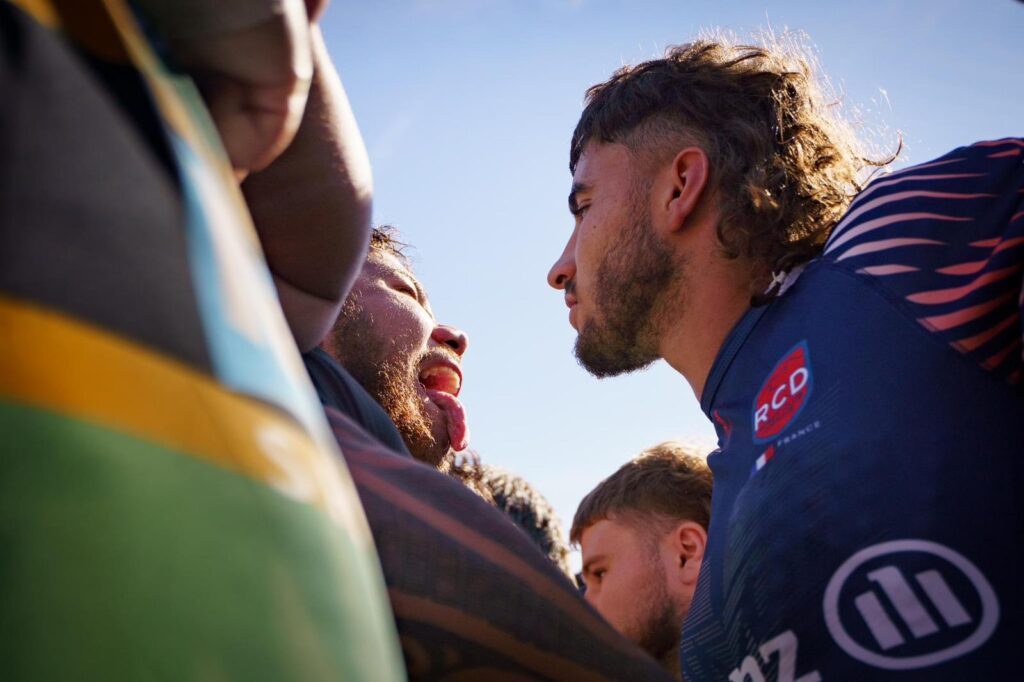
You have to head deep into the hills, follow the winding roads, accept the silence of the mountains to understand that in Digne-les-Bains, rugby is anything but a given. No big stands here, no outsized budgets. Just a club, long tossed between hope and relegation, and an almost crazy idea. Throw the windows wide open.
Far from the main arteries of the rugby business, something strangely precious is going on. A story like no other. A story where New Zealanders turn up to work on building sites, where Fijians pray at dawn before heading off to train, where an amateur club attracts players from twenty nations without promising them a penny. A story carried above all by one president.
Jérémy Teyssier is nothing like the standard club official. He talks without a filter, bursting into laughter, memories spilling over. “I was born in Digne, I’ve always lived in Digne.” The scene is set. That of a club that went up, then came crashing down. “We go up to Fédérale 3… and after that the club sinks.” A slow decline, almost inexorable. “Me, I came back into the senior side at the worst possible moment… all I knew was relegation, all the way down to 2e série.“
In plenty of places, the story ends there. In Digne, it starts.
The club scrapes by, short of players, short of volunteers. A survival routine. Then comes this simple, almost naive idea. Open the windows. “I took the club back on with a team… with the desire to open it up to the world.” No tactical revolution, no benefactor. Just a hunch. Rugby can be a passport.
Teyssier has seen elsewhere. England, Canada, dressing rooms where accents and cultures cross paths. “I wasn’t a great player, but I had that piece of luck.” So he wants to pass it on. To offer his players something other than local derbies. “To let them discover something other than playing Sisteron and Gap, to open their minds.” In a landlocked valley, the idea looks almost like a provocation.
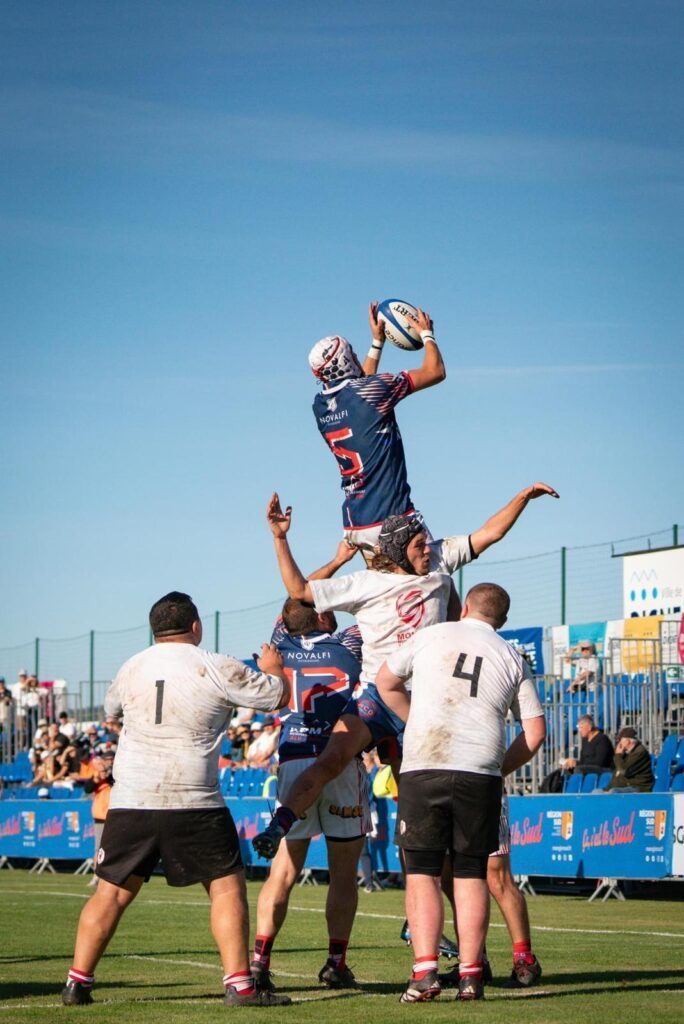
“Go on then, let’s try”
Everything speeds up almost by chance. A Welsh godfather, a university friendship, a trip to Cardiff. And in an airport, on the way home, a sentence thrown out like a dare. “Damn, we came all this way for 50 euros… and it didn’t cost us much after that… what if we could organise an amateur Six Nations.“
They did it.
2018 becomes a turning point. The club stages an amateur Six Nations, then hosts a France v England U18 fixture. The media follow. The momentum is there. And as so often in this story, someone pushes it a little further. “Jérémy, you’ve organised a Six Nations, you have to go up a level, you have to organise a World Cup.“
Silence. Then an answer. “Go on then, let’s try.“
What follows belongs to the realm of gentle madness. No budget, no international structure, no safety net. “We started from nothing, not a bean.” A meeting in a bar in Digne, a sports management student, and a promise both fragile and stubborn. Find the money, build a project, bring people on board. “I told her, all I’ve got is the idea.“
The project takes shape during Covid. While the world grinds to a halt, they push on. The goal is clear. Replicate a World Cup. Twenty clubs from twenty nations. In the end there will be sixteen. Already a big number. But the essential lies elsewhere.
In 2023, during the official World Cup, Digne hosted its own. 600 players, teams from Japan, Chile and South Africa. Stories everywhere. “Japan created an amateur team specially to come.” Chile staged a national tournament to send its best club. South Africa sent its oldest club… which won, as if to wink at the whole thing.
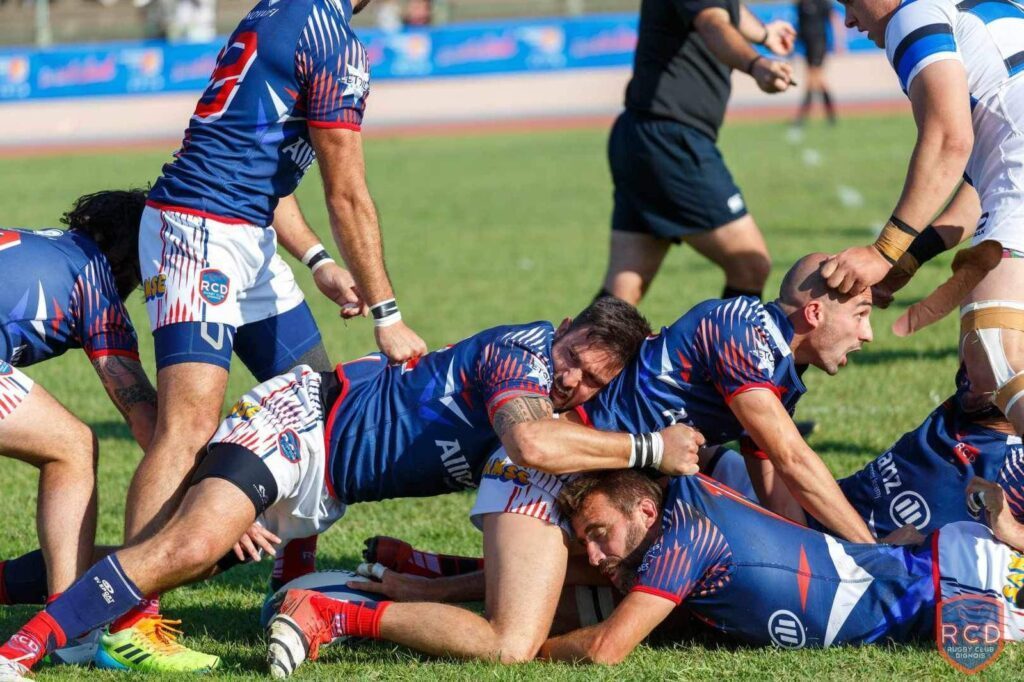
A universal language
The matches are played on the coast first, then everything moves back up towards Digne. An improvised epicentre. “We brought everyone back here.” The ground overflows. 5,000 people in a venue built for 1,000. “I built temporary stands.” Pure craftsmanship.
And then there are the images. “Japanese lads partying with Argentinians. It was magic.” Rugby as a universal language, stripped of contracts and agents. For a few days, the world fitted into a handshake and a third half.
The budget reached 1.5 million euros. An almost unreal figure at this level. “We finished with 30,000 euros.” Breaking even. No jackpot, no excess. Just a demonstration.
But the story does not stop there. It branches out.
Because behind the event lies a philosophy. A way of inhabiting rugby. A way of putting it to use.
Monastic discipline
It all starts with those players from elsewhere. New Zealanders first. “I found them work and somewhere to live.” Then others, year after year. An informal, almost organic pipeline. “If you’ve got mates who want to come…” And they come.
Then an even more improbable story emerges. That of the Yamacia Rugby programme. A camp in Fiji, run by a pastor who picks young people up off the street and gets them back on their feet through rugby. Monastic discipline, prayers, work, training.
Contact is made almost by accident. A message. A reply. “If you are in touch with me today, it is because God has blessed us.“
From there players arrive. Among them Saimone Qeleka. An unknown name that becomes a national curiosity. “In his first tournament, he takes the ball, he cuts everything to pieces.” The observers get carried away. Clubs call. He will go on to spend time at RC Toulon, among others. The story of a bricklayer turned (almost) professional player does the rounds.
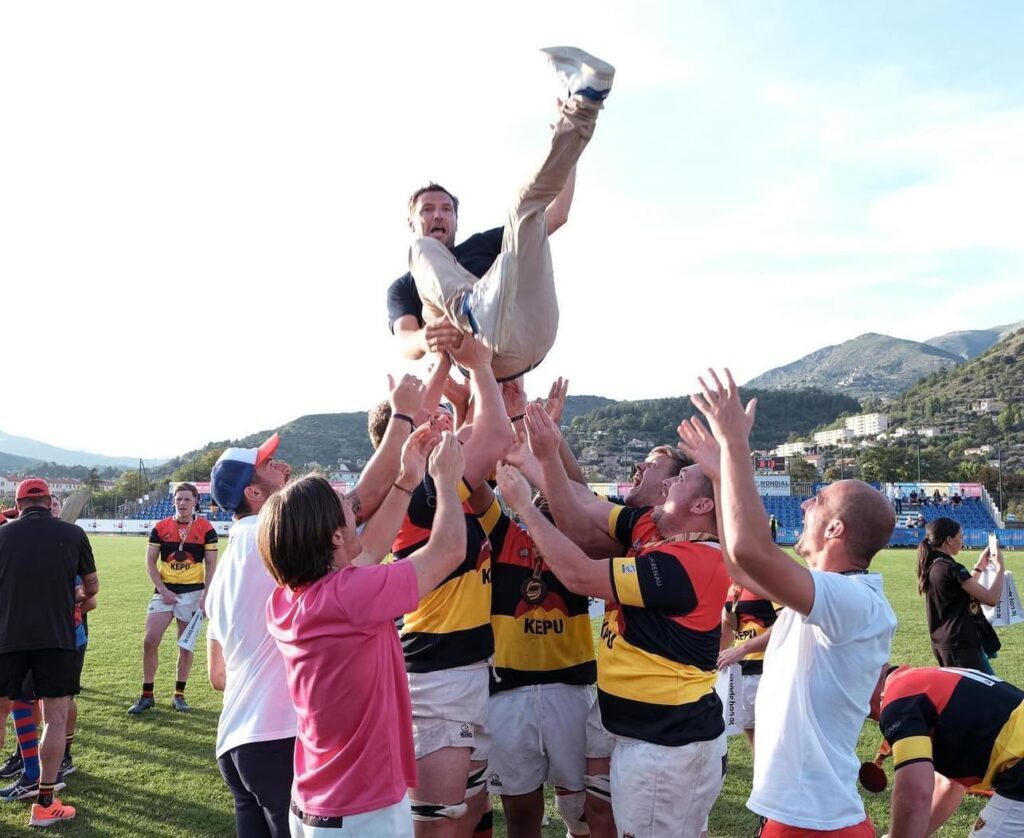
But Teyssier looks beyond performance. “The problem is that they aren’t prepared to fit in.” So Digne becomes a staging post. An airlock. You learn to live, to work, to manage. “We take care of everything.“
“We teach them to manage their money”
And sometimes, rugby becomes almost secondary.
Like for this player who had been at Stade Montois Rugby. “He was living in a one-room flat with five children.” Despite professional status. An absurd situation. Teyssier steps in. “I’m not paying you, but I’ll find you somewhere to live.” A few forms, a social housing unit, a five-room flat. “The kids were transformed.” The phrase sticks.
Nothing exceptional, he says. Yet all of it is.
In Digne, taking in a foreign player is therefore not just a matter of handing him a jersey. It means opening a bank account, explaining a payslip, going with him to the social security office, translating letters, reassuring a family left thousands of kilometres away. “We teach them to manage their money“, Teyssier slips in, almost as a detail. It is in fact a foundation.
On the pitch, the club is climbing back. Slowly, solidly. As far as Fédérale 3 today. With regional titles and a rediscovered momentum. And players who arrive without a salary, drawn by something else. “What we sell them is a life project.“
The word keeps coming back. Project. Not a slogan. A daily reality.
Because around the club, everything is widening. Primary schools, secondary schools, sports streams, social work. Adapted rugby for people with disabilities. Sessions in IME and ITEP centres, France’s specialist units for children with disabilities. Inclusive tournaments. “We mix every kind of group together.“
And even programmes for people on the RSA, France’s income support benefit. “We use rugby to give them their confidence back.” The pitch as a tool for rebuilding. “We also use it for psychiatric care.“
In Digne, rugby is no longer just a sport. It is a lever. A language. A method.
Irreconcilable visions?
In this machine, everybody lends a hand. Volunteers, coaches, officials. An informal but solid network. A human chain that makes up for the lack of money. Here, the capital is time.
So inevitably, the question comes back. The secret.
Teyssier doesn’t have to search. “Passion. Work. Madness.”
What came next could have been international expansion. A second World Cup in Australia, then in South Africa. The project was attempted. It ran into another reality. “The Anglo-Saxons are too business… we’re too non-profit.” Two irreconcilable visions.
And then there is the world. The costs, the crises, the distances. “It would have been complicated.“
So back to the essentials. The club. The area. The people.
Since 2023, Teyssier has been refocusing. Consolidating. Structuring. Still developing. A new sports stream in a secondary school, another at the high school. Keep bringing players in, keep sending his own out to travel. “Go back and see our mates from all over the world.“
Less spectacular, perhaps. More sustainable, no doubt. “The club’s DNA is sharing“, the coordinator hammers home.
The trips go on too. Scotland, Ireland, England. Right up to that almost unreal moment, on the eve of the World Cup, when the Digne players took the field on a mythical ground, Webb Ellis’s own, in the heart of the town of Rugby, the cradle of the game. “We played there, against the local side.” Like a quiet symbol, almost too good to underline.

The centre of the world
In 2023, Digne was the centre of the amateur rugby world. A suspended moment, improbable, almost unreal. But today, the stakes lie elsewhere.
Not to become an ordinary club again. “To stay the place where a player can arrive with nothing and leave with a life“. Where a child can discover the world without leaving his valley. Where rugby is good for something other than winning.
A place where, in the end, the biggest victory is not the one on the scoreboard.
And deep down, the real question is perhaps not how they did it. But why so few others even try.



1 comment