
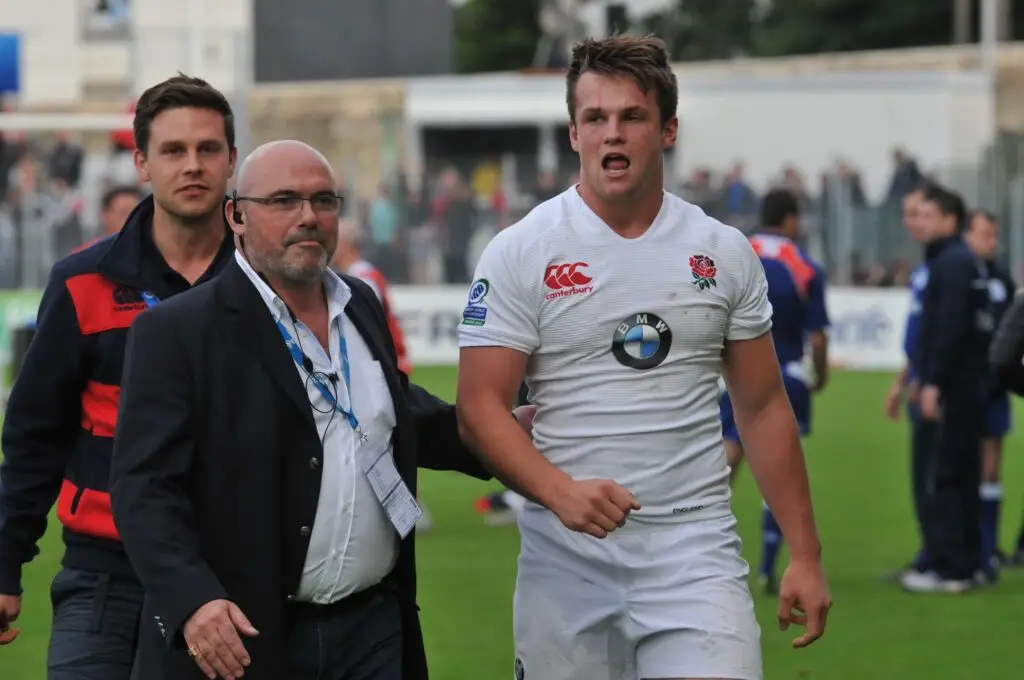
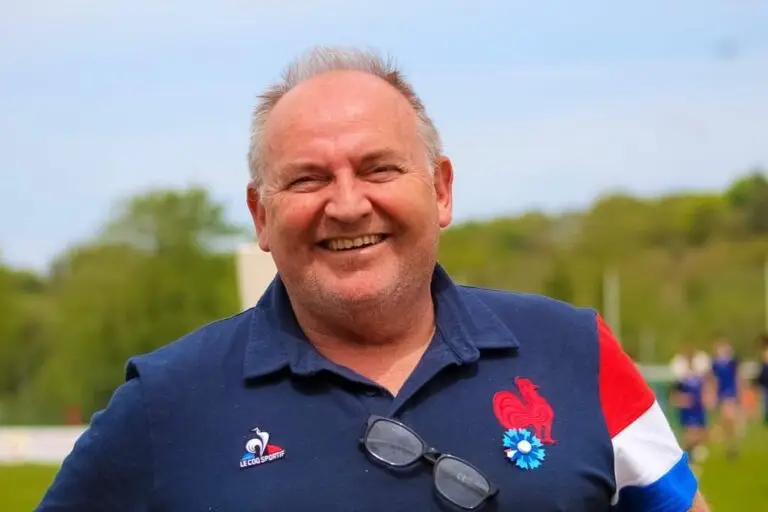
A former player (rugby school at 12 in Clamart, Hauts-de-Seine), Paul had to give up playing before joining the senior side at around 15 or 16, the knees… But with the rugby bug very much alive, he followed his old team-mates around the clubs of the Île-de-France department, with a special mention for Racing, its show business, and the Royal Villiers as a den.
The Breton roots come from Paul’s mother: there would be spells at Stade Rennais (where Julie “Juju” would reach two French championship finals at age-grade level), at Le Rheu and then at Rennes Etudiants Club. Coaching and refereeing qualifications followed, and a finger caught in the volunteering machine at the 2007 World Cup and its Nantes venue. Then came France’s November matches at the Stade de France and elsewhere, where he specialised in looking after the press alongside Christophe Kukafka and Alixia Gaidoz for the FFR.
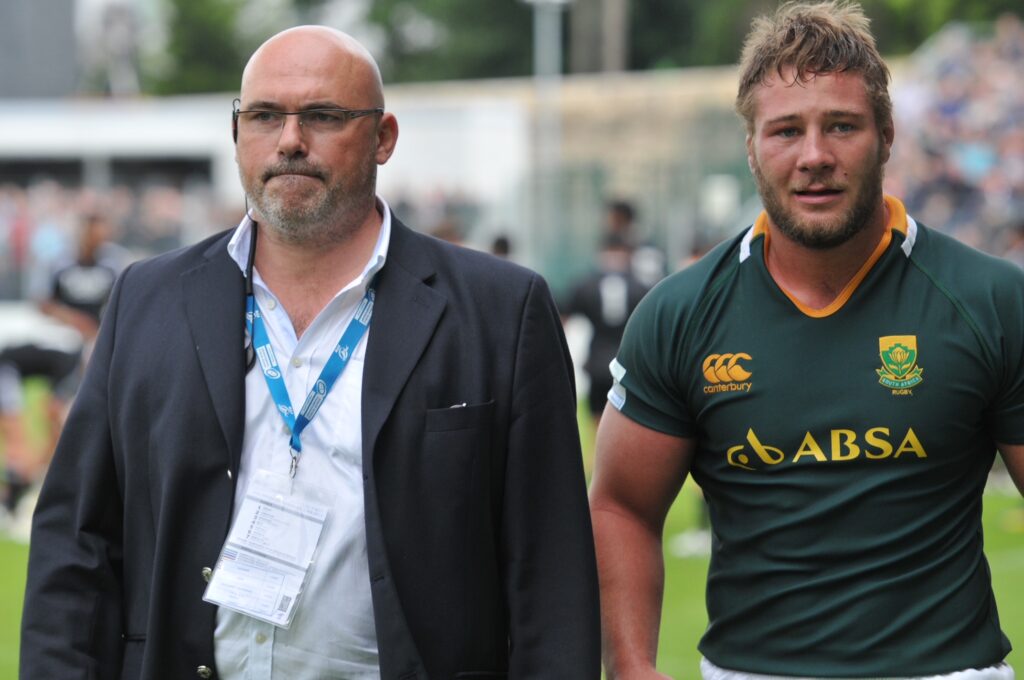
Fine encounters at Stade Rennais too, notably with France’s fly-half at the time, Sandrine Agricole. Player, referee, coach, manager, volunteer and then, for the past six years, an elected member of the Brittany league, today vice-president in charge of raising rugby’s profile in the region.
Add Sylvie, the mother who also played and who today works within the FFR’s CSR department alongside Alixia Gaidoz, Arnaud, now a former player and a rugby journalist, Sébastien, another former player… Quite a family!
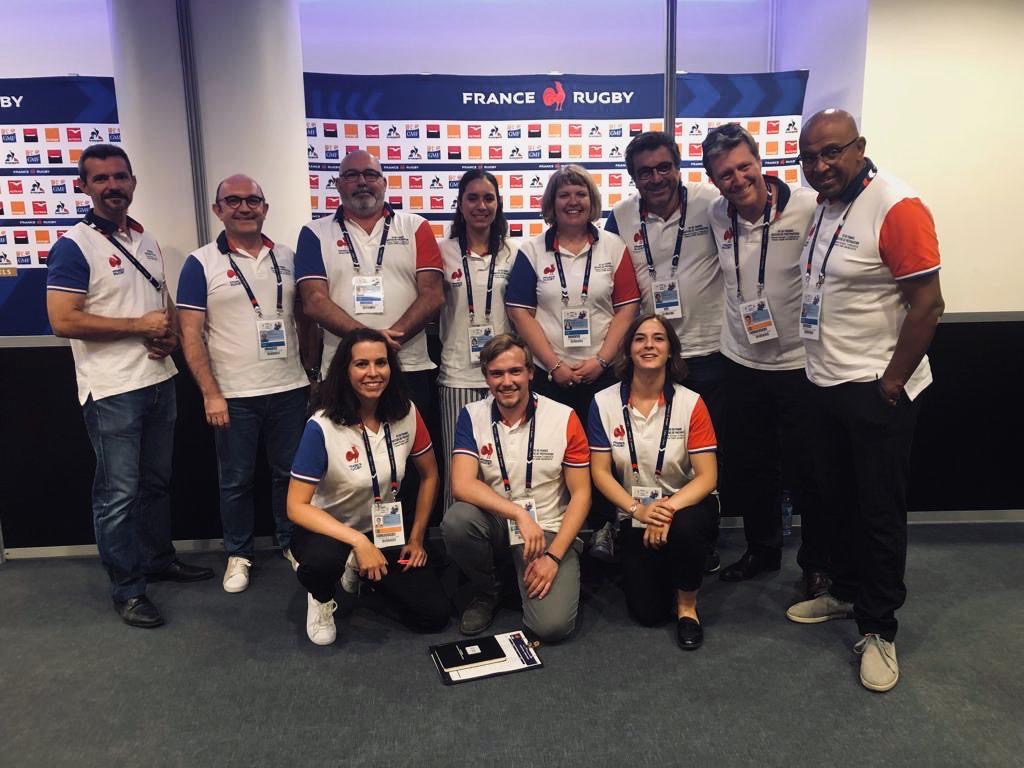
Paul takes an almost amused view of this family — and Breton — passion for rugby: “I really reconnected with rugby in 2000, I was 32 and I did indeed learn my trade all over again at the rugby school. I took my coaching qualifications, first level, second level, right up to the federal certificate in development and competition. All of it at Stade Rennais Rugby, at Le Rheu and at Rennes Etudiant Club.”
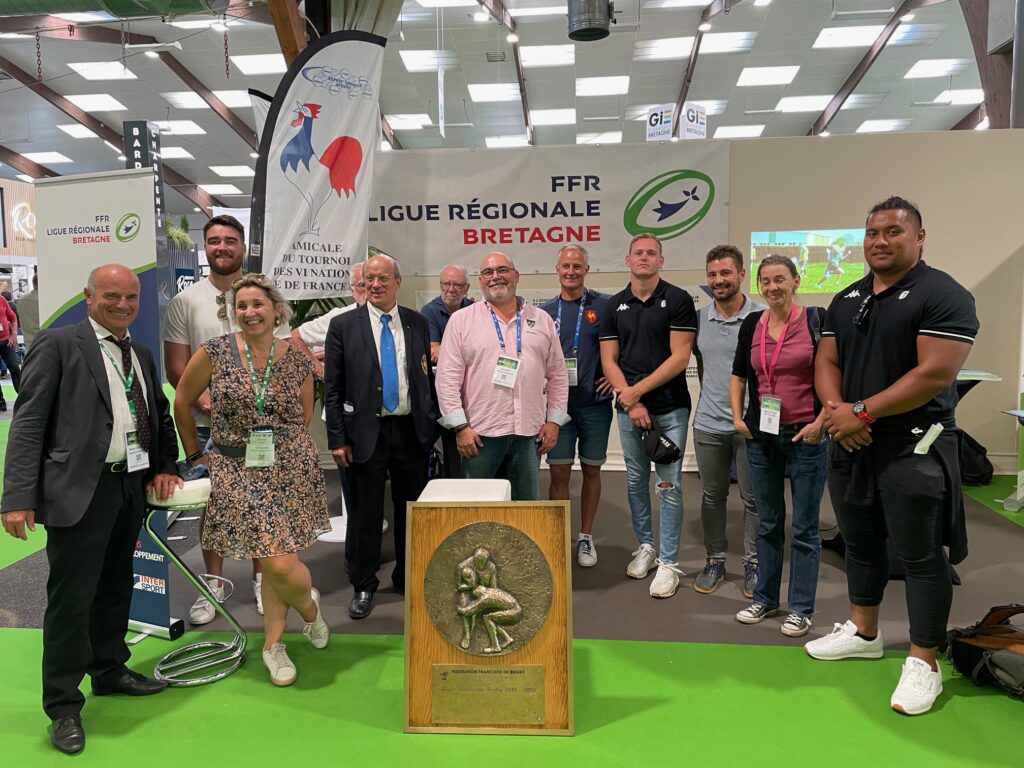
When the subject of the “takeover” of the REC comes up, his modesty takes a beating, so it is worth pointing out that Paul Rey was part of a group that took the club over when it was in a bad way: the first team had just been relegated to Fédérale 3 and there was a great deal to rebuild, both financially and structurally. “In the end we turned to someone who was just a sponsor at the time, Paul recalls, Jean-Marc Trihan, who became club president, because what we really needed was an investor, a genuine business leader at the head of the club.”
And the REC climbed back up, Féd 3, Féd 2, Féd 1. National, back down to Nationale 2, then the title last May and the return to Nationale. “On my side, at the REC, I mainly built the youth section and worked on the academy, the development centre.”
Next to nothing, we’re told, but what a family!
1 comment