
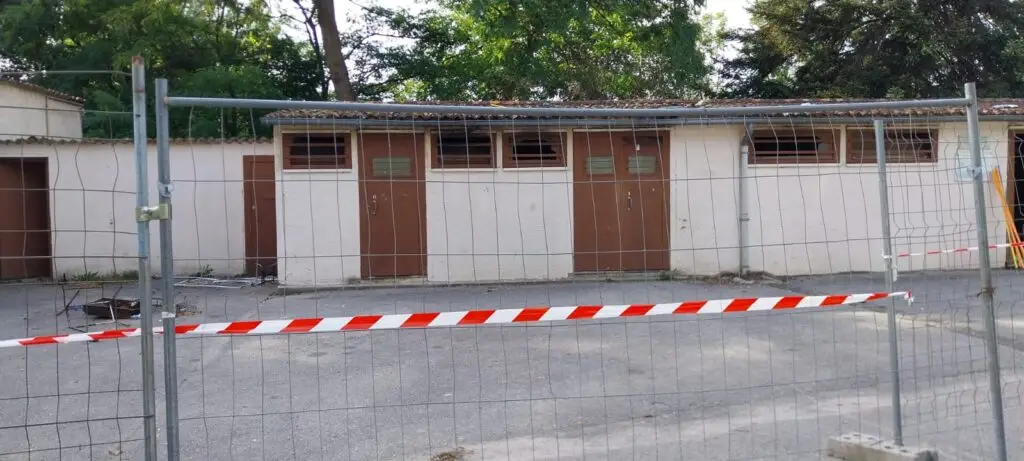
After the possibly criminal fire that destroyed its changing rooms, Rugby club de l’Aurence, in the Haute-Vienne, could have sunk into gloom. But in a city where sporting rivalries have fuelled passions for decades, solidarity took over instead. Rival clubs, volunteers and the town hall joined forces to save the season and to prove that rugby is more than a sport: it is a brotherhood.
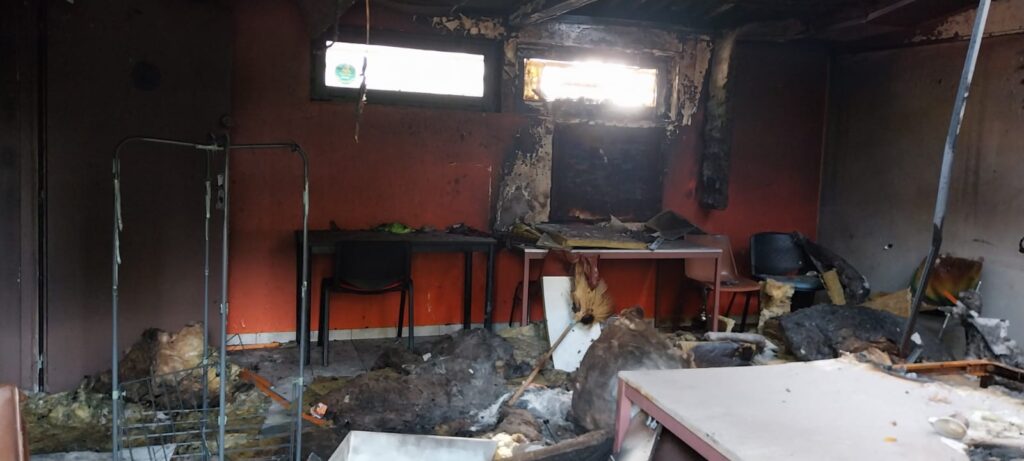
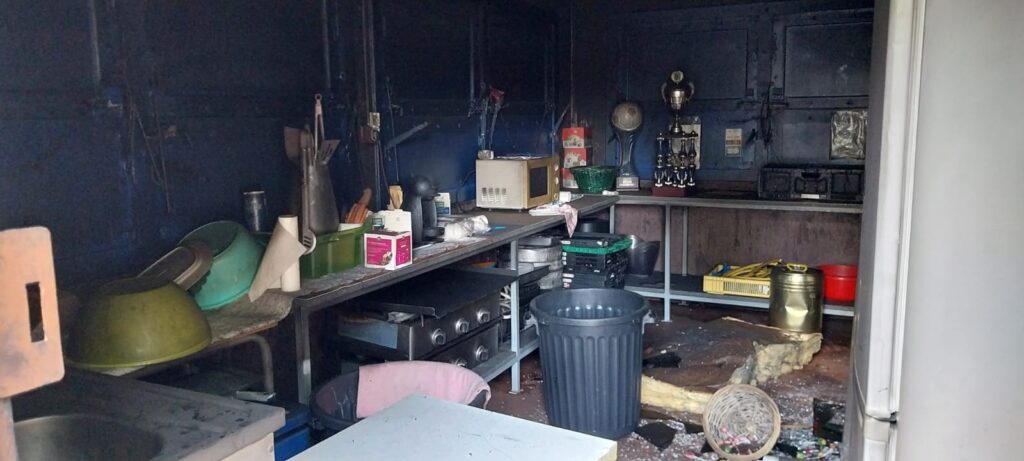
Some flames consume, others warm. The ones that licked at the changing rooms of Rugby club de l’Aurence (RCA) on the night of 15 September 2025 belong firmly in the first category: black, devastating, they reduced to ashes a place that was not merely a building, but a sanctuary of camaraderie, sweat and shared dreams.
“It was bound to happen in the end. People have been out to cause us trouble for months, with a lot of damage to our facilities and thefts. There were serious tensions with lads from the football club“, admits a former RCA player. This time, a fire destroyed the changing rooms shared by the football and rugby clubs outright, in a district of Limoges hit by drug trafficking and by “riots” earlier in the summer, the latter having made the national headlines. The Limoges public prosecutor’s office has opened an investigation into the fire. According to a source close to the town hall, arson is the leading theory.
A collective response
And yet, out of that chaos, other flames were lit: those of solidarity. Because in Limoges the oval ball is not just a pretext for sporting confrontation; it is also social glue, a common language that transcends the colour of the jersey. The fire could have brought a brutal end to the season for the hundred or so registered players at l’Aurence. Instead it opened the way to a collective response in which former opponents, sometimes fierce ones, held out a hand.
As soon as the news broke, Rugby club Verneuil and Aixe Rugby Athlétique offered to take in the youngsters from the academy. “On the pitch, we fight each other. But off it, these are kids, coaches, a shared passion. We couldn’t let them down“, says one of the officials. Almost a given, so strongly do rugby’s values demand that singular blend of harshness and brotherhood.
Under the same banner
That left, no bad pun intended, the burning question of the senior sides, men’s and women’s. Two weeks from the start of the league season, how do you imagine a campaign without changing rooms, without facilities? That was when another neighbour, often seen as a rival, stepped in: Rugby Club Palaisien. After talks conducted at breakneck speed between staffs and coaches, a merger of forces was sealed.
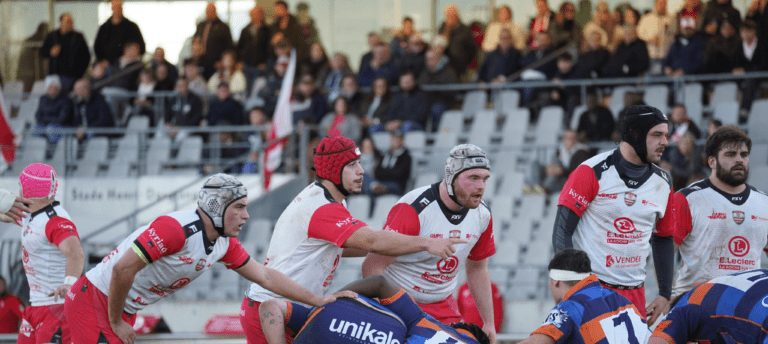
L’Aurence and Le Palais, two clubs who had faced each other for decades, will play together this season under a single banner in Régional 3. The joint side did not begin its new adventure in the best way, though, losing at home first up at the stade du Gravier, on the heights of Le Palais-sur-Vienne.
“Nobody deserves to see their club go through something so unfair.“
The l’Aurence club
This alliance of circumstance says something broader, of course. “We didn’t hesitate“, says Fabien Pétignaud, president of l’Aurence. Faced with a human emergency, egos and memories of fractious matches were set aside. With one conviction: “Nobody deserves to see their club go through something so unfair.” The women’s side will also play at Le Palais’ facilities, proof that solidarity is not just a word but a concrete reality.
The reaction goes well beyond the green rectangle. In Limoges, the council mobilised immediately to find solutions, promising new temporary premises while starting proceedings with the insurers. The volunteers, meanwhile, take turns every day to keep training going, organise travel and reassure families. “We’re sad, of course. But we’re standing tall“, the l’Aurence board added in a statement shared on social media.
An invisible loyalty
What strikes you about this story, in the end, is less the absurd violence of the vandalism than the collective response it triggered. Rugby, the contact sport par excellence, is a reminder (if one were still needed) that it is also a school of connection. That behind the rugged scrums lies an unspoken brotherhood, an invisible loyalty that binds.
At a time when social divisions are hardening, when individualism seems to be winning, the Limoges surge stands as a parable: it is in adversity that a community’s cohesion is tested. The changing rooms at l’Aurence are now nothing but ash and rubble. But on the pitches nearby, children are still running, women and men are still tackling, and clubs who were enemies yesterday are shaking hands today. And what if this disaster has simply reminded us that the very essence of rugby, like that of any collective life, lies in one simple act: standing together, when everything threatens to collapse?


Comments