
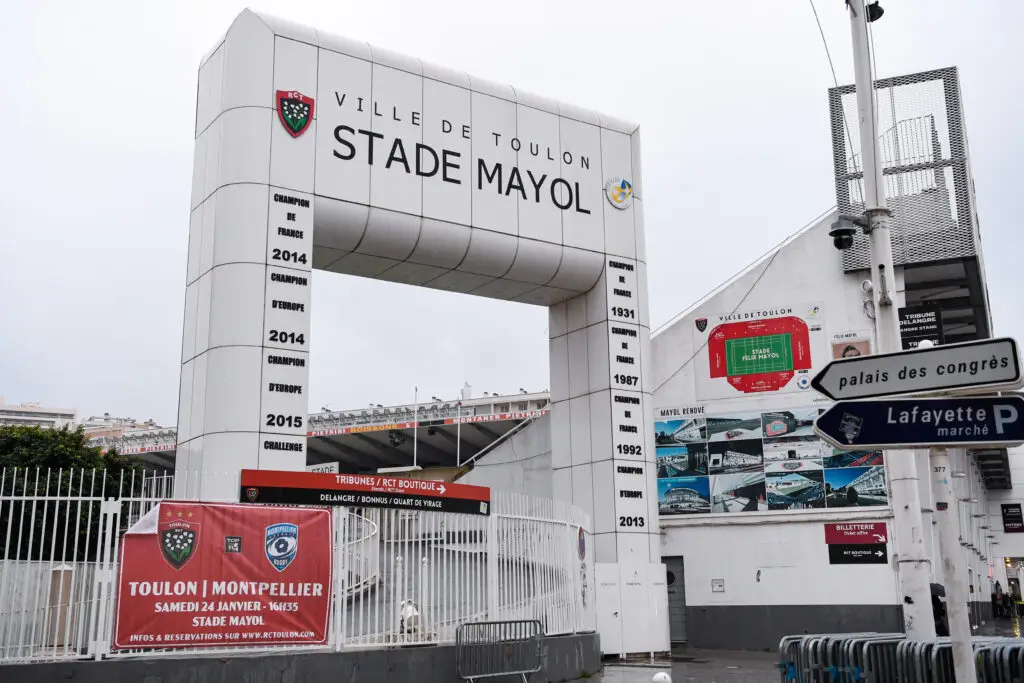
In Toulon, rugby does not simply exist, it structures the city, feeds its neighbourhoods and nourishes the collective identity. And yet one of its most powerful symbols, the Stade Mayol, could be about to wobble. The president of Rugby Club Toulonnais, Bernard Lemaître, is now openly pushing the idea of a new stadium, a project capable of redrawing the club’s landscape… and that of the whole bay.
Because behind the myth, the reality is brutal. Opened in 1920 and hemmed in between apartment blocks, the university and the conference centre, Mayol has become a technical and financial headache.
“Mayol is its age. It is completely unsuited to modern operation“, says Bernard Lemaître bluntly. In his view, the scope for development is almost non-existent; in particular, it is impossible to extend the ground without “blowing up the Neptune conference centre or the housing around it“.
The RCT’s economic equation
The heart of the problem is financial. In modern professional rugby, the stadium has become an economic engine. And Mayol considerably limits the Var club’s income.
“The ground is limited to one match every fortnight“, Lemaître points out, for want of permission to stage other events. As a result, the RCT is said to be missing out each year on 5 to 10 million euros of hospitality revenue, a decisive shortfall in a league where budgets are exploding.
In the chairman’s mind, the conclusion is clear. “We have to move towards building a stadium, it is inevitable.“
The project being discussed in the club’s circles points to a modern ground of around 20,000 seats, potentially set by the sea and capable of hosting concerts, events and hospitality all year round.
A facility comparable to those that today allow the great venues of European rugby to secure their revenue.
The sociology of the supporter
The question is therefore also a logistical one. Going to Mayol often means taking on the saturated car parks of the port and the city centre. A new stadium, by the sea or on the outskirts, would improve access and parking.
But that change could also transform the crowd. fewer city-centre supporters, more families and spectators arriving by car. A discreet shift, but potentially a major one for the Toulon atmosphere.
Limited possibilities
For Bernard Lemaître too, the idea of a new stadium answers another economic logic.
Today, clubs such as Stade Toulousain or LOU use their grounds all year round thanks to boxes, seminars and event spaces. At Mayol, those possibilities remain limited. Matchday revenue is capped, for want of modular VIP spaces.
In a Top 14 governed by the salary cap, those missing millions of euros weigh heavily on the RCT’s competitiveness.
A city split in two
But touching Mayol means touching a sanctuary. The stadium is not only a sporting arena, it is the beating heart of Toulon rugby. Right in the city centre, it embodies the club’s popular history and its visceral relationship with its supporters.
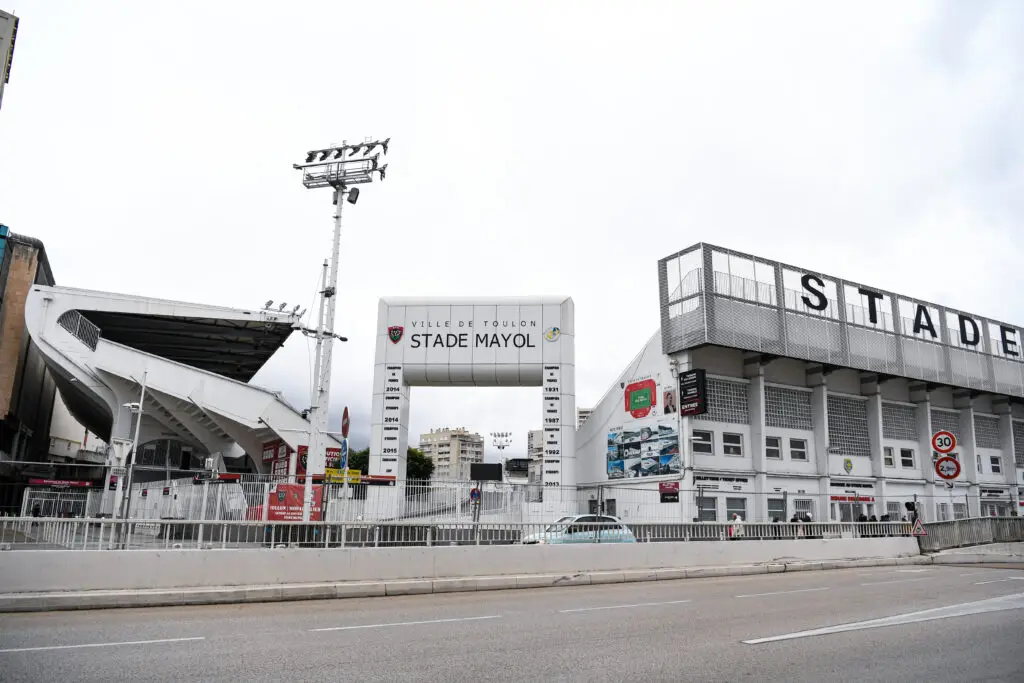
Hence a burning political debate in Toulon, with local elections approaching. Some local figures argue instead for renovating the historic stadium. For them, leaving Mayol would mean breaking a unique bond between the club and the city.
“Telling the people of Toulon that they are losing Mayol is very complex“, warns former international David Gérard, a candidate in the Toulon municipal elections, well aware of the symbolic weight of the place.
The trap of a unique charm
Mayol has an architecture that has become rare, almost “English-style”. The stands drop onto the grass, to the point where the front row seems to touch the touchline. That closeness creates a unique pressure.
When the Pilou-Pilou comes down from the Lafontan or Delangre stands, the roar literally wraps itself around the pitch. In a modern 20,000-seat stadium, more open and airy, that resonance could be diluted.
And with it, part of the psychological advantage that long made the RCT so strong.
Between myth and modernity
Nobody at the RCT genuinely wants to abandon Mayol. But the question now goes beyond nostalgia. In an increasingly competitive Top 14, infrastructure has become a strategic weapon.
The dilemma is therefore a cruel one: preserve a monument steeped in history, or build the economic tool capable of securing the club’s future.
The debate is only just beginning.

Comments