
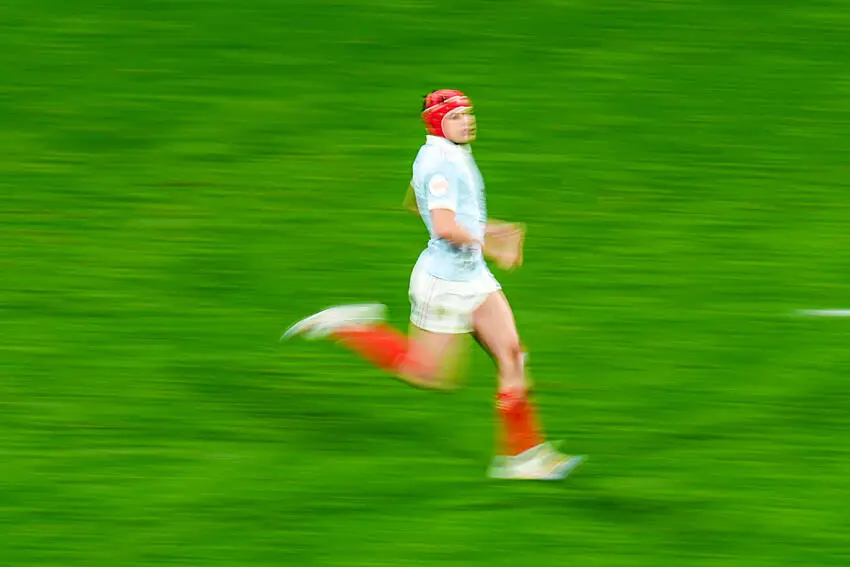
The 2026 Championship produced a fine winner, France. That double win in the last seconds against England to lift the trophy is something the players and supporters will remember for the rest of their lives. The same goes for the Italian players and the tifosi: a historic win over England at the Stadio Olimpico. Italy, so often mocked since they joined the Championship, can now say they have beaten every nation in it.
Mixed fortunes for the European nations
By beating an Ireland side deprived of nine undisputed first-choice men with real authority in the opening round, France partly ruined the little green men’s St Patrick’s weekend. Partly? Yes, because by beating Wales, England and Scotland, Ireland claimed the Triple Crown, enough to justify hectolitres of Guinness.
Even Wales can take heart: by beating Italy after giving Ireland a scare, a nation adrift seem to have found their bearings again with that wide win over the Italians, and they can count on an “awkward” under-20 generation feared by everyone in that age group. Which leaves England… Woeful at the start of the competition, entering Championship history through the back door by losing to Italy, looking apathetic (the fault of last summer’s Lions tour? Tiredness? A narrow game plan?) and finishing in an inglorious fifth place. But be warned: what England showed on Saturday in Saint-Denis proves they have resources.
A title and records for the history books
What a Championship: everyone beat everyone, with a glut of tries, stadiums packed to the rafters (apart from Wales’ first match, quickly put right afterwards), red-hot television audiences and a lovely tightening of the table. And despite France’s final victory, there were plenty of positives, of course, but also some legitimate questions:
On the plus side:
- 19 years of waiting. France retain their title: a first since 2007. It puts into perspective the back-to-back Grand Slams of 1997 and 1998, the seeds of the 1999 World Cup campaign and that legendary 1999 World Cup semi-final against the All Blacks at Twickenham (43-31).
- 9: Bielle-Biarrey beyond superlatives. That is the number of tries scored by Louis Bielle-Biarrey in the 2026 Championship. No player had ever scored so many in a single edition of the Six Nations. His four tries in the closing match against England take him into the pantheon of world rugby in his own lifetime, as do those 9 tries in a single championship, unseen for 100 years or more; he is averaging more than a try a match! He is not yet 23… The second-highest try scorer of 2026 is also French: Théo Attissogbe (5), ahead of England’s Henry Arundell, Scotland’s Darcy Graham and Ireland’s Jamie Osborne (4).
- 100%: a faultless attitude for the final match. At last the coin landed the right way up, thanks to a Thomas Ramos who is more than ever the leading points scorer in France’s history, and who once again returned a 100% record with that hugely important winning penalty beyond the regulation time, world class.
- A red-hot attack: Bielle-Biarrey, Attissogbe, the French greyhounds well fed by Jalibert, Dupont and Ramos are wonderfully quick.
The grey areas: power and defence
On the debit side:
- The defence: a cardboard scrum, roughed up by Italy, folded by the Scots and the English, sadly memorable retreats against mauls, a brittle defensive line, a sort of inevitability about opposition mauls going forward… It is urgent to find a tighthead prop worthy of the world’s top three, and a balance at centre, inside centre and outside centre (orphaned of Fickou).
- Too many missed or loose tackles: opponents’ momentum barely disturbed, and a sense that once inside the French 22, the opposition are going to score…
- A lack of power: glaring against Scotland (France shipped a 43-0), against England (an almost embarrassing scrum, an inability to defend mauls and, worse, the line, contests lost with too few dominant tackles), France have to raise the cursor if they hope to compete with, or even limit the damage against, South Africa’s heavy hitters and the muscular speed of the All Blacks).
To sum up: the gamble on speed paid off with Attissogbe and Bielle-Biarrey, while the shadows of Romain Ntamack, Uini Atonio and Gaël Fickou hung over certain shortcomings (defensive organisation, variety, scrum power). It will take a great deal more power to hope to lift the Webb Ellis Cup. There is still time. Fabien Galthié knows it: look at his lack of reaction when Thomas Ramos kicks the winning goal while the French coaches’ box erupts; he knows.

Comments