Just back home after a sensational match between the Auckland Blues and the Highlanders (47-40), Ewan Bertheau took the time to sit down. For It’s Rugby, the 24-year-old French player agreed to speak without any spin.
The former Perpignan and Biarritz player looked back on his divorce from Mont-de-Marsan a few weeks ago. Frankly, he talks of promises that were not kept and of a difficult relationship with the coaching staff.
Bertheau, who came through the CABBG academy, mostly opened up about his new adventure in New Zealand. In love with the country and with the All Blacks, the back-rower is living out his childhood dream. Interview.
IT’S RUGBY. – To everyone’s surprise, you left Stade Montois in mid-season. How did that come about?
Ewan BERTHEAU: I had had enough of the way things were going at the club. There was no connection at all left between the coaches and me. For my mental health but also for my career, I preferred to leave. Very honestly, I consider that I lost two years of my life at Mont-de-Marsan. I had the chance to come and play in New Zealand and therefore to fulfil one of my biggest dreams. It was my decision and the club did not stand in the way. In any case, there was no point in me staying in the Landes any longer.
Did the lack of game time also weigh in the balance?
Yes, of course. At some point, if you don’t play me, I am not going to stay. I was not developing. That break was no small thing. My first year at Mont-de-Marsan was very complicated. There were words from the coaches that I really did not like. A lot of things did not go down well. Then I was made plenty of promises. I was told plenty of things. And in the end I was taken for a mug, to stay polite. I said stop.
You are now living your dream by playing in New Zealand… Tell us about it.
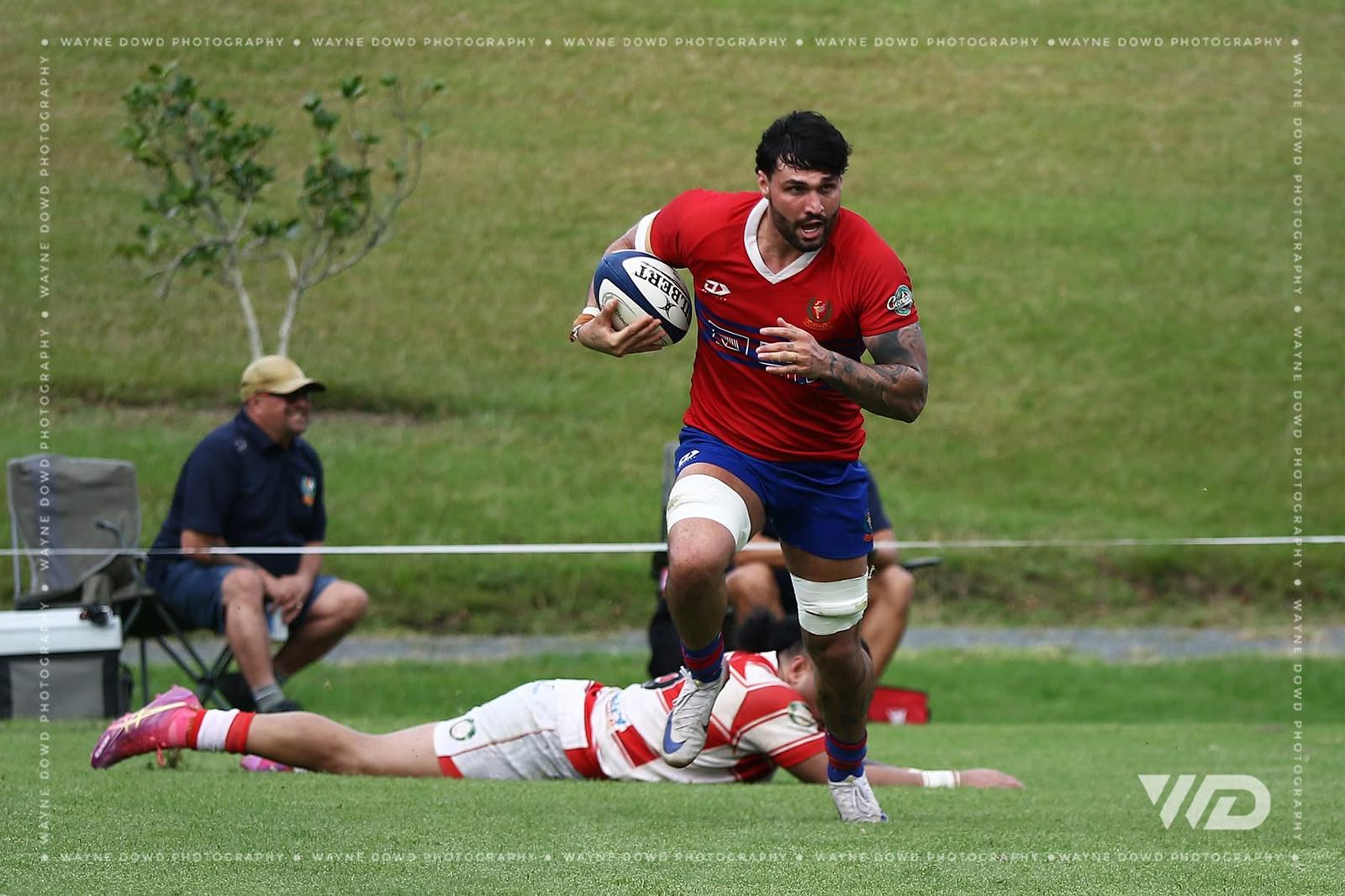
I play for the Suburbs club, in Auckland. Here there are three levels of competition. There is what is known as the “Premier”, the league we play in. In other words the third level. Above that there is the NPC, the professional provincial championship. And above that again there is Super Rugby, which we all know. The equivalent in France? It is hard to say. It all depends on the teams and the squads. In our division it can go from a very big side at Nationale level down to a more average team at Fédérale 1 level.
What do you make of the standard?
Compared with what I knew in Pro D2 and Top 14, it is weaker all the same. But there are a lot of differences with what we know in France. It is a completely different rugby and far more expansive. In France we tend to build phases and then put in pressure kicks. Or else, when we get into the 22 or inside the 40, we often take the points. Here the game is total. For example, inside our own 22 we can play four phases before deciding to kick because we are under pressure. We rarely take the three points. In the two matches I have played, we almost never went for the posts. We mainly scored tries. If you get a penalty inside the 22, it is either a scrum or a lineout. It is fun to watch.
What attracted you the most? The country? The mentality? The approach to rugby?
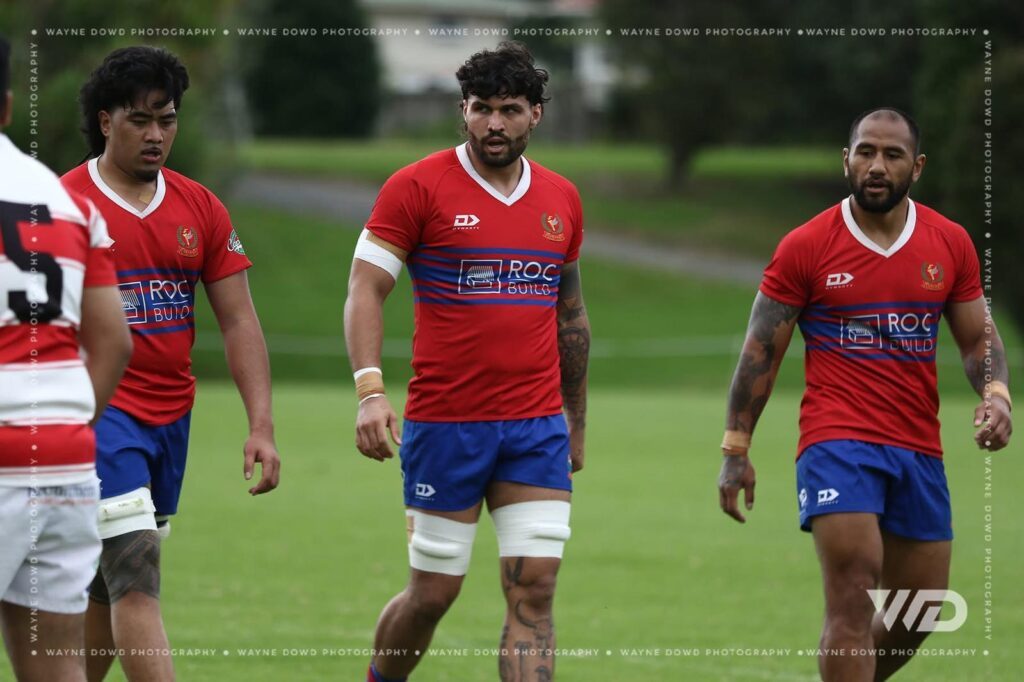
Ever since I was very small, I have always loved New Zealand rugby culture. I was immersed in it very young. My uncle is a players’ agent. He worked a lot in New Zealand. He lived half his life over there. My mother also lived in New Zealand when she was younger. And then I have always been an All Blacks fan. My favourite team is the Hurricanes. Back then, the first memory I have is of Tana Umaga, the captain of the Hurricanes and the All Blacks. He was my first idol. It has always been a dream to come and play here. Culturally, when you talk about rugby, you talk about New Zealand. The more you grow up, the more your dreams take shape. Today, my dream would be to play in the NPC, or even later on, in Super Rugby.
Weren’t you afraid of leaving everything behind?
No… Then again, you do think about it. You know what you are leaving, but you don’t necessarily know what you will find over there, or what is going to happen. There can be a form of worry. You tell yourself: right, you have to jump into the void. But honestly, when I look at where I had got to in France, I felt I had been round the block. So I did not ask myself too many questions. I told myself: go on, live your dream, and you will see what happens.
So the people around you were important…
Yes. I come from a family of rugby players, almost 100%. My father played rugby. My uncle, my mother’s brother, is an agent. He is the one who looks after me and he played rugby too. My grandfather, on my mother’s side, was a former Stade Rochelais player. He was a centurion there. He then coached Stade Rochelais. He also worked for the French Rugby Federation. So I know rugby very well, I have always been immersed in it. And the people around me have always been very important to me because they have always given very good advice and kept my feet on the ground.
I arrived on tiptoe. The lads knew a new player was coming but they had no idea who I was, or what I had done before. And that is no bad thing, actually. I did not want to turn up with a particular status compared with the others
Were you the “attraction” or the “star” of your club Suburbs’ recruitment? Let’s remember you have played in Top 14 and Pro D2…
Not at all. I am not that kind of person at all. I arrived on tiptoe. The lads knew a new player was coming but they had no idea who I was, or what I had done before. And that is no bad thing, actually. I did not want to turn up with a particular status compared with the others. That said, when you tell them you have played in Top 14 and Pro D2 and that you are only 24, the lads have a lot of respect for you. I arrived as a normal person. Now I am already one of the leaders in the team. I try to bring all the expertise I picked up during my years in Top 14 and Pro D2. It is pretty cool.
So you have turned amateur? That is also a big change to your daily life, having been a professional before…
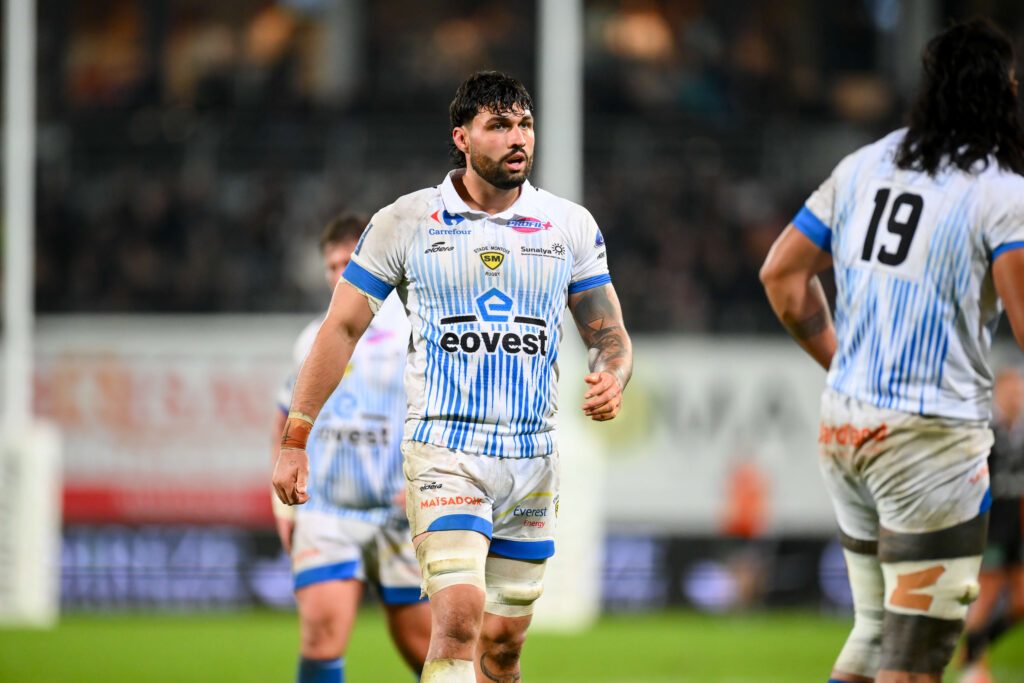
At the moment I am playing for nothing at all. Here, in the amateur game, players are not paid. So I work. I am at Mainfreight, a big storage and delivery company in New Zealand, which handles import-export across Oceania and even a bit further afield. I work in a depot: I load lorries and I make deliveries. I do that in the morning. Then, most of the time, I can go to the gym. I carry on training every day, in the weights room and physically. We also have two rugby sessions a week, on Tuesday and Thursday. It is a whole daily routine that has changed, yes.
Did the club help you with your job search?
Yes, absolutely. It was thanks to the contact I had here, through my uncle in particular, that we found this job. Mainfreight is one of the biggest players in Auckland, notably in rugby. The contact we had here used to work for the company. Being at this club made it easier for me to get into the business.
How do you feel in New Zealand? What is life like?
I feel so good… In three weeks I have already moved around a lot. I have been out exploring several different places. There are beautiful beaches to visit, wonderful hikes to do. And life is really pleasant, a bit like the people here: very open, very kind, very generous. Life in New Zealand is like the people here. You get an eyeful. There really are magnificent landscapes.
@ewanbertheau Le voyage d’une vie !! ?
♬ original sound – ?????? ?????? ☆
Have you come across other French players who went into exile in New Zealand like you?
Professional players who have come to New Zealand for rugby… There have not been many. Christian Califano is the well-known one, with the Blues. At Suburbs itself there was Florian Ninard, a former Stade Rochelais player. Recently Clément Castets tried his luck in the NPC. The other way round, Patrick Tuifua went to Toulon. Otherwise, it is mostly young guys, lads who were playing at small clubs in France and who came to enjoy New Zealand. I have a mate called Martin, who plays at Manukau. It is a club in my league. He did not come for the rugby. He works alongside it. He really came because he wanted to live here. Going to watch the Blues against the Highlanders at Eden Park, I met a lot of French people. Talking to them, most of them came because this is New Zealand, the land of rugby. I don’t want to say I am a one-off. There are surely others.
What did surprise me a lot, though, is that when I arrived here, a lot of players talked to me about rugby league. In Australia and New Zealand it holds a very important place. Some of them told me the Warriors, in the NRL, were bigger than the All Blacks
Since 2015 and that golden generation now retired, you sense the All Blacks have become less strong. To the point of being criticised. Have you talked about it with locals? Are they worried?
The All Blacks are the All Blacks, quite simply. People tell me that since the 2015 generation a lot of things have changed, yes. I still notice that they remain very attached to their team. The enthusiasm for the national team is as strong as ever. What did surprise me a lot, though, is that when I arrived here, a lot of players talked to me about rugby league. In Australia and New Zealand it holds a very important place. Some of them told me the Warriors, in the NRL, were bigger than the All Blacks! I thought: come on lads, these are the All Blacks… They replied: “No, Ewan, you go and watch a Warriors match.” At the Blues’ Super Rugby match, I noticed the stadium was not full at all. My mate Martin showed me a video of the Warriors’ stadium during a match against the Sydney Roosters. The ground was packed to the rafters, with a crazy atmosphere. He too confirmed to me that the Warriors are today the equivalent of the All Blacks in New Zealand.
Away from sport, you are popular on social media and notably on TikTok, where your singing talent is appreciated. Is there something to explore on that front for you?
I have not really asked myself the question. Today it is above all a passion outside rugby. It lets me clear my head. I have been singing since around 2020 or 2021. I am self-taught, I learn everything on my own, so it is not always simple (smiles). But I have always done music. When I was younger I played the guitar before moving on to the ukulele. You should know that I have a family with a certain artistic streak. My mother is a dance teacher and was a professional dancer. My little sister dances too and has made it her job. I also did dance when I was younger. But it is true that singing came along a bit by chance. I love music. Now it has become a real passion.
1 comment
Well done, hold onto your dreams
Automatically translated