
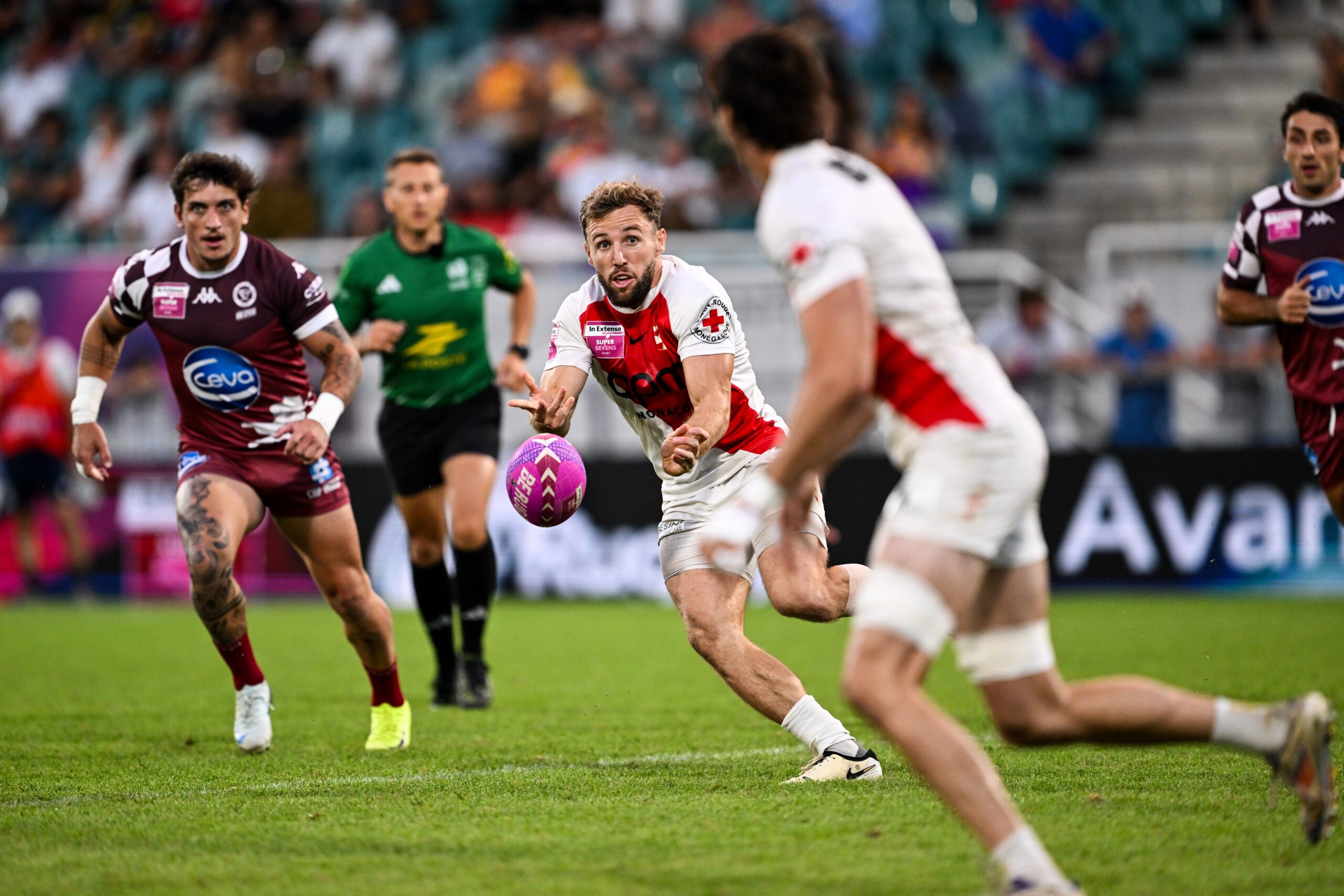
In Turkey, waiting for his flight home to France, Thibaud Mazzoléni (29) took the time to open up to It’s Rugby. The sevens world champion with France has just come back from a three-week rugby experience in India, one he describes as “different”.
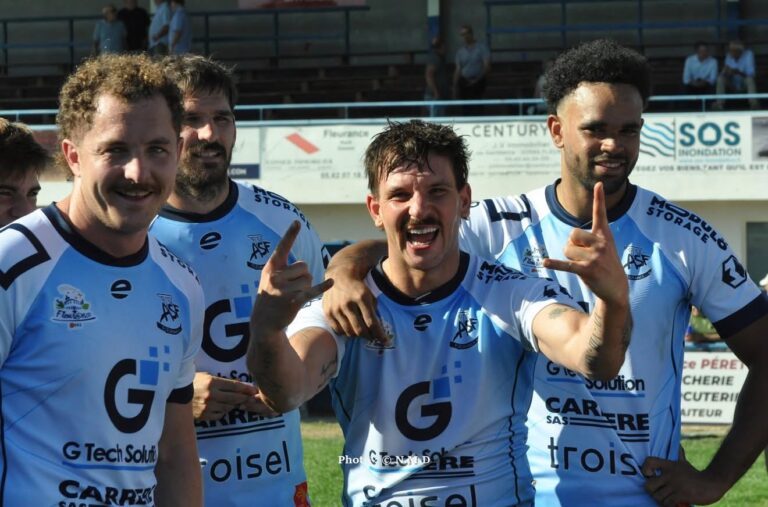
The future Fleurance (Nationale 2) player recounts what he went through and talks about the ambitions of Indian rugby. Mazzoleni, who will coach the backs of Agen’s Espoirs side, also discussed his disappointment at missing the Paris 2024 Olympics, his failed spell at Agen and Layrac, the club where he came through. Interview.
IT’S RUGBY. – Thibaud, can you talk us through your journey since winning the sevens world title?
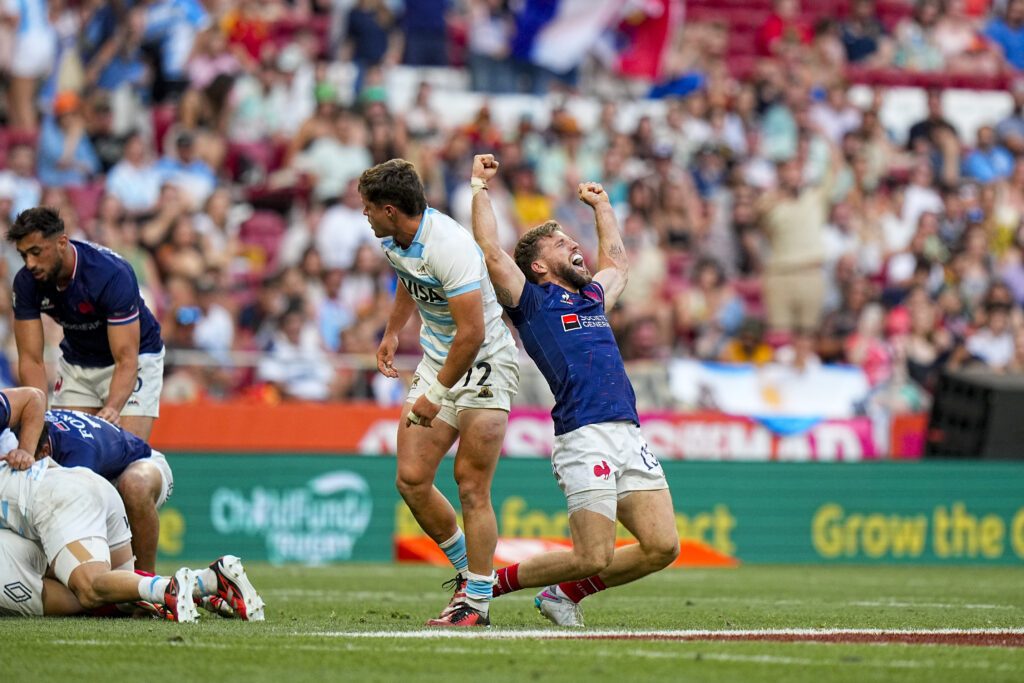
Thibaud Mazzoléni: It’s just as well that title is there, otherwise it would have been hard to swallow. Sadly, I didn’t take part in the Paris Olympics. Basically, I was 15th in a squad of 14. That was a disappointment. Then came Agen. Playing there was my childhood dream. But I had a very complicated time of it. At the end of that season, I decided to stop. I wasn’t really looking to stay in professional rugby. There was the disappointment of missing the Olympics, a difficult season on the pitch and a delicate personal situation too.
I told myself: “You’ve got a child now, that’s the priority.” I tried to move towards a slightly more stable life. So I signed for Layrac (Fédérale 1, ed.), the club where I learned the game. Just before that, I still had the good fortune to wear the France jersey again, a year ago. The last time was on 29 June, with the European title, right after Agen. That was really great. And after signing at Layrac, there was a bit of sevens with Monaco, with, unfortunately, that runners-up finish at the championnat de France Inextenso.
Had you lost your connection with the game?
You have to understand that I have quite a particular history with this sport. A few years ago, I was injured for 27 months. I had four injuries back to back. After that, I had a bit of a burn-out. Inevitably, when you’re injured, others take your place. And when you come back, you have to work twice as hard. But every time I came back, I broke down again. It was complicated. My last injury was an elbow injury, a very tricky one. I might never have played rugby again and had a prosthesis in place of the bone inside my elbow. But then the Olympic flame was lit again. I gave everything to try to make the Games. Unfortunately, it didn’t go the way I wanted. Those are the ups and downs of elite sport. Coaches make choices and you know you can be on the wrong end of them. I respect that.
Today, let’s say it’s been digested because it’s coming up to two years. But it remains one of the biggest disappointments of my life. Then I made quite a few financial sacrifices to wear the Agen shirt because, as I said, it was my dream. It was a good opportunity for me. A lot of things were said and weren’t honoured. I was left high and dry at the end of the season, with very little room to manoeuvre. I was exhausted. I didn’t want to move, to uproot the family, when things were already delicate enough. I got the chance to take a permanent job in the Agen area. One thing led to another; I hadn’t planned to go straight back to Layrac (smiles), but back I went.
And after your spell at Layrac, what happened?
Layrac is a club apart. I know it well since it’s where I started playing rugby. It was a joint set-up, my licence was at Caudecoste, a little village nearby. Not a lot has changed, either on the pitch or in the changing rooms. It’s a Fédérale 1 club that still does things the old way. I’m not even sure the pitch would be worthy of Régionale. I talk about it openly because everyone knows it and everyone talks about it. As soon as it rains, it’s hard to play any rugby. It’s tough, it’s exhausting. Then came that interlude with Monaco last summer, which did me good. I knew that by going away with Monaco I’d get answers to my questions, but they weren’t the right ones, not the ones I was expecting (laughs). I thought I’d be off the pace… And in the end, it went pretty well. I said to myself: “Thibaud, you’ve still got a few years to enjoy rugby. If you can try to go a bit higher, go for it.” So I signed for Fleurance (Nationale 2), which means I’m still staying local. And to round off this summer, there was this opportunity to go and play in India…
The president of the Indian federation wants to grow rugby at an accelerated pace
Tell us about this one-of-a-kind adventure…
Yes, it’s quite something. It’s very unusual. It’s only the second year this competition has existed. Last year, there were no French players. This year there were three of us, with Luca Mignot, Guillaume Bouche and me. In fact, it’s the rugby president of the Indian federation who set up this championship to develop sevens in India, to let Indian players rub shoulders with the best in the world, to share experience, with a view to growing the local game. Sevens in particular, for a possible appearance at the Olympic Games one day. The president of the Indian federation wants to grow rugby at an accelerated pace. If they get the chance to develop sevens even further, they could also qualify via the Asian championship.
And in practical terms, how did you end up out there?
The president of the Indian federation is in contact with Christophe Reigt, manager of the France women’s team, and Jérôme Daret, current manager of the France sevens team and my former coach with France sevens. The president said to them: “I’d really like to have some French players.” Christophe and Jérôme put it to Lucas Mignot, Guillaume Bouche and me. We said yes. Through that federation, we were paid pretty generously. Out there, it works on a draft system. There are six franchises. We call them franchises because they’re attached to a city, but they’re owned by private investors. The system has several categories of player: category A for the major nations and current World Series players, category B for second-tier players, category C for those who used to be on the World Series but aren’t from major nations, and the Indian players.
Did you arrive as a star?
Well, yes and no. There were current World Series players there. Then again, there is that world title, so inevitably… I was lucky enough to be picked in category A. I almost turned up with impostor syndrome because it had been two years since I’d played on the Series (smiles). So I got myself ready. Obviously, I was coming off a year in Fédérale 1, and that’s not the World Series. Sevens is so different from the rugby you play in Fédérale 1.
How would you describe the experience?
If I had to put one word on the experience, I’d say different. Because India is a country unlike anything we know. There’s a lot of poverty, a lot of catching up to do, I think, compared with what we have in France. There’s catching up to do on rugby development too. The staff aren’t as sharp as what I’ve known with France or with Monaco. There’s ground to make up on the organisation of the tournament. On the first day, the opening match was more than an hour late! We had no changing rooms. You got changed in the stands, like when you’re a kid. I was used to having my knee strapped but the physio wasn’t quite sure how to do it, so I had to put it on myself. The food is also something else. I knew nothing about it, so there was always someone behind me telling me everything was fine and asking if I wanted something else. The water as well… We were told not to brush our teeth with tap water. It’s a very different life but it’s hugely enriching.
We ate white rice for three weeks, with chicken but no sauce. When I landed in Mumbai, I had to change terminal. I was overwhelmed. Nothing was signposted. I had to take an old bus in India. The guy who comes to get your suitcase, you think he's the driver but in fact he's someone who comes to carry your bag and then asks you for money
Tell us more…
I was afraid of everything, honestly. You set off on your own, after hours and hours on a plane. I’d always been used to trips where everything is taken care of. You pick up your bags and follow. Here, you don’t know where you’re arriving, you don’t know what you’re going to do, what you’re going to eat, what hotel you’ll get… You know nothing. I left my partner and my nearly three-year-old son at home and I was heading off into the unknown. It wasn’t simple. We ate white rice for three weeks, with chicken but no sauce. When I landed in Mumbai, I had to change terminal. I was overwhelmed. Nothing was signposted. I had to take an old bus in India. The guy who comes to get your suitcase, you think he’s the driver but in fact he’s someone who comes to carry your bag and then asks you for money. During the tournament, I turned round in the stand to pick up my things and just before going up the steps, I saw a scorpion wandering about…
You talk about an enriching experience… Do you take positives from it all the same?
Yes, because inevitably, when you play sevens, you travel, you discover things. I take it as something that made me grow, that let me discover something else. Because when you’re with France, you’re always in your cocoon, in full performance mode. In my team, I was the only Frenchman, the only European. I had to speak English for three weeks. You discover other cultures, other ways of life, other rhythms, other ways of thinking. It really is an experience apart.
What’s your goal now? A return with France sevens?
Being selected for France sevens now, I think it’s too late. If the opportunity comes, I’ll take it, of course. But it’s been a year since I played at professional club level in the Top 14 or Pro D2. I’m staying in Nationale 2. I obviously enjoy it but it isn’t really a goal because it’s hard to reach. What I do want is to keep enjoying events like that one. I’m going back with Monaco this summer. There may be a private championship, in the same style as the one in India, but in Europe and in September, with six big teams. I’d like to stay involved in all that, because those are special moments, privileged moments. It’s still sevens, which I love. What I want is to perform with Monaco this summer. We’re going after a French title, because we’d really love to have it. We weren’t far off last year. I hope next year will be the one. For the years ahead, the goal is to establish myself with the Monaco team and to keep performing with them.
And with Fleurance, are you feeling the pressure? Any fear? Or can’t you wait to start the season?
I want to start the season, obviously. Right now, I left my hotel fifteen hours ago. I’ve got no desire to talk about rugby at the moment because I’ve spent seven hours at Bombay airport (laughs). I’m shattered. I’ve still got seven hours of flying to do, I’m waiting for the last flight home to Toulouse. But of course I’m excited to get going again with Fleurance. I’m back in with them next week. The thing is, I’m off again with Monaco in August so my start will be a bit staggered because I’m going to miss almost a full month. I want to get familiar with the game plan, with my new team-mates and with the club. I’m going in with humility. It’s funny, I was talking about it with a friend a few minutes ago by message. I was telling him that my status is there, we can’t change that. The CV is written, that’s how it is. But what counts is what happens on the pitch. If I’m not playing, it’s because I’m not performing. And that’s not what I want.
Comments