
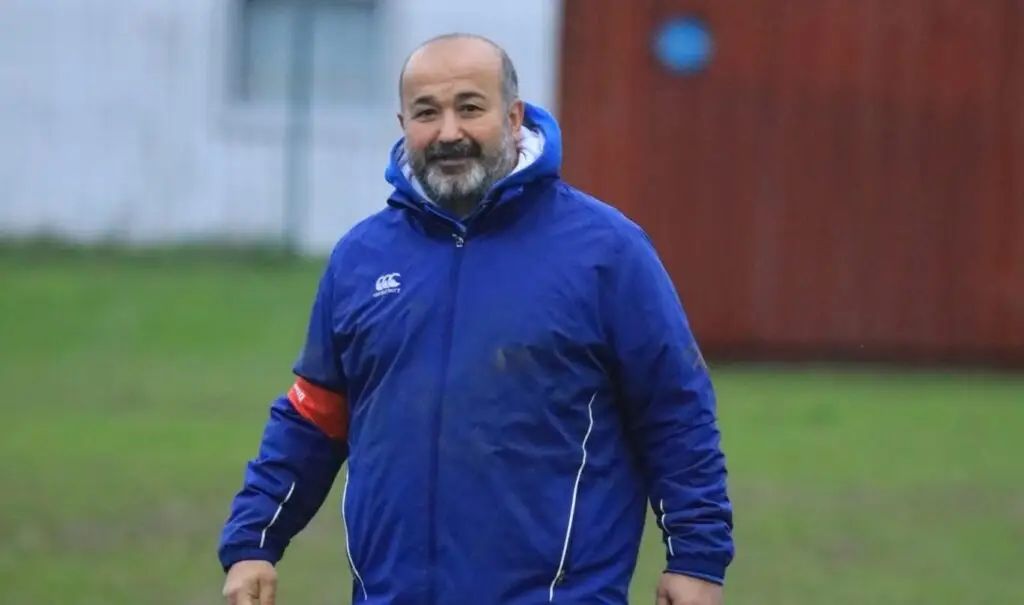
Mehmet Oskan discovered rugby when he arrived in France more than 40 years ago. Quite a journey and a passion that has never wavered.
“I was born on 10 March 1977, so I am 48 and I joined my father in France in 1981.” So says Mehmet Oskan, rugby player, coach and father of a rugby player. His father came to France in the 70s, when the country needed manpower. What followed was a family reunion, and it would be in Châteaubriant: some twenty families, the Foundry obliging, a Turkish community took root to the point that today the community of Mehmet’s compatriots makes up 10% of the population of Châteaubriant, “There must be 1,400 of us out of 13,000 inhabitants”, points out the husband of Mertap. Married, four children including a big lad of 23 who is a prop with the espoirs at REC, a fine 120-kilo beast. “In any case, as soon as he could walk he was in the changing rooms, laughs Mehmet. So he played for Stade Nantais until last season before signing for REC, where Kévin Courties and the coaches are doing a super job. Rennes Etudiants Club, it’s good, respect,”
But how do you end up pushing open the door of a rugby club at the age of 8, when you are Turkish, from a hugely sporting country but one not known for a passion for the oval ball?
Mehmet’s explanation, as he remembers it: “I had mates when I arrived in France. I had mates I still play with. Even today, Armand Martin and Pascal Fouchère… And they played rugby, I lived next to the ground, that makes things a lot easier. That is why I came along. Because I had friends from school who I was at school with. I tried it, I didn’t really understand the laws. I rather liked it (laughs).” The club officials took him a little under their wing. They supported him. And since then? “I don’t know what life is without rugby.”
His mother must have been a little worried at the start, just as his wife must have been worried for the children. “Yes, but my eldest weighs 120 kg all the same. I said, worry about his opponents instead!”.
Mehmet’s parents were not anti-rugby, but very nearly. They did not understand why their son was playing that strange sport. “When my father came here to France to earn a living, to earn money, he would say to me, you’re not going to do that. It’s rubbish! Do something else, another sport. But that was what I liked, it was rugby.”
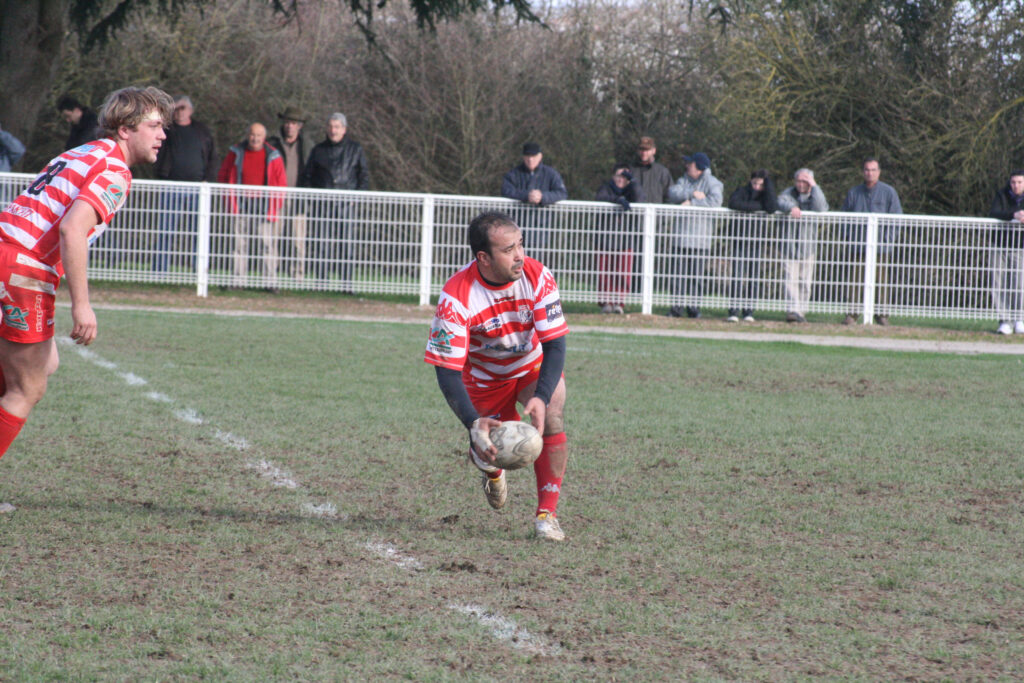
Today a tiler, with big thighs and a strong back, it is at scrum-half that Mehmet has criss-crossed the pitches of Chateaubriand, Saint-Nazaire and now Segré.
“Today I’ve got more of a prop’s body! I used to play number nine. But I am fit to play prop… just not mentally.”
Why stop at 40? And not 39 or 41? “I wanted to go until 40. For me it was 40. And then I wanted to tell my wife, until 40. After that we’ll go and see the châteaux of the Loire… but she is still waiting for us to do it: they aren’t far away, and yet on Sundays I’ve got rugby. I am still coaching Segré in R1. That’s been eight years. It is a very young club, not even 30 years old.” To the point of pulling his boots back on to help out! “I put them back on because there weren’t enough players. This year. I was on the team sheet again, because there were only 15 of us. Otherwise we would have forfeited the match.
So by putting myself on the team sheet, there were 16 of us. So we didn’t forfeit. By the way, I told them I would not be going on the pitch, that they shouldn’t count on me. So, no injuries or anything, funnily enough!”. The more time passes, the longer the pitches get. You even get the impression they are on a slope! “You see gaps, you think you’ll get through, but no, they close up too quickly. We are too slow. I don’t know, there is something that… In our heads, we see all sorts of things. We see the skill, but no, it doesn’t work. Something is missing!”
The final word? “What I miss today is the changing room. I love that. It is all the preparation, it is all of that. Once you are playing, it isn’t the same stress at all as being a coach. You play, you throw yourself into it. Except that there are no questions. When you are a coach, you ask yourself questions.”


Comments