

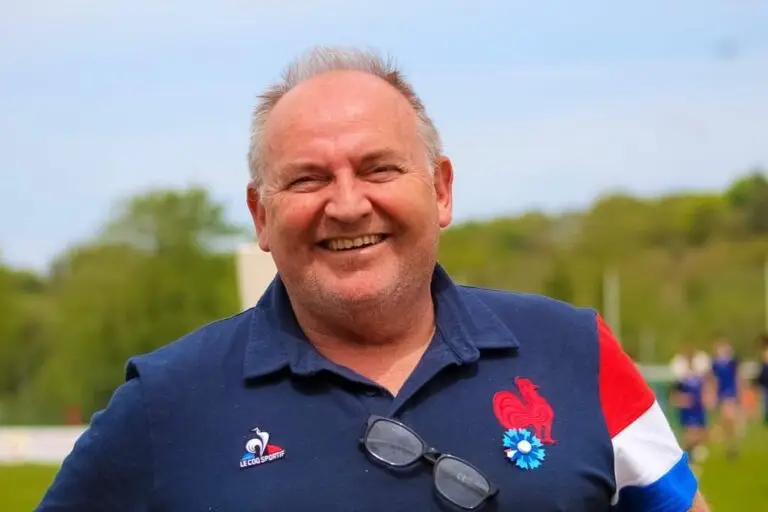
Joël’s passion for rugby was born on the school benches — or rather outside them. Last century, during his teacher training at the École Normale in Paris, rugby was a way out.
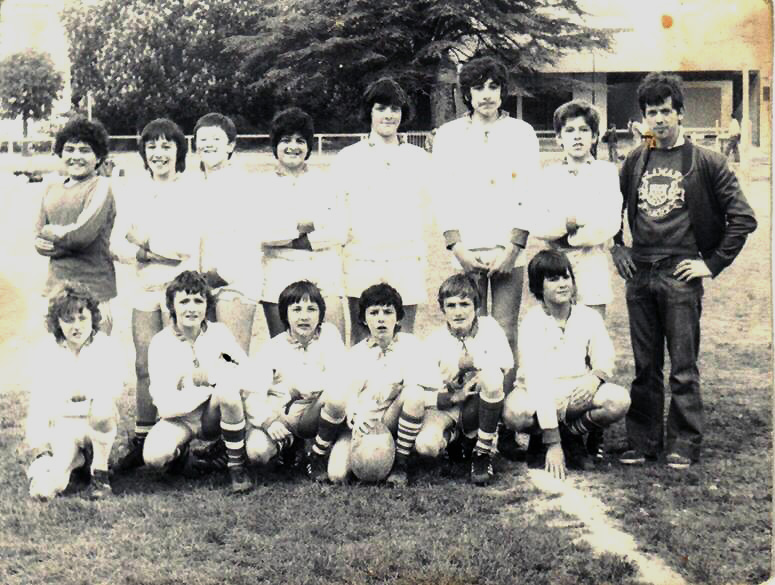
“When I was at teacher training college in Paris, it was a way of getting out of the boarding house on a Thursday, since Thursday was the children’s day back then. And at the college, we played rugby.”
His roots, though, are firmly in the west. While his parents lived in Le Plessis-Robinson (today the home of Racing 92), his father was born in Montreuil (near Fontenay-le-Comte) and his mother came from around La Roche-sur-Yon.
The “Swiss Army knife” of Loire rugby
“I think I’ve done just about everything in rugby”, Joël smiles. And the list is impressive:
- Player
- Coach (club and juniors)
- Referee
- Youth coach
- Administrator
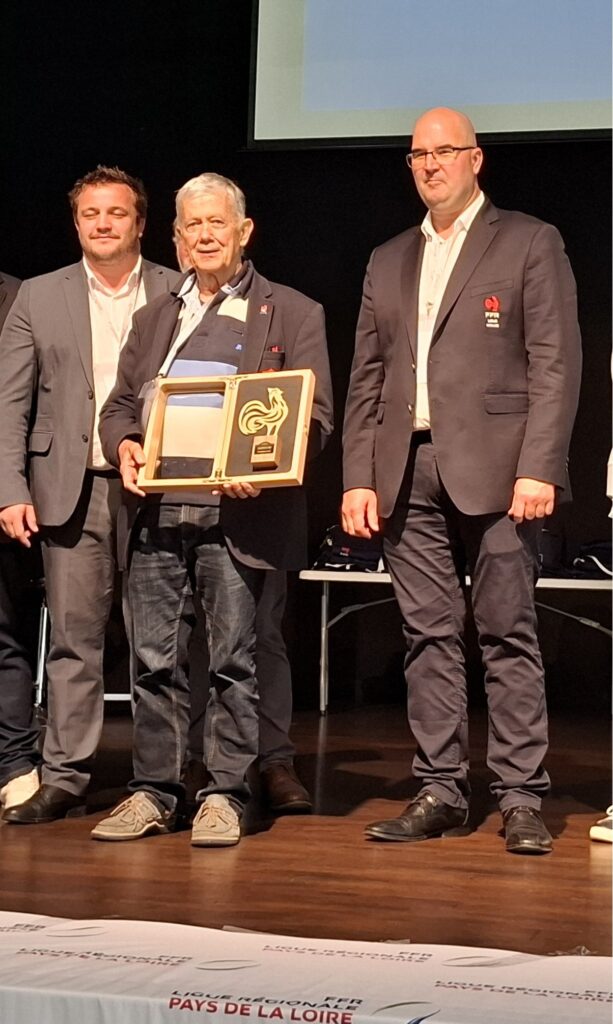
Today, he chairs the disciplinary committee of the Ligue des Pays de la Loire. A vast job for a region spread over five départements, from the Sarthe to the Vendée. A sort of “Chile” of French rugby, stretching 300 kilometres from La Ferté-Bernard to Fontenay-le-Comte.
“When I was looking after the juniors at Rugby Club des Sables d’Olonne… our pool included Brest. When you’d already done 120 kilometres, you were coming out of Nantes and you saw ‘Brest 300km’… You need motivation!”
Discipline: guardian of the values
What is the reality of discipline in 2026? For Joël Gâté, it is a delicate balance. “It’s about giving players a voice. They’re made to play, not to sit in the stands. But there are rules, and you have to live with the consequences.”
His view of how society is changing is a worried one, however, particularly when it comes to the 15-19 age group.
“They have a way of speaking, a way of relating to each other that is very difficult. There are insults aimed at opponents, it’s terrible. They use language that I, at 78, have never tolerated from anybody… We’re not here to call each other every name under the sun, with racism thrown in.”
Faced with these excesses (insults on the pitch and harassment on social media), the Ligue is setting up an “Incivility and Violence” committee. For Joël, there is zero tolerance: “When a 19-year-old lays into his opponent… as far as I’m concerned, there’s no let-off.”
The key role of the coaches
Joël insists on the mirror effect: children are sponges.
“When the coaches on the touchline are permanently on their feet bawling with their hands in the air, the youngsters get the impression that if they lose, it’s because of the man in the middle [the referee], not because of the opposition or their own game…”
The call of the sea: the other passion
In 1977, Joël had “one foot in a boot and the other in a deck shoe”. Living close to the sailing base at Les Sables-d’Olonne, he followed his children into sailing and found himself running the dinghy club.
Why this double life? A question of the calendar.
“If you don’t make the play-offs in rugby, there’s nothing after 15 March and up until September. So it frees up time.”
So he became a race officer and judge. One thing led to another and the bug took hold: he went on to become team manager of the France Optimist squad at the 1992 world championships in Mar-del-Plata.
The last word: a hymn to volunteering
For a man who amply deserves his médaille de la Jeunesse et des Sports, what matters most is human commitment.
“People have to keep volunteering, it’s what keeps life going. People don’t see all that work in the shadows: those who spend their morning hanging up shirts, getting water bottles ready, cutting up lemons. They’re the ones who keep rugby alive. The players enjoy themselves, they make the most of it. And once they’ve made the most of it, they have to carry on giving something back to the younger ones.”

Comments