
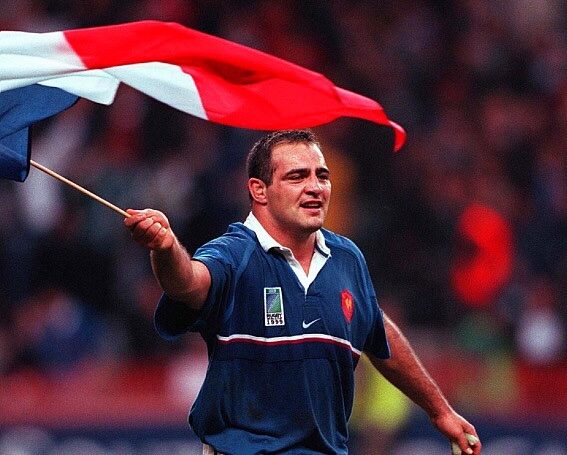
A final, especially one on the other side of the world, is not something you forget. Thirty years on, Raphaël Ibanez has lost nothing of France’s university triumph in South Africa in the summer of 1996. Captain of that golden generation and now manager of France, he looks back for itsrugby on a formative five-week adventure in the southern hemisphere, at the crossroads of a dying amateurism and a nascent professionalism.
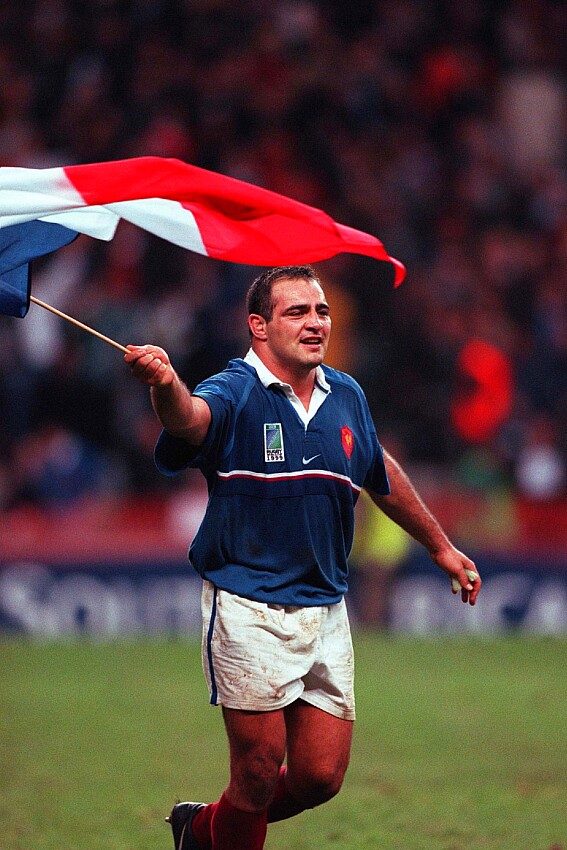
University rugby, “a side of the game we can identify with pride”
Rugby is a hooligans’ game played by gentlemen, but you find university men in it too. “University rugby is one of the sides of our game that we can identify with pride, because that university rugby allowed a lot of players to flourish and to develop in a special, particular spirit,” says the current France manager, deep in preparation for a month of Nations Cup.
At the time, the France university side were the federation’s official development team — a role held today by France A, as it once was by the Barbarians. The story of that 1996 France U side involved players whose roots had grown in amateur rugby and who were blossoming in a game that had turned Open (professional) in 1995.
At the crossroads of amateurism and professionalism, that team allowed student players to commit to an elite pathway. The “Ibanez” generation benefited from that set-up.
1996, South Africa and five weeks in the southern hemisphere
The 1996 World Cup in South Africa was completely uncharted territory for the whole squad, or at least a large part of it: a five-week adventure in the southern hemisphere, an extraordinary moment for those young players.
“I have to go back over that competition, because it is 30 years ago after all! We had to face England, Argentina and the All Blacks, I think, to reach the final, which was played against the hosts, South Africa, at Ellis Park in Johannesburg,” the captain recalls.
“Almost the whole squad went on to have a career. The federation had really banked on that team to allow every player in it to develop and to flourish, while being aware that there was also a strong competitive stake.”
“To be world champions”: the ambition of a generation
“That group was extremely ambitious, with one idea in the back of its mind: to be world champions. That was our primary motivation and the primary ambition of our staff, headed by Christian Lanta, who had known how to shape that team, ready for that competition in the southern hemisphere,” Ibanez continues.
“And it is true, a lot of players went on to make their name at the level above, with the senior France team: David Aucagne, Nicolas Brusque, Serge Betsen, Olivier Brouzet, Richard Castel, Yannick Bru… and plenty of others.”
Some generation, and some memory, one the captain turned France manager enjoys revisiting: “Fantastic memories, brilliant memories, it is a pleasure to talk about them.”
France – South Africa, a story of reunions
Quite a period, and quite a set of meetings, these France – South Africa fixtures: the 1995 World Cup semi-final lost in the Durban downpour, France U’s victory in the final in Johannesburg a year later, and what followed.
“The 1996 final is played at Ellis Park, a legendary ground, against Springboks who obviously want to impose their game, their power. And we win,” Ibanez says. “The following year, in November 97, that France university team face the reigning world champion Springboks, on tour in Europe. We play them in Lille and once again, we beat them!”
The revenge, a few days later, did not involve the university side but the senior France team, crushed 52-10 at the Parc des Princes. That match marked the end of a generation (Lacroix, Cabannes, Merle…) and the arrival of a new one, illustrated by France’s only try, scored by the young replacement hooker of the day: Raphaël Ibanez.
Pioneers between amateurism and professionalism
The France U 96 generation took on the demands of competition, along with a duty of education: young men well equipped for adult life as elite sportsmen. Trailblazers of a kind, born with their hands and feet in a dying amateurism, but their boots in an emerging professionalism.
“That new landscape was a bit like rugby’s New Deal, a new landscape of professional rugby, but with a large slice of uncertainty, a large slice of the unknown, which we could offset with a real carefree streak,” Ibanez confirms.
Betsen, Bourgarel, Blanco: the pride and the shadow of apartheid
And then there were memories stronger than the rest. Roger Bourgarel, forever the first, Serge Blanco, and finally Serge Betsen among the Boks, two years after the end of the abomination of apartheid…
“Johannesburg, Ellis Park, the Springboks, the 1996 final. Serge scores, and it is followed by an enormous ‘bronca’ around the ground, which made me think during the match that the end of apartheid was not for tomorrow… It had a big effect on us,” Ibanez concludes. “We were so proud to have Serge with us, and on top of that he scores in the final. The perfect script.”
Comments