
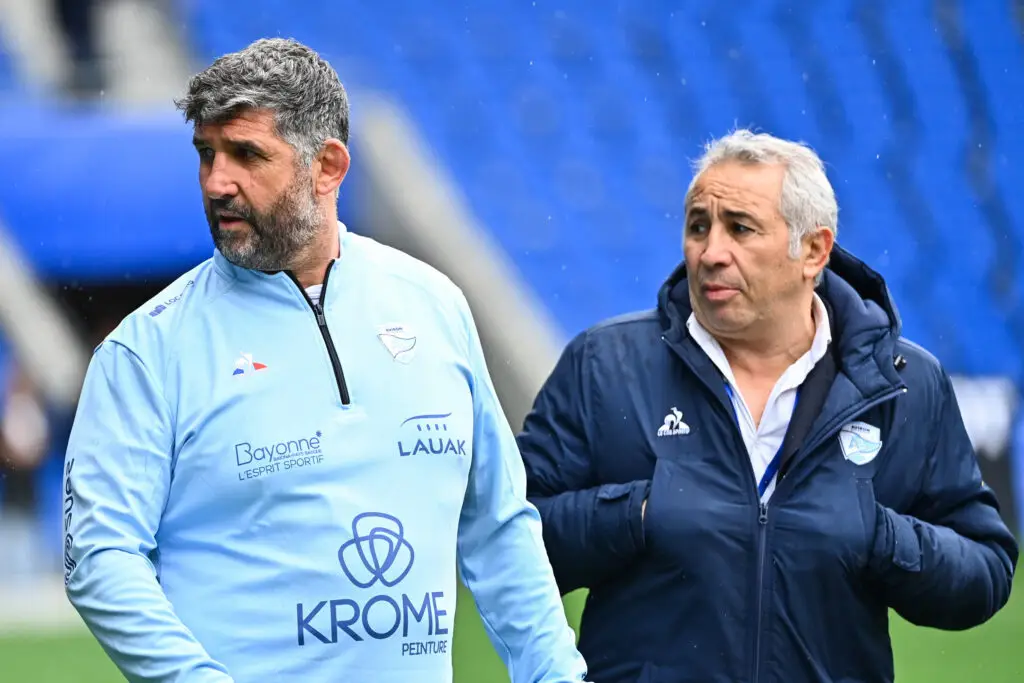
There are the statements: sober, polished, almost mechanical. And then there are the silences, heavy ones, that tell the truth about a dressing room and a club. On Thursday morning, 19 February, Aviron Bayonnais announced “by mutual agreement” the end of its collaboration with Grégory Patat, bringing to a close a cycle that began in the summer of 2022. A conventional formula, but one that barely conceals the reality of a divorce that had been brewing for months.
To understand this split, you have to go back to last season. In sporting terms, Patat had breathed new life into the Basque club. He had arrived with a brief to stabilise Aviron in Top 14, and had done far more than that, taking Bayonne to a historic semi-final in 2025 and restoring a credibility the club had not known for decades. But behind that renaissance, cracks were already appearing.
??????????́ ???????? ?? ?'?????? ????????? ????? ???
— Aviron Bayonnais (@avironrugbypro) February 19, 2026
?: https://t.co/JuvI4Fi1rR pic.twitter.com/Rx2ZaSsrXc
The tipping point came with the reorganisation of sporting power. The arrival of Laurent Travers as director of rugby reshuffled the pack. The cohabitation quickly became strained. Internally, communication dried up, remits became blurred, decisions were contested. The board reproached Patat for his lack of cooperation, while the coach denounced growing interference in his own remit: assistants imposed on him, his management of the squad questioned, his sporting strategy debated…
The isolation grew gradually. In the autumn, despite a contract extension until 2028 presented as a sign of confidence, criticism was already emerging at the top of the club. The fracture was deep, almost irreversible. Behind the scenes, each side dug in. The shared project was crumbling.
The paradox will remain complete
Then the results stopped hiding the tensions. In 2026, Bayonne sank into a negative spiral, with two consecutive defeats at Jean-Dauger (a fortress that had been impregnable for more than a year), stringing losses together and sliding dangerously down the table. The club, stuck in a wretched run and unable to win since the start of the year, began to doubt and started looking for a jolt. The coach, for his part, understood that the wind had turned.
Last week, the discussions between the club’s lawyers and the manager’s picked up pace. Patat wrote to the board to make clear his desire to leave. A few days later, the board asked him not to take training. The symbolism was powerful. The break was complete. Irrevocable. Final.
? COMMUNIQUÉ DU BOC ?
— Asso BOC (@assoboc) February 19, 2026
Le BOC souhaite réagir à la récente séparation entre l’Aviron Bayonnais et Grégory Patat. pic.twitter.com/jEOJFwLe5u
On Thursday 19 February, making it official was no more than a formality. Bayonne justify their decision by the need for a “fresh impetus” at a pivotal moment in the season. Behind that phrase lies the admission of a project that has fallen apart.
The paradox will remain complete. Grégory Patat leaves behind a transformed club, more ambitious and better structured, but also one shot through with power struggles that ended up getting the better of him. The coach is paying for the crisis in results as much as for the redistribution of power. At Jean-Dauger, a page is turning. Without any public din, but with the muffled brutality of break-ups that have become inevitable. And in modern rugby, it is often the coaches who leave the stage first, even when they have helped write the finest lines of the revival.

Comments