

For the past week, the Gers has been living to the rhythm of tractor blockades and farming slogans. Livestock breeders and farmers are blocking roads and roundabouts to protest against the systematic culling of herds hit by lumpy skin disease and to denounce deals such as Mercosur, which they see as destructive for French agriculture. Their anger flares, but on the blockades the conversation sometimes takes an unexpected turn: it drifts towards rugby and the local figures of the national game.
That closeness is not a mere anecdote. In the South-West generally, rugby is more than a sport, it is a common language, a space of identity that binds the countryside together. Antoine Dupont, captain of France and Stade Toulousain, and a son of that rural world, is its most striking example. A native of the Hautes-Pyrénées, from a family of livestock farmers and educated in part at an agricultural college in the Gers, Dupont embodies that galaxy where sporting and farming cultures meet. The protesters are now calling on him to support their fight against the culls, seeing in him the symbolic figure of a rural France that “does not want to disappear”.
A French rugby talent pool “that comes from rural France”
“Antoine Dupont, our emblematic rugby figure, who represents our rural Hautes-Pyrénées, we’re asking him to come and support us, to take a stand against the culling of herds in France, and to save our profession, our French and Pyrenean livestock farming, a representative of the Coordination Rurale of the Hautes-Pyrénées told our colleagues at La Dépêche. The French rugby talent pool comes from rural France, from the farming world, so today we would like all the professional rugby clubs to speak up and hold a minute of applause in support of French agriculture. We want everyone to oppose total culling. Today, we also need citizens, with a message on a car, and shopkeepers, with a message in their window: no to the culling of our herds. We have to save our rural France, and it is our French wealth.”
? Les agriculteurs demandent à Antoine Dupont de venir les soutenir ➡️ https://t.co/uxwu8SHwHshttps://t.co/jSJd1NOIeW
— berger edwige (@bergeredwige) December 19, 2025
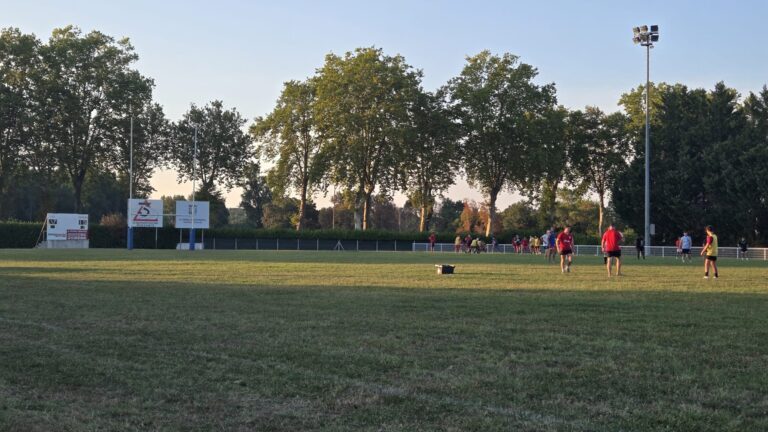
That appeal is no accident. Rugby has long irrigated the countryside. In the agricultural colleges of the South-West it is often the number one sport, favoured by local traditions and by grassroots club life. Many professional players, from Anthony Jelonch to other internationals, grew up between fields, livestock and village clubs, building an impossible dichotomy between the land and the pitch. Hard work, team spirit and solidarity are values shared by both worlds.
Rugby, part of the farming identity
Today, on the blockades, conversations swing between farming and rugby demands. People talk about the local lads picked for their country, they salute the exploits of the Pyrenean scrum-half, they joke about the analogies between a three-quarter line and a row of spotted cattle. That humour eases the tension, but it also betrays a deeper feeling: in the villages, rugby is not an urban luxury, but a component of the farming identity. It gives a voice, recognition and a social bond that many feel is threatened by the centralisation of political decisions or by international deregulation.
This farming mobilisation is not only a health or economic crisis, it is a crisis of recognition and existence. Farmers are not only defending their animals; they are defending a way of living, of working and of passing things on. In that context, rugby becomes more than a refuge, it is a political language, a window of expression, a platform for visibility. The appeal to Dupont is not simply a request for media support: it is the search for a representative for a world that too often feels invisible.
Le premier essai d'Antoine Dupont depuis son retour de blessure ??#TOP14 pic.twitter.com/cU3oXKNKvd
— TOP 14 Rugby (@top14rugby) December 19, 2025
Closing the lines
At a time of blockades and tractors on the A64 or the roads of the Gers, as protests spread against health rulings and trade deals judged dangerous, the presence of rugby in farming conversations is symptomatic of a centuries-old bond. Agriculture and rugby share values, men and a geography. And in this corner of France, the mesh between the maize fields and the rugby pitches is not coming apart, even under the pressure of crises.
In the discussions around the filter blockades and on the signs held up to drivers, you could almost hear the referee whistling for a scrum: the battle is fierce, but these farmers still know how to close their lines.



Comments