

The head of French refereeing sets out for itsrugby.com what is going to change in a few weeks. A chance to look at the thinking behind it, and to take the temperature in the amateur game.
The fundamental principles of rugby are safety, fairness and continuity of play. They have been there for more than 150 years and they will always need defending. Safety is absolutely paramount.
Mathieu Raynal is the current French benchmark when it comes to refereeing. With a new season about to start, for professionals and amateurs alike, he walks us through the changes, and explains the reasoning.
And then there is Sacha Coris, a young referee in Régionale, who is waiting for early September and the new instructions for the youth and amateur game.
Cards: France keeps a strong red
The positions taken by World Rugby on shoulder charges in particular are hard for many referees to make sense of, for all kinds of reasons. That is why France will stick to a strong red card, with the orange card used in tiny doses, maybe 10 cases in a season across 450 matches.
Mathieu Raynal | Head of French refereeingWe want to keep a strong yellow card and a strong red card to defend the principle of player safety.
Then there is continuity of play, and preserving fairness in the contest for possession. “We are very attached to that,” the head of French refereeing goes on. “We are not there to favour the attack, whatever you often hear. We are there to allow the ball to be won back potentially anywhere on the field, and to allow the turnover.”
Rewarding the collective contest areas, the maul and the scrum, does not only make the game inclusive, meaning a game with room for every profile. It also creates space, because it tires players out, and it creates a spectacle. The last point is continuity of play. Raynal: “That is where we are going to put the emphasis in any case in Top 14 and Pro D2. We want to shorten matches and increase ball-in-play time, the tempo of games.”
Shorter matches, more ball-in-play time
That runs through the 45 seconds allowed for kicks at goal (penalties and conversions, instead of 90 and 60 seconds), even if it means the tee carrier hands the ball to the kicker: “When you see the number of penalties attempted, the number of conversions, if you can save time…”
Then comes the revision of the law on the number of replacements. France is going back to the one the rest of the world applies: no more tactical substitutions. There again, a lot of playing time gained and shorter matches.
Mathieu RaynalWe had the longest second halves in the world, and the longest matches too. Cutting the number of replacements is going to have an impact on the total length of the match.
If on top of that things speed up and the use of the TMO is streamlined…: “We are pushing to go faster on the TMO. A new video system will give us access to all the images and to the feed beforehand, before a referral is made. We will no longer be checking a doubt, it will already have been checked without stopping play.”
The images will be cued up when they need to be. Referrals should get shorter and fewer, because the flow of images will be under control.
There is also the time taken to play lineouts: “We are asking referees to speed up the setups. Last season a lineout took 29 seconds, against 24 seconds in the other leagues.” With 24 lineouts per match on average, that mechanically means 5% more ball-in-play time.
It took some negotiating with the South in particular… The North does not share the idea that everything must be handed to the attack, in line with their “Reward the attacking team” doctrine. Raynal: “We said “no” clearly, and they came back to something where safety comes first in their playing philosophy. The second is the contest and the third thing is continuity of play.”
Lower tackle line: fewer concussions in the amateur game
And lowering the tackle line to sternum height? “That will concern what we call “Community Shield” rugby, meaning the amateur game. Studies have been run over the past two years by several nations including France, England, Wales and Scotland.”
Mathieu RaynalBy lowering the tackle line, we have cut concussions and head contacts by more than 40%.
As a result, the players (at the U20 World Championship in Georgia) adapted, and they brought their tackle height down.
In Régionale, Sacha Coris is waiting for the September briefing
For Sacha, a referee with the Ligue des Pays de la Loire, there will be consequences within weeks. He will officiate in Régionale at senior level, up to Nationale in the youth game, and in Excellence B and Fédérale B for federal reserve sides.
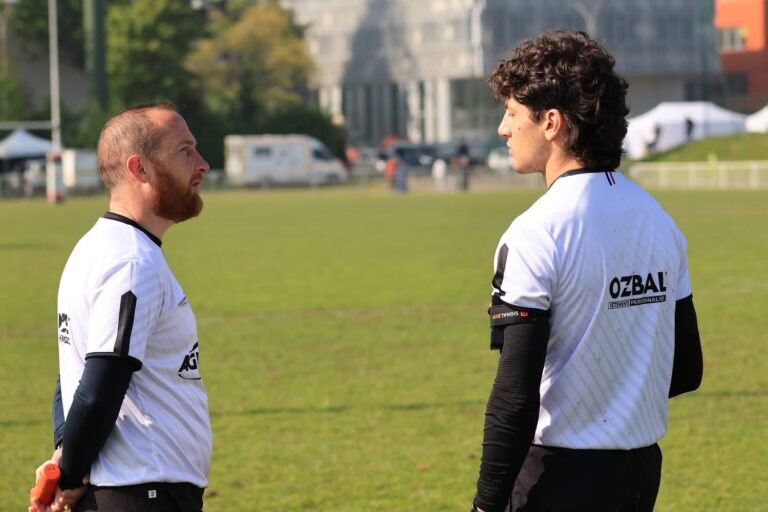
Sacha Coris | Referee in RégionaleWe get regular law updates, directives on law changes. We adapt as the matches go by. At the start we often go over the new laws with the captains so everyone is up to date for the first few games, and after that it takes care of itself.
Lower tackle zone? Changes to the replacement laws? “That has not been passed on to us yet. We have a pre-season course at the start of September. Replacements are a matter for the federal representatives, we are not really affected.”



Comments