
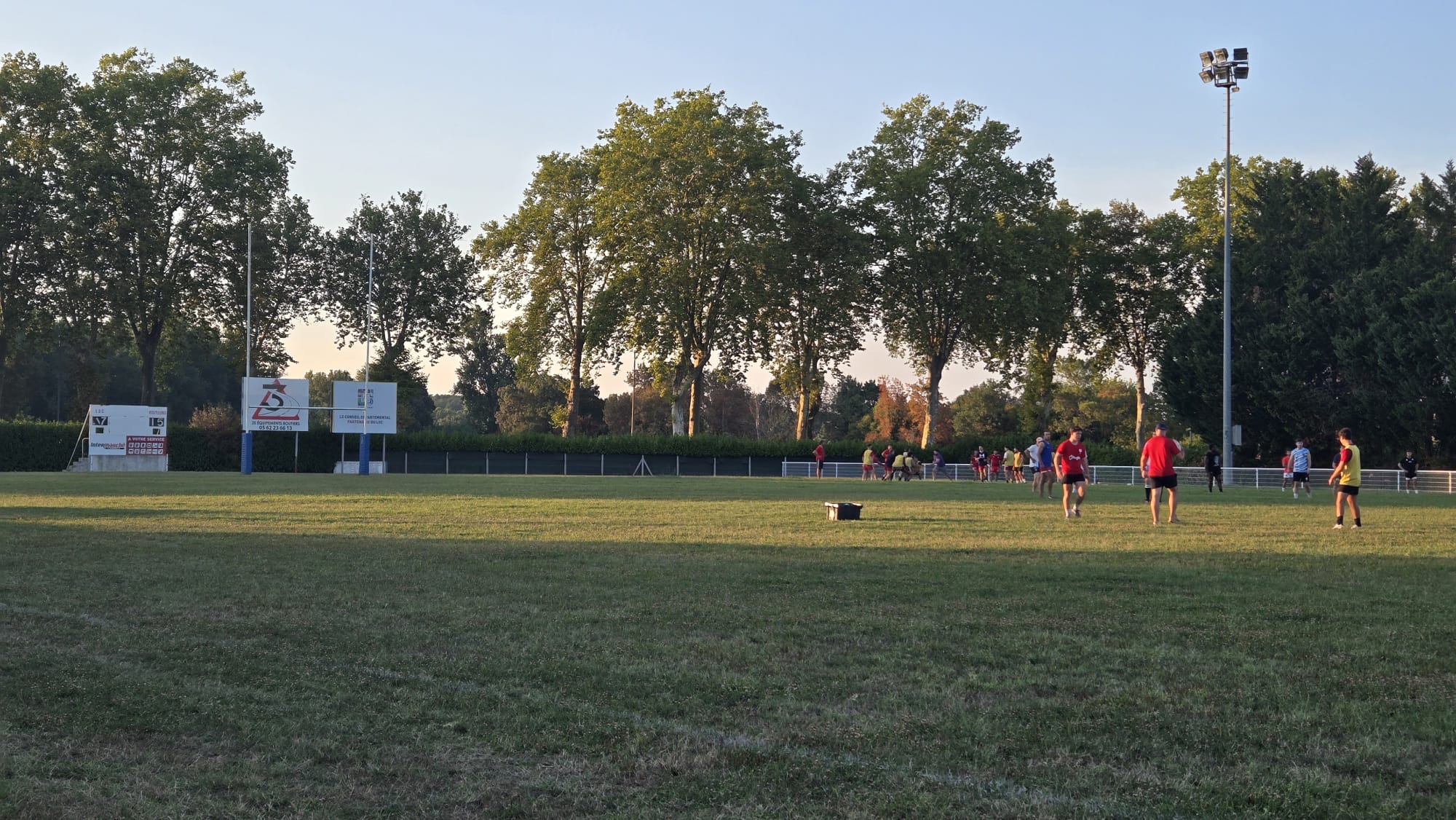
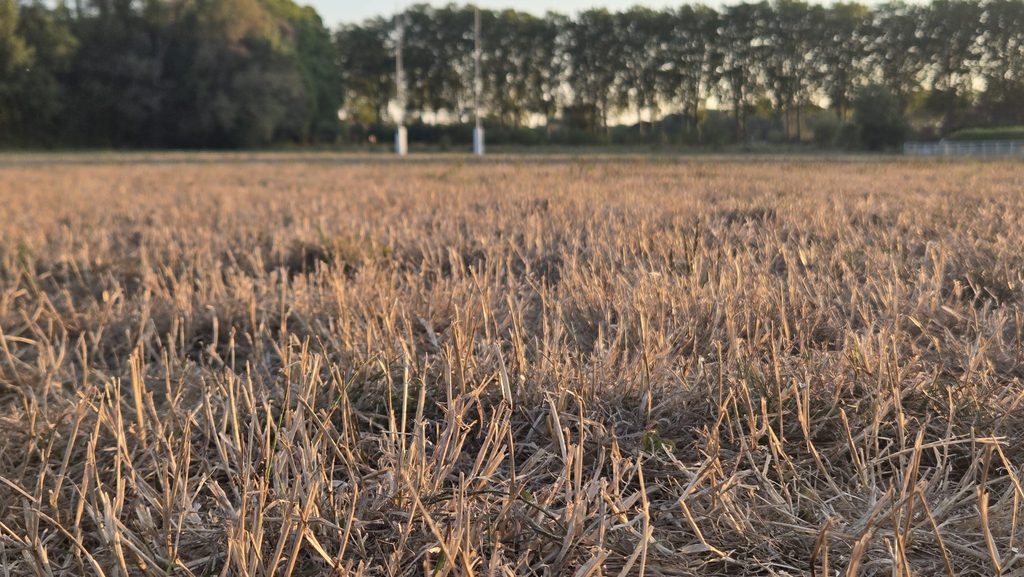
“It’s hot. Very hot. We can’t take any more of playing on concrete.” At Lombez-Samatan, duck country in the heart of the Gers, the pitch has little left of the green carpet you picture for a Sunday of rugby. It is dry, hard, worn out by weeks of heat. The sprinklers have done their job, but the ground still carries the marks of summer. Cracks run alongside the in-goal lines.
The players have no time to worry about it. “Come on lads“, shouts Jean-François Montauriol, a former Stade Toulousain player who has come back to his roots. They run. They push. They tackle hard. One drill, then another. On the Pierre-Brocas pitch, the forwards work together. The coach watches over it all.
For a Fédérale 2 club, the pre-season is serious. And the means are there to match. A weights room has been fitted out in the club’s facilities, under the main stand. “I was surprised to see the preparation, because there is a gym and everything in Fédérale 2. Fifteen years ago that did not exist yet”, says Montauriol, who has played at international level.
Two grounds, the same feel
“That room is a piece of LSC history“, says Xavier at the side of the pitch, a club stalwart and a member of the committee. The club has played in Fédérale 1 and still has facilities built for a higher level. “We are set up to be above this.”
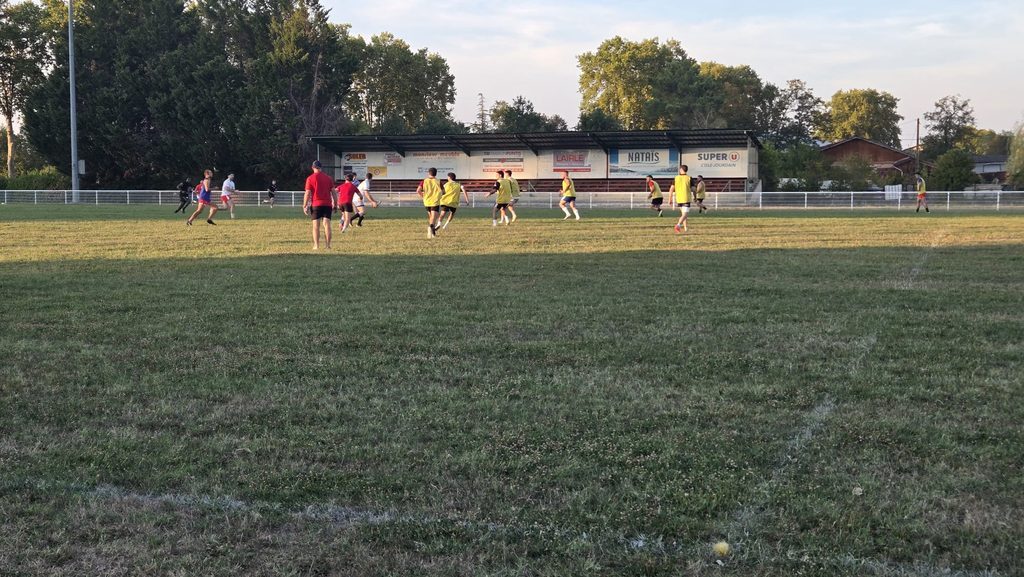
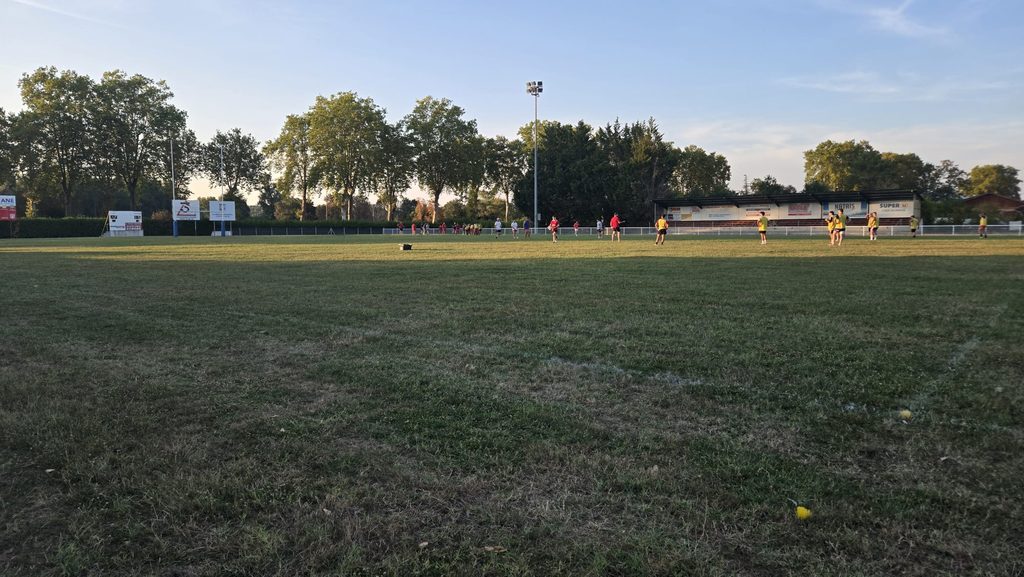
Another advantage, and a rare one at this level: the Red and Whites have two grounds. In Samatan, the Stade Pierre-Brocas, and in Lombez, the Stade Paul-Vignaux, also used by the footballers. LSC can therefore spread its training sessions and its matches between the two towns. “Every other weekend, the club plays at home on one of the two pitches“, we are told. That arrangement is also what makes Lombez-Samatan unusual: two towns, two grounds, a single club, and enough space for everyone to work without getting in each other’s way.
LSC, an old family story
Lombez-Samatan has had several lives. Before sharing the same name, Lombez and Samatan each had their own club. The two towns “were at war with each other“, the older ones say. And not only on the rugby field. The final merger dates back to 1961. The new club then climbed, all the way to the top level in France in the 1980s. In that side, there is no point looking for players who lived off rugby alone. The club had been built with its territory, its farmers, its shopkeepers, its local men.
The result? “You feel it inside the squad, there is plenty of banter between the lads, between the ones from Lombez and the ones from Samatan. The banter flies around here.” Healthy banter, of course, the kind that drives a team forward.
Jean-François Montauriol did not end up here by chance, either. His father and his uncle wore this shirt. “It is a return to the very roots of rugby, with people who have values.” The former Italy international knows what LSC stands for. He also knows its other face, that of professional rugby. “It is precisely that double experience that makes his view interesting“, Xavier says.
A “village club”
Xavier has been part of club life for a long time. A former vice-president, still on the committee, he remembers the good times, the relegations, the changes of generation and the days when you simply have to find enough pairs of hands to keep everything running. He talks first of a “village club“. Then of a “terroir”, of a “real history“. Of an “identity“.
But he does not sound like a man looking only behind him. This small man with the big smile also talks about “good players“, a “good atmosphere“, a “good level“, with “character“. And above all about “projects” and “ambition“. “That is probably what sums up LSC best today.”
A village club, yes. But a club that wants to play rugby seriously. So the room where they lift the iron is there. The facilities are there. So is the staff. Montauriol handles the forwards, Bruno the backs. The two work together. “Neither of us is above the other. We are in it together.” The mark of a tight-knit team that thinks collectively.
Nor is there any question of dropping the methods of a professional club onto Lombez-Samatan. The setting is obviously not the same. Not all the players live off rugby. And around them, there is a whole world that keeps the house running.
The ones who never play, but are always there
Montauriol spotted them quickly. The volunteers. The old boys. “Here at Lombez-Samatan we have the grandads, the grandmas, the blokes who are around all the time. They cook us a meal after every training session.” Because there are shirts to get ready, water to carry, facilities to keep running. And then there are the meals. The club also runs eleven bingo nights a year. Eleven evenings to bring in money and keep a machine going that inevitably costs something.
“It is not spectacular. It is even rather invisible“, Xavier says quietly. But without it, there is no club. “All those little things, we eat together. It is very much a family.” Montauriol has known a different set-up. “In a professional club, inevitably, there is not much of that, because it is a bit of a company. Or at least you do not necessarily see it. Here, a player can know the man handing him a bottle of water. The next day, they might run into each other at the market. The club is not only a place you come to train.”
Rugby goes through the market, too
On Monday morning, the thing to do is to go to the marché au gras, the fattened duck and goose market. “The biggest in France, the most famous“, they say. In Samatan, it is a rugby appointment. People talk poultry, foie gras, prices, weather. And as often happens in villages, the conversations end up crossing. Rugby is never very far away…
That morning, the “Sunday match” (a Saturday one, as it happens) is still fresh. “One player scored. Another missed. We won, we lost, maybe we should have done it differently.” LSC is part of the local conversation. “It is an old habit. The club belongs to those who play, of course, but also to those who watch, lend a hand, organise, fund, comment“, Montauriol points out.
Xavier talks precisely about that “real history“, which is not found only in results or in the sides of the past. It is in the “habits“. And in the youngsters. Because the youth section is one of the projects the club’s stalwarts mention. There too, LSC is preparing for what comes next.
No need to choose between the past and the present
Out on the pitch, meanwhile, every player is thinking about the pain. The pain of a crushing heatwave, of earthy, grazing turf. “We might as well have moles, at least the soil is soft“, you can hear. The lads drink, go again, and struggle back to their feet…
“In small clubs like this one, in Fédérale 2, that is what makes them strong. Wanting to come to training, coming with pleasure.” Coach Montauriol insists on the local players. “Here, these are lads who know each other. I try to remind them of brotherhood, of fighting together, of defending the territory together. And among the pros, that does not come out the same way. It is not the same world.”
Read also: the interview with Jean-François Montauriol, from Stade Toulousain to village clubs




Comments