
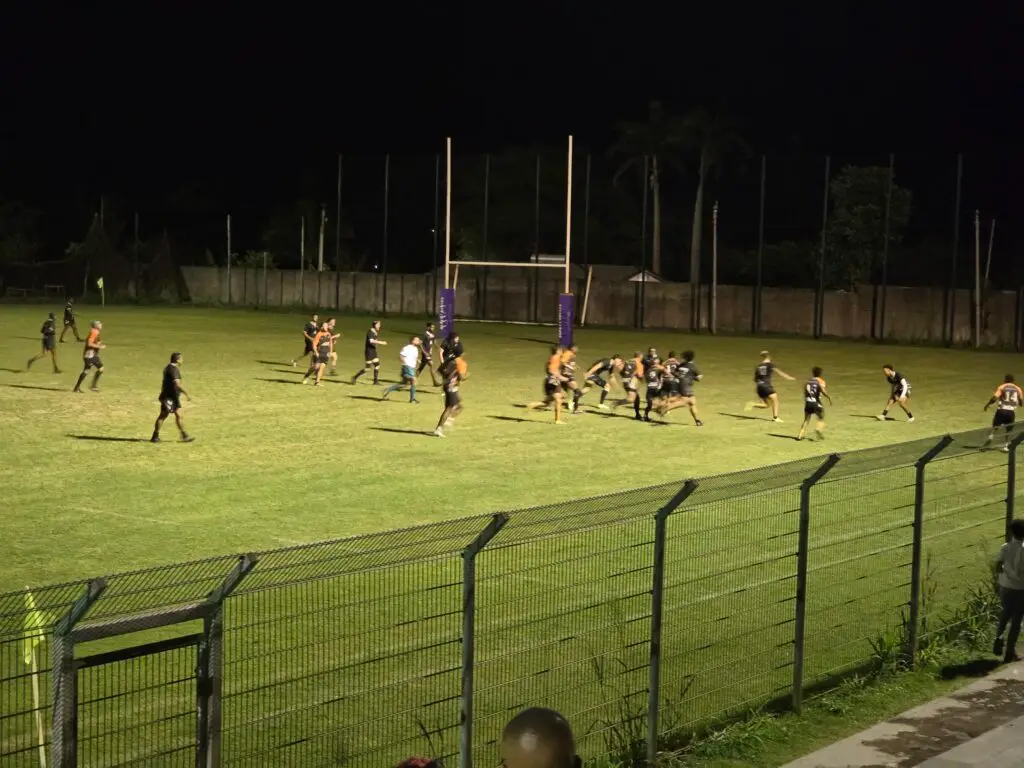
Night falls quickly in the tropics. At the Chaudron, it swallows the outline of the ground without the slightest ceremony.
In this working-class district of Saint-Denis, known across the island for its past tensions and its raw energy, the municipal ground looks like a sporting enclave ringed by tall, tight fencing. It is there for a reason. Here, rugby is lived intensely and the history of the place holds a few memories of things spilling over.
The ground is also used for football. The turf bears the traces of that double life. The lines cross over each other, the worn patches tell the story of one weekend after another. The lighting is sparing, almost timid. Under the tired floodlights, the players’ silhouettes stand out as though in a grainy old film.
Dodo, rum and zamal
But the place is alive.
On the steep stand, families arrive in clusters. Children in shorts, former club players, brothers, cousins. The players’ mothers, sisters and partners take their seats with the confidence of people who already know every number on every back.
“Here we know everyone. When they play, we shout for our boys as if they were France“, smiles one player’s mother, settled in the middle of the stand.
The voices soon rise. Here, nobody watches rugby in silence.
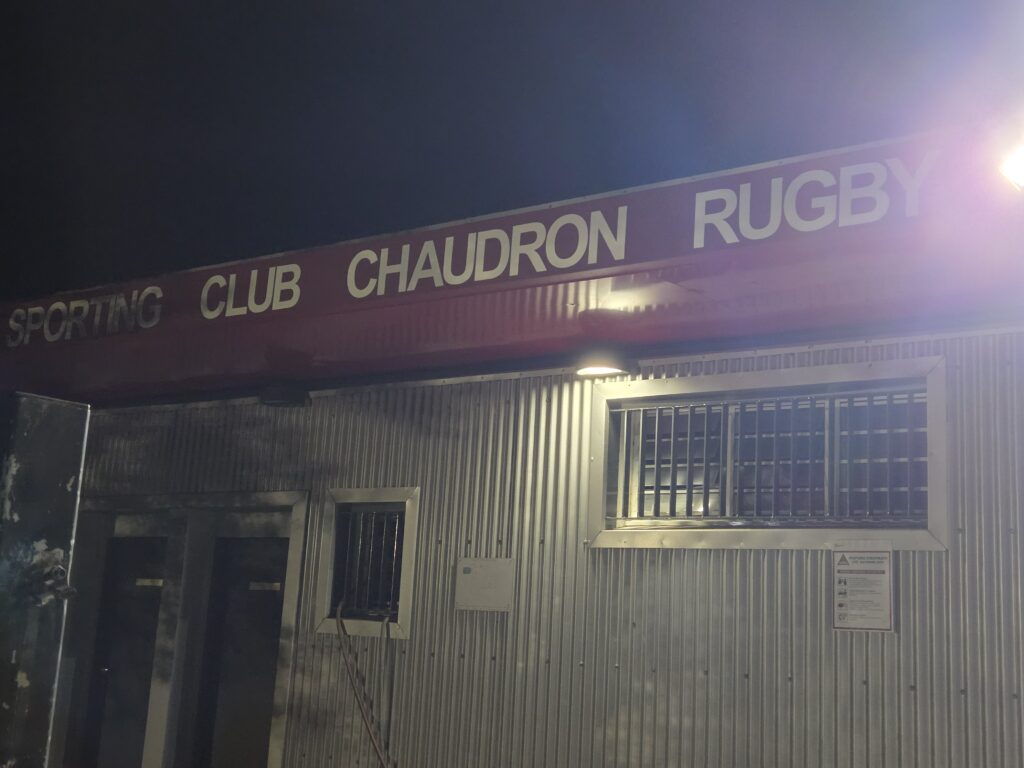
A little further down, the clubhouse is still a building site. Planks, bags of cement and tools take up one corner of the space. But that stops nobody from bringing the place to life. Behind a makeshift table, bottles of Dodo are opened at a steady rate. The local beer passes from hand to hand while the conversations run on team selections and memories of past seasons.
“We’re rebuilding the club bit by bit. But rugby, that never stops“, says one volunteer as he serves another bottle.
A story about mates
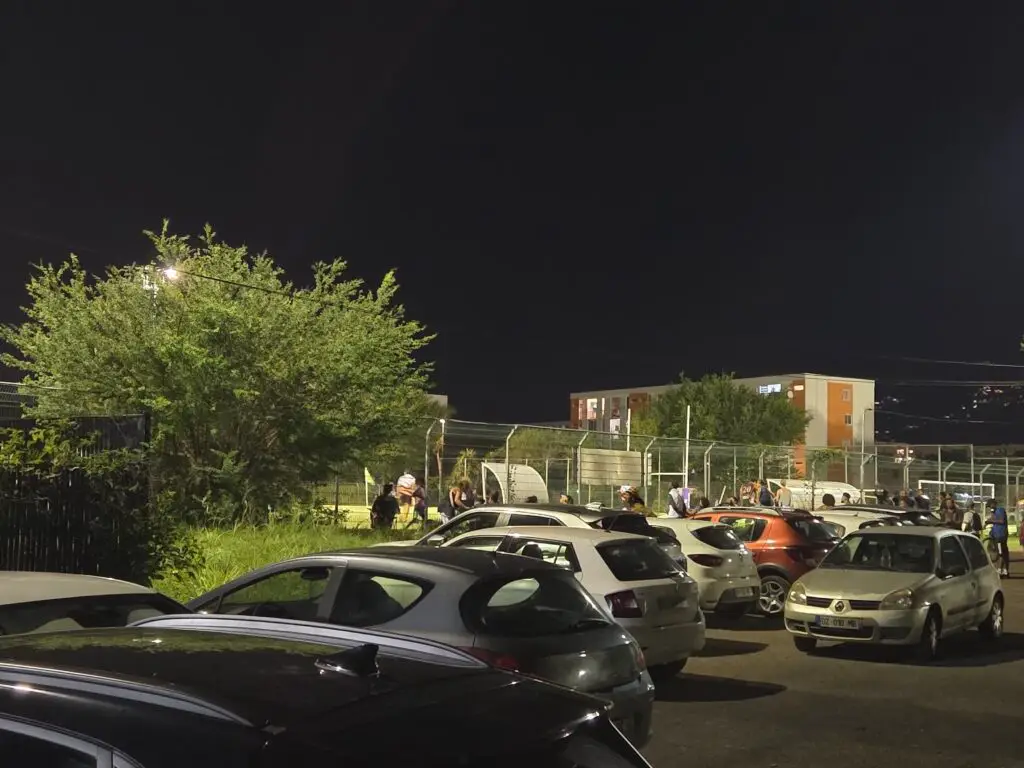
On the car park that opens straight onto the ground, the mood is looser still. Boots stay open. Cars become improvised tables. Bottles of rum slowly empty and zamal joints are passed around between friends with the nonchalance of a neighbourhood night out.
“It’s simple here. We come to watch our mates play, we chat, we live the match our own way“, says one supporter leaning on his car, while children cling to the fence around the pitch.
And on a mobile phone propped on a bonnet, the evening’s other rugby invites itself into the scene. Scotland against France. Every so often, a shout leaps out of the little screen. Then the eyes turn back to the pitch.
“Hang on, hang on… France might be scoring… ah no, penalty“, one spectator lets out before lifting his eyes back to the field.
Because this derby matters every bit as much.
RC Chaudron are hosting XV dionysien for the restart of La Réunion’s domestic championship. Eight teams make up this island league, where rugby develops far from the spotlights of mainland France but with its fervour intact.
Cyclone break
The season had come to a dead stop for more than two months. The cyclone season lays down the law in the Indian Ocean. Wind, torrential rain and weather warnings had put rugby to sleep.
Tonight, it wakes up.
“We all wanted to play again. Two months without a match here, that’s a long time“, says a local committee member at the side of the pitch.
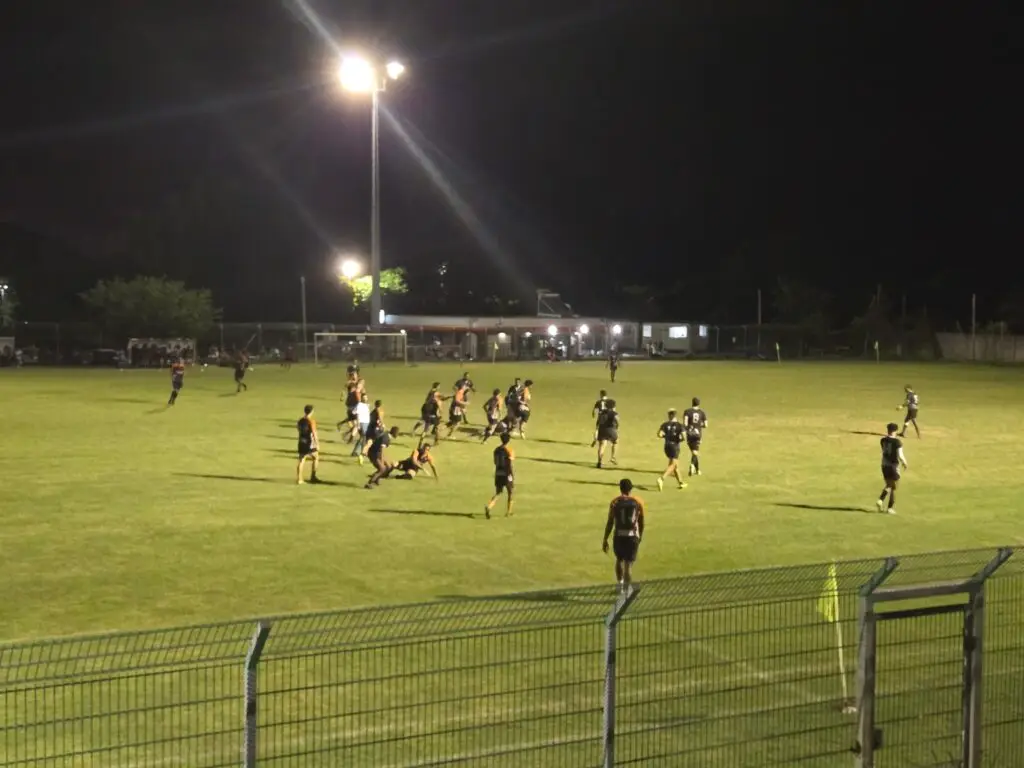
From the first minutes, the tone is set. The players are long-limbed, lean, honed. Here, speed is a natural weapon. The runs are long, the footwork explosive, the space attacked without hesitation.
Chaudron are playing at home and it shows immediately. The hosts inject tempo, counter-attack again and again and look to shift XV dionysien around.
“The lads are hungry”
But the restart also shows up its imperfections.
The sequences are sometimes rough around the edges. The game is chopped up by knock-ons, scrums and penalties. The instincts are still being rebuilt after the long break imposed by the storms.
“You can feel the lads are hungry, but they’re still a bit short of reference points“, reckons a former player leaning on the railing.
None of which takes anything away from the commitment. The tackles crack in the humid air. Support arrives quickly. Every ruck becomes a small battle.
In the stand, the encouragement turns into impassioned orders. First names are called out. Advice is handed down. The referee gets an earful. Every break is celebrated like a try already scored.
“Tackle him! Tackle him! There you go!“, roars a voice behind the perimeter rail.
A game of movement
RC Chaudron eventually take the upper hand. Their movement-based game finds gaps in the dionysien defence. The outside backs make the most of their speed and several well-constructed attacks end up behind the line. A long way from the talk of the old-timers, who had been forecasting one round of fisticuffs after another.
XV dionysien never lose the thread of the match, though. The visitors respond with more direct, powerful sequences and keep the gap in territory that is still up for grabs.
With every try, the ground catches fire. Children run along the fence. Supporters bang on the metal barriers. The players on the bench leap up as though the pitch were too small to contain their energy.
“Here, when we score, it’s the whole neighbourhood that scores“, laughs one Chaudron replacement.
Bit by bit, Chaudron pull away. When the final whistle goes, the scoreboard reads 36-25. A clear win for the hosts in this first fixture back.
Another culture, the same fervour
The players fall into each other’s arms. Some sit straight down on the grass, drained. Others salute the stand where the families are still on their feet.
“It feels good to start the season again like this, in front of everyone“, pants one Chaudron player, still out of breath.
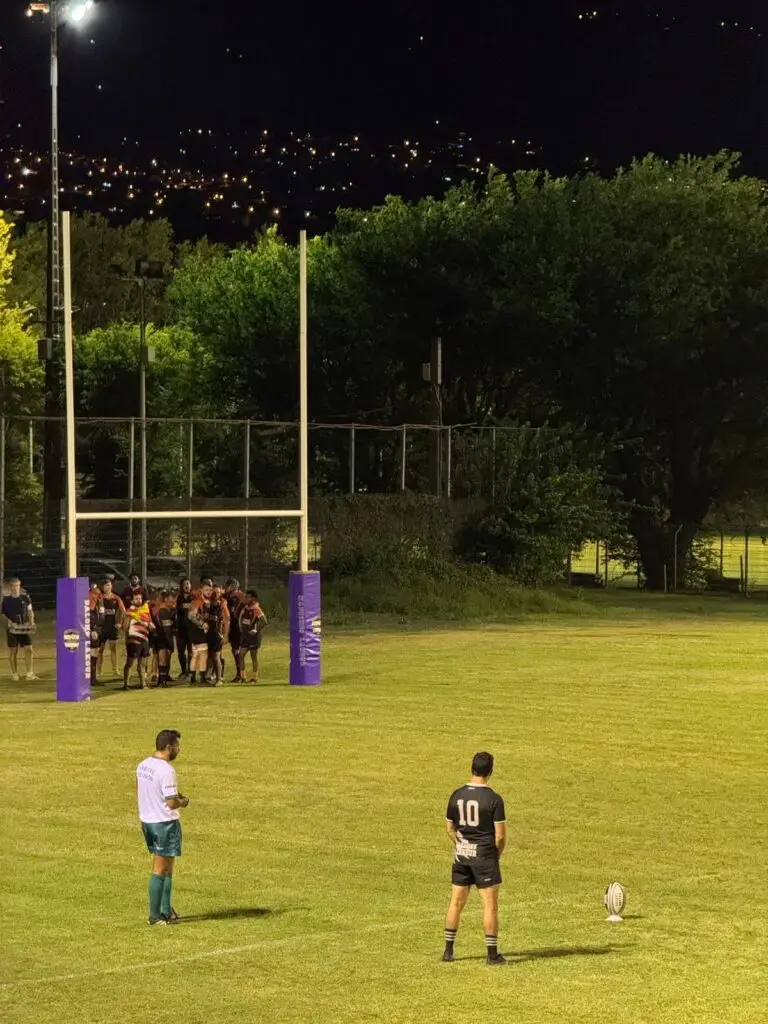
Night has now settled over the ground for good.
On the car park, the conversations start up again as if the match had only been a pretext to get together. The tries are analysed, the moves replayed, the jokes about the next meeting already flying. A long way from the clichés about a district with a reputation for trouble.
In one corner, the phone is still showing the closing minutes of Scotland against France. Two different kinds of rugby, separated by thousands of kilometres. But at the Chaudron, on this Saturday 7 March, nobody doubts that theirs has a burning soul too.



Comments