

In the early morning, the Lozère has that smell of damp wool and turned earth that sticks to your shoes like a promise. The département that joins the Massif Central to Occitanie and, above all, the least populated in France – 78,000 souls scattered across a giant’s territory – could quite happily settle for its Canadian landscapes. But in the heart of Mende, the prefecture town, a few steps from the cathedral with its twisted spires, the RCML (400 registered members) cultivates another kind of verticality: that of trajectories going up, patient and stubborn.
The turf at the Jean-Jacques Delmas stadium is heavy. Here, the only club of any “standing” in the département springs up where you would only have expected a valley. “We have to make everything ourselves, from the player to the sense of belonging“, says Laurent Pradier softly, a president as solid as a granite wall. On a pitch ringed by meadows where ewes and cows graze – and even bison further north, as local folklore likes to point out – rugby becomes a way of standing tall in the face of the immense silence.
A distinctive DNA
Because the RCML is above all a story of territory. Mountain territory, but one that looks outwards, towards the sunlit plains where they play the “handling game”, towards Toulouse, towards Montpellier. “We respect the dietician and the five fruit and veg a day far too much. Our players eat too many vegetables“, smiles president Pradier. Meaning that his players (an average age of 23), slim, rangy and athletic, are capable of slicing through Régionale 2 pitches (and equally of being bulldozed by more heavyset sides). Whereas mountain rugby usually likes to be rougher and more head-on.
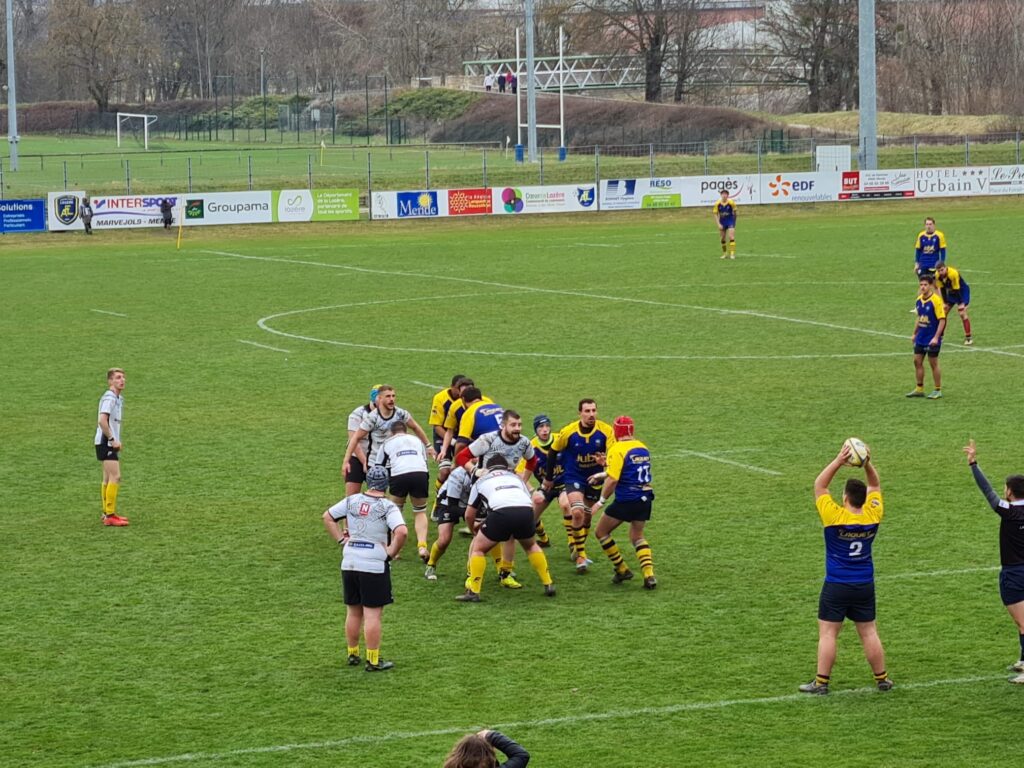
“People always say that the Lozériens don’t have the same accent as the southerners or the Auvergnats, but they have an Occitan heart“, Pradier slips in. A way of saying that the roughness of the causses does not stand in the way of a delicate touch. He insists: “Our DNA is turned towards movement. From the youngest age.” And yet it is towards Clermont and ASM that eyes turn. Or the other way round, with the “Jaunards” regularly coming to scout young gems around Mende to enrich their “nursery”.
Big-name players
Development here is not a slogan for a grant application. It is survival. A philosophy. And sometimes a flash of brilliance. The Lanen brothers, now well established in the professional world, took their first strides there. The same goes for that fearsome competitor Joël Koffi, the emblematic former Carcassonne captain. And one of the Nevers men, Hugues Bastide, too. Or the excellent Léa Chazalette, an MHR player.
In all, 35 players, women and men, schooled at the club have graced (or still grace) clubs at the top and very top level. Before them and after them, other kids from the causse took the road to Pro D2 and the Top 14, as if the altitude gave them a spring. “Nothing is handed to us. So we learn to build, not to buy“, Pradier insists. In his eyes there is not an ounce of bitterness, but rather a farmer’s pride, the kind that mixes patience and doggedness.
“We see them turn up at 6, shy, and leave a few years later with an inner compass. We don’t just develop players: we develop people”,
Laurent Pradier, president of the RCML
The RCML is nothing like a still refuge, though. The club takes in close to four hundred registered members which, in such a sparsely populated département, is almost beyond reason. Wednesdays echo with the shouts of the little ones, children who play rugby the way you run in the woods: without calculation, with no prospect other than raw pleasure. “We see them turn up at 6, shy, and leave a few years later with an inner compass. We don’t just develop players: we develop people“, the president points out. They even come back to train and play at the weekend while they are students in Clermont (2 hours’ drive away), Montpellier (2 hours) and Toulouse (3 hours).
Far from the spotlight, the scene has something poetic about it. The coaches, volunteers for the most part, cobble together drills against the winter wind; the parents hand out coffees that are far too sweet; the juniors dream of Toulouse like a red moon set on the horizon. But nobody is mistaken about the aim: the RCML has no ambition to conquer the world, only to open its doors.
“An incredible human density”
In the shadow of the bell tower, or rather of the Urbain V cathedral that towers over the whole town, the white lines of the stadium sometimes seem to dissolve into the mist. And yet, every weekend, they take shape again under the feet of the two senior sides (a women’s team too!). A club which, despite the geographical and economic constraints (a 300,000-euro budget), refuses to admit it is small. “We don’t have the numbers of certain towns, nor the means. But we have an incredible human density. And no budget can buy that“, Pradier hammers home.
That density is perhaps what makes the RCML a club apart. A sort of pastoral laboratory where rugby is made differently, with the same seriousness as a shepherd counting his flock in the spring. They talk about passing things on, about humility, about desire. They also talk about the future, about plans to modernise the facilities (the clubhouse in particular), about keeping the youngsters longer, about continuing to build bridges towards the top level.
A “peripheral” territory
Listening to what is said around the Jean-Jacques Delmas stadium, you understand that the RCML is more than a sports club. It is a breath of air. A way of reminding people that even in so-called “peripheral” territories, creativity is not lacking, and neither is talent. “Mende is a long way from everything, but that is exactly the point: it forces us to go out to others. To invent. To be better”, he insists.
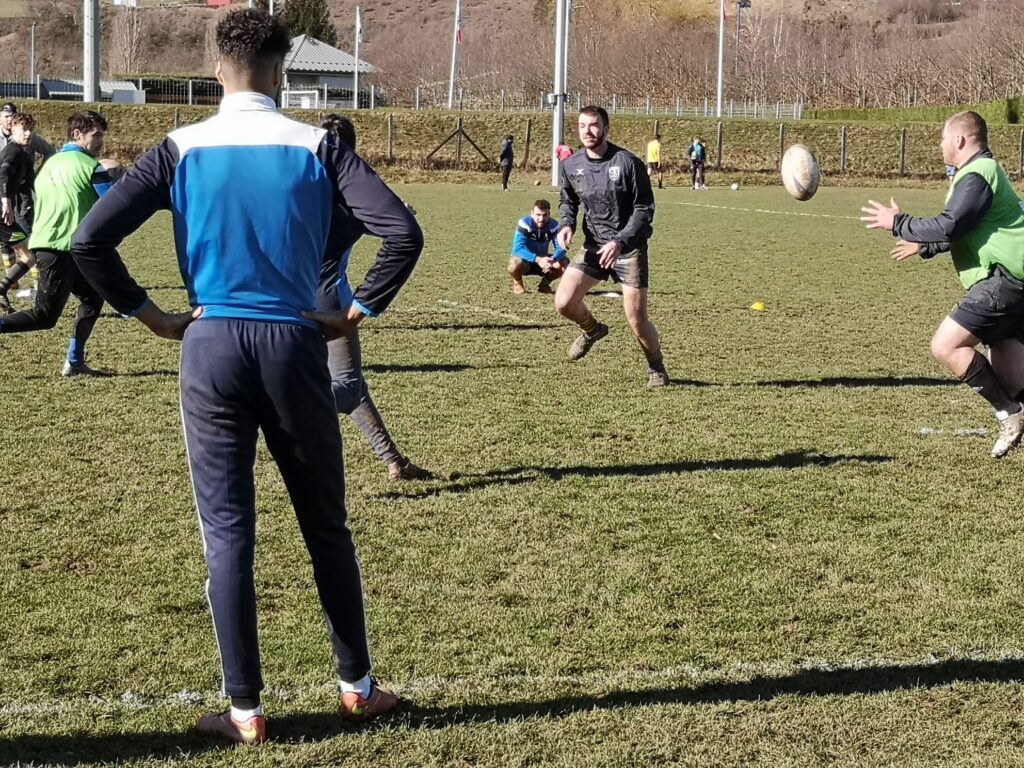
When the light fades on the summits of Mont Lozère, the last balls are still bouncing. Faces are red, hands chapped, but the laughter spills over. And you tell yourself that this club, planted in an urban area of 13,000 inhabitants in the middle of the high pastures, is like those trees twisted by the wind: untameable, alive, and remarkably fertile.
At the RCML, rugby is not only a sport. It is a way of holding a scattered territory together, of giving young people an inner landscape as vast as the causses. Here, in this corner of France that is sparing with inhabitants but lavish with horizons, the oval ball traces a lifeline, supple and tenacious. A line that even the bison, at the bottom of the meadows, seem to respect.

1 comment
Trained in the Haut Doubs (Pontarlier), I recognise in this profession of faith a speech, a flame, a pride that I wouldn’t have disowned. My discussions with Joël (…) are therefore taking shape. As for the accent though…
Automatically translated