
Maxime Mermoz hides nothing. He speaks frankly, sincerely and always with a solid argument. The former France centre (35 caps) gave a long interview to Ruck Zone and dodged no subject. The Epinal native, a four-time Brennus winner (two with Toulouse, one with Toulon and another with Perpignan) and a two-time European champion (with Toulon), looked back in particular on his early retirement and his many health problems. Dizziness, recurring pain, relapse… Mermoz went through sheer hell. An interview that pulls no punches.
RUCK ZONE. – What brought your career to a premature end?
Maxime Mermoz: I ended my professional career in 2020, the year of Covid. I took advantage of it, because for me it was a chance to press the stop button. I’d had inner-ear problems for a few years. People didn’t really realise and I said very little about it. It started in 2015, when I had tinnitus and slight hearing problems after coming back from a training camp in Tignes with RCT. I saw ENT specialists who told me it was nothing much. Then I had attacks of vertigo that left me disabled. I couldn’t move any more, with nausea, vomiting, stomach pain… A lot of fairly serious and disabling symptoms. I did a bit of vestibular physiotherapy, seeing doctors when I went to play in England in 2016/2017. It improved my health, then I went through a fairly complicated personal event in September 2017, when I was at Newcastle. I was in top physical shape, I’d had an extraordinary pre-season with the club and unfortunately at the end of the summer, this personal blow came along and broke the momentum. I came back to France for two weeks with very little sleep and a lot of stress. Then I headed back to Newcastle to go to Philadelphia to play Saracens.
I was due to start, except that on landing, I had vertigo. Instead of hour-long attacks, I had permanent ones, and even with injections from the doctors it wouldn’t go away. The tinnitus was worse still. From then on, it was a descent into hell. Sometimes, putting my son down on the floor, everything would spin and I’d get big flashes in my head. I’d fall, I’d wake up in a different position… It was very hard to live with. At the end of the year, I decided to come back and play in France. My son was coming back too, because of the separation from his mother. I couldn’t see myself living far from my son. We absolutely had to find doctors to work out what I had and treat it. For a year I saw every specialist imaginable, I even had minor operations and nothing worked. I was able to play a bit again but I was barely at 10-20% of my capacity. Not just physically, but when you can’t even stand up, look at someone or look at an object for more than a second or two without everything spinning… from that point you can’t live any more.
Did your medical situation put your return to Stade Toulousain at risk?
At that point, I wasn’t asking myself « can I play rugby again ». It was more: « Can I just live normally ». Get up, go to the bathroom, cook for my son and play with him, do the shopping… It had become impossible. So I signed for Stade Toulousain, explaining my situation to them, and at that time Didier Lacroix, who had been my coach before, and Ugo Mola, who had followed me throughout my career, expected of me, beyond the playing side, an involvement in setting things up with them. Those were the terms on which I came back to Toulouse, to close the circle, where I started at the age of 15. Even though it wasn’t cured, I managed to play again and even Ugo Mola was quite surprised. He’d picked me in the starting side several times and I was able to put a fair few things in place at the Stade with the new generations. I loved it but there was more suffering than pleasure. At that point, there was no sense in carrying on. Other clubs were making me offers but my aim was to get up in the morning without everything spinning and to be able to walk normally.
I think I had roughly 45 minutes of normal independence a day.
Maxime Mermoz
What impact did that vertigo have on the end of your career at Toulouse?
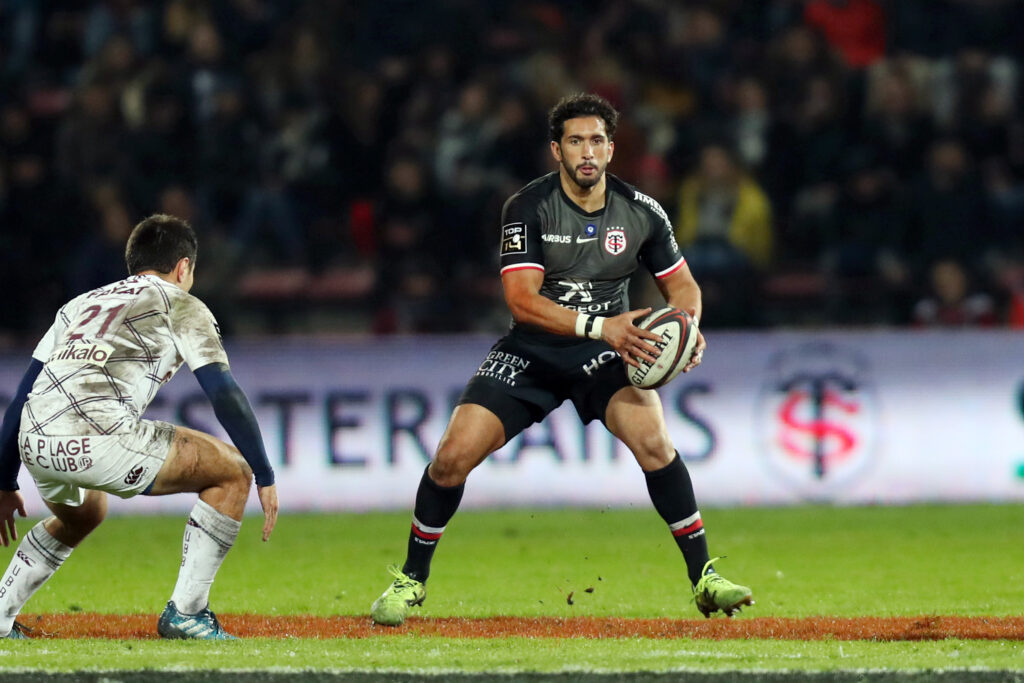
My concentration, my memory… I had nothing left, basically. It was very complicated. I did a lot of things on instinct. I remember a match between Toulouse and Perpignan at Aimé-Giral, I see Cheslin Kolbe about to score, I go towards him to jump into his arms and all of a sudden everything spins and I fall over on my own. My mother was in the stands. She understood. She knew what state I was in. Very few players understood as well. As soon as training finished, I couldn’t wait to get home quickly, get into the dark and lie down so the vertigo would stop. People could accuse me of not getting involved enough in the group’s life away from rugby, but for me it was impossible. I think I had roughly 45 minutes of normal independence a day.
What effect did that have on your mental health?
In rugby terms, I wasn’t at 100% of my capacity. I was looking for support. Medically, no doctor could work out what I had or treat it… At that point, I’m living alone, isolated between four walls. I couldn’t watch television, and even my phone gave me a headache. It was a form of depression. At one point you also think about ending your life because that isn’t living, it’s surviving. You get no pleasure out of life at all. Getting out of bed and going to the bathroom is an ordeal. You become even more aware of how lucky you were to be healthy. It had become unbearable. Psychologically, you’re on the brink.
Did you feel a kind of weariness at the lack of a satisfactory medical answer?
To start with, a tiredness builds up from repeating the story over and over. It started in 2015, and between then and 2020, I saw plenty of specialists. It carried on until 2023. Repeating, re-explaining the symptoms… It makes you live it all again. It’s long and you tell yourself you’ve had enough. You’re fatalistic and you say « that’s it, I’m stopping ». Then on other days, you say no, you have to fight. The doctors couldn’t pin it down. Going by symptoms, it could be a thousand things. Even doing tests, we couldn’t work it out. The personal context didn’t help. It was a strange thing to live through.
Did those frustrations affect your mood and your relationships with others day to day?
I was switched off, I had far less energy, I was less socially open. You’re much more irritable, defensive, more aggressive… You’re not yourself any more. It’s a version of you that you’ve never known. Seeing life positively at that point was complicated.
Towards the end, did life as a professional rugby player feel like a chore?
Living that day in, day out, I found it long and boring. Intellectually but also in human terms. With all the respect I owed my team-mates, I was arriving in a young squad (at Toulouse, ed.), and it was the same at Newcastle, so you don’t have the same desires or the same things to share day to day. On top of that, you have to remember my health wasn’t at its best either. What got me up in the morning was the pleasure I took on the pitch. You have to realise that the matches are at the weekend and that all week long, even though I liked training, it was all that dead time that I found long. I had the feeling my pleasure came from other things.
For example, we win the French title with Toulouse in 2019. I’m very happy for the team. For me, it changed nothing in my life because my health was still the same. But I’m happy and proud to have been able to put plenty of things in place with Clément Poitrenaud, with Ugo Mola, without the players knowing about it at the time. I told myself: « Find a way of getting your health back even if it takes time ». I say it shyly but my aim is to build a project up and make it grow.
Were you able to build strong bonds with your team-mates at Toulouse in those conditions?
At the start, I’d been away from Stade Toulousain for more than 10 years. On the one hand, some of them are pleased I’m coming back, others are a bit more sickened by it, I see that very quickly (smiles). Others put on an act but, off the record, are pretty sickened too. All of that was part of what made me want to stop. That hypocrisy and that false friendship… At that moment I’m still enjoying it, I sense there are expectations on me. Gradually, in the second half of the season, I hurt a shoulder again, after a match at Agen in the middle of winter at minus 10 degrees. That kind of match where you want to be there without being there (smiles), and I go from being the player who arrives with his baggage, his titles, his status and his performances, to the player who’s injured and isn’t playing any more. With my health problems on top. So at that point, far fewer interactions. Before, everyone was a bit interested in your life, even if you don’t know whether that’s unhealthy or not. I used to talk a bit about my personal life but a lot of people feed off the misfortunes that can come along. From then on, I closed in on myself. I let them get on with their lives and I tried to focus on how to get treated and how to live normally again. I always had a lot of support, on the other hand, from a lot of people, from the medical staff, the physiotherapists and others. Thankfully.
Didn’t you think about « grabbing » one last contract at a less glamorous club?
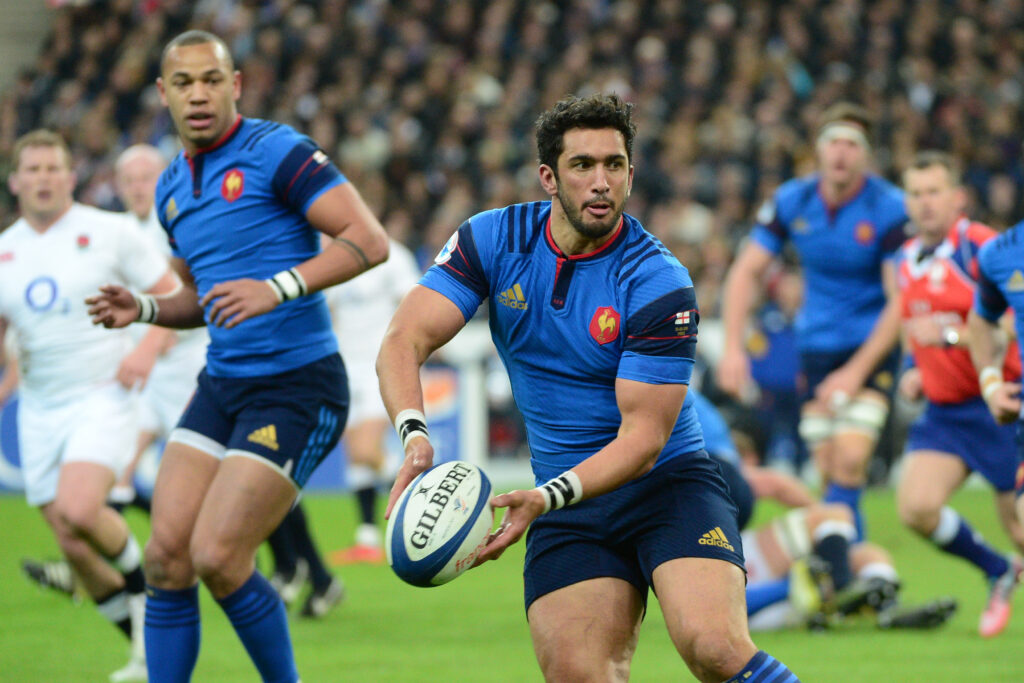
It was offered to me. Clubs in Top 14, Pro D2, Nationale… For me, being at half or 70% is inconceivable. Either you sign Max Mermoz at his full potential or nothing. Because when I think back to my last season at Toulouse, I find that rugby hasn’t changed in the slightest in terms of the game. In training, even diminished, I could intercept, anticipate, tackle, kill moves off… You feel the game and it doesn’t change. Then when you’ve got vertigo, when you train your body and then your head is spinning, you tell yourself it isn’t possible to sign somewhere, to fool people. For me, it was unthinkable. I’d have been ashamed to do what some people do, which is pretend to be better and grab a contract. I was offered, for example, the chance to wear the jersey just once, on the basis that that would do. I said I’m not a mascot. I suggested alternatives. I had other skills and roles but at that time, people liked putting others into little boxes and making sure they didn’t get out of them. There’s always a bloke at the club who doesn’t want anyone coming into his area. I wasn’t there to take anyone’s place but either I put it badly or it was badly received.
Is sporting retirement even more of a « little death » when it’s the medical side that forces it?
There is a form of little death but I’d been longing for a break for a while. Or at least to look after my health. Watching the matches or commentating on them on beIN Sports felt strange, honestly. Especially during Covid with nobody in the stands. I didn’t feel I was missing out on something. I’m not saying I didn’t feel it but alongside rugby, I’d always done little things. I was criticised for that too, but I’ve always liked living other moments. I understand, there are plenty of things you can miss but what I did, I did, whatever some people say. When I see certain people bringing up my performances, skills and honours again, and that today the institutions or the media act as if I’d never played, it’s funny because they’re the same ones who, every day, used to come and ask me for interviews. It just makes me laugh. When I was an actor in rugby, I was also a spectator so as not to identify with that character people might have known.
I was talking with the president of Monaco Rugby, where I have an ambassador role, and I was saying why not take out a licence there. I wouldn’t play every match but it could be worth considering from time to time
Maxime Mermoz
Today, your inner-ear troubles are behind you. Are you thinking of a Ma’a Nonu-style comeback at 39?
Er… (smiles) Very surprisingly, we managed to identify the problem in 2023. It’s called a haemato-labyrinthine rupture. It’s caused by a lot of impacts in rugby. There’s a big haematoma in the inner ear. It broke something or it lets fluids through. It’s hard to operate on. We managed to bring the inflammation down and so reduce the vertigo. And since then, I’ve been able to take up sport again and it’s true that when I post plenty of training photos on social media, I’m in better shape than when I was a player (smiles). I take fewer impacts these days, there’s more continuity in what I do. I feel almost fitter than when I was a player. I’ve taken up touch rugby again, I’ve taken up contact rugby again but in ten-a-side international tournaments in Dubai where we’re champions with the Bali Legends. It was Alex Tulou (former Bourgoin, Castres and Montpellier back-rower, ed.) who called me.
We play against former internationals so I found myself up against the Armitage brothers, Chris Masoe and plenty of former All Blacks or Australians, for example. At first you tell yourself the little knot in the stomach is back but once a year, it’s a blast. Sometimes you think about it again but the reality is that it’s still a contact sport. When I went to see the chiropractor not long ago, you can see bone avulsions everywhere (laughs)… There are after-effects. I started at 4, so there you go. Sometimes it nags at me. I was talking with the president of Monaco Rugby, where I have an ambassador role, and I was saying why not take out a licence there. I wouldn’t play every match but it could be worth considering from time to time.
Don’t you miss professional rugby?
Honestly, when I see the matches every weekend, people ask me if I don’t miss it. I say no, because I’ve lived all that. I lived it in such an enjoyable way because I was focused on performance, on competition. It really is a relentless rhythm. It’s a daily life that revolves around nothing else… Being in a professional set-up with pleasure, but as a player (he hesitates)… Rugby hasn’t particularly changed today but the physical and athletic dimension has. Honestly, I think I gave a fair bit and I realise I’m not in too bad health. I owe it to myself to protect it. We do have a life after all that.
Comments