
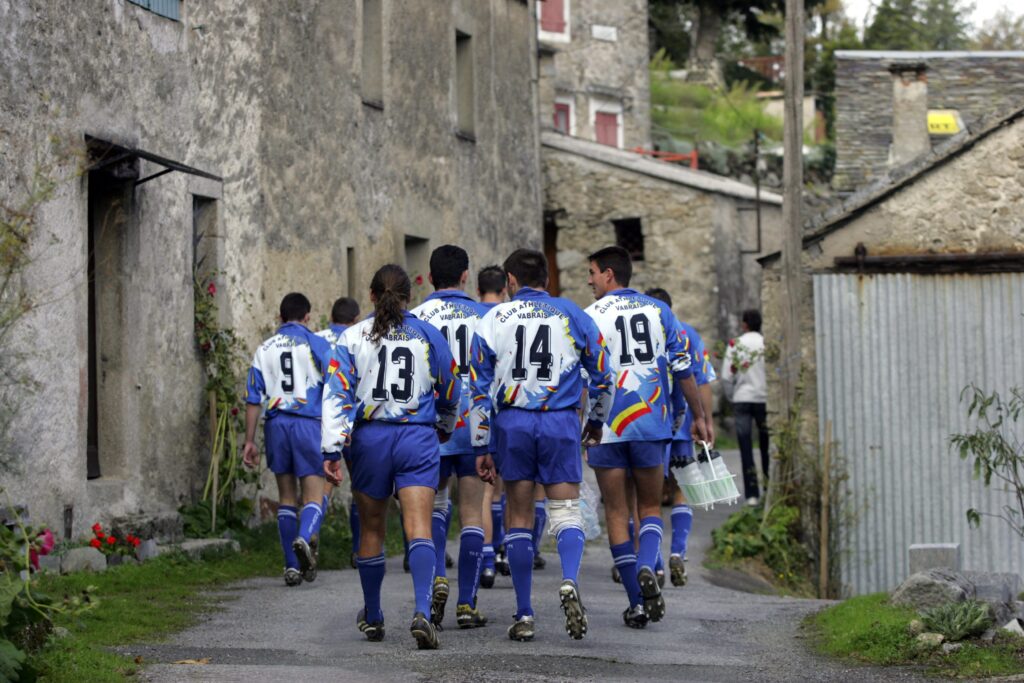
In Samatan, Marie and Didier (names changed) have stopped jumping when the doorbell rings. “Kids from the club, usually. They ring and run off. A tradition.” They laugh, resigned. On a derby day, further along in Lombez, an away team’s bus ended up in the ditch, badly guided by an over-enthusiastic volunteer. “Nothing serious, but it took ten pairs of arms to get it out. The match started twenty minutes late. Nobody complained“, Vincent says. Standard. One night, another time, a player who had had a few too many fell asleep in his garden. “Once, I found one under the cherry tree. I gave him a blanket…”
In a small village near Toulouse, Claire has seen her hedge used as a landmark. “People park in gardens as if it were the most normal thing in the world. Once, an entire family had a picnic on my lawn before the match.” On tournament days, the youth teams cut across properties to warm up. “They pass the ball between the garages, weave between the bikes. It’s hard to grumble when they say hello with a smile.” Rugby spills over, but rarely without an excuse.
“Once, a prop came round to apologise for the noise… with a tarte flambée.“
On the outskirts of Aurillac, Marc recalls the Sunday an entire team decided to jog up and down his driveway to warm up. “They were looking for a straight line. They found my garage.” The uninitiated neighbours get annoyed, sometimes. But the stories create bonds. “Once, a prop came round to apologise for the noise… with a tarte flambée.”
In another Auvergne village, Hélène has watched her vegetable patch turn into an impromptu warm-up area. “They were doing high knees between the rows of leeks.” One Sunday after a defeat, a supporter sat crying on her low wall. “He apologised. I offered him a coffee.”
“It blew the jug apart”
One spring afternoon in Saint-Yrieix-la-Perche (Haute-Vienne), a ball that escaped from a lineout landed in the middle of a family lunch. “It blew the jug apart“, Jean-Claude says. Play stopped, a wing came to retrieve the ball with an apology, then headed back to applause from the stand.
In the Auvergne, Hélène still remembers a referee knocking at her door. He had left his whistle in his car, parked… in her driveway. “He was already in his shorts, as focused as if he were walking out onto the pitch.” The match started on time, the whistle was returned, and the coffee was offered during the third half.
The line between private and public
Jean-Claude, from the Limousin, tells of the night of a win when two players, too merry to find their way back to their hotel, fell asleep under his gazebo. “They were snoring in time with each other.” He woke them at first light, slightly ashamed, hugely grateful. Rugby had spilled over once again…
“Living next to a rugby ground means accepting that the line between private and public is a porous one, he says. That the party spills over, that excess exists, that noise invites itself round without warning.” But everywhere, behind the sometimes absurd stories, the same truth emerges: a living ground is better than a silent pitch. And a confirmation, too: rugby is not content with being watched, it is lived, right on the doorstep.



Comments